



At Reconext, innovation is how we compete. Our vision is straightforward: let automation handle the repetitive work so our people can focus on the judgment calls and problem-solving that actually move the needle.
That vision is now showing up in the numbers. Several of our recent automation and AI platforms have moved out of pilot mode and into production, and we’re shifting our focus from proving these tools work to optimizing their performance for a roll out across our programs and sites worldwide.
Optiline
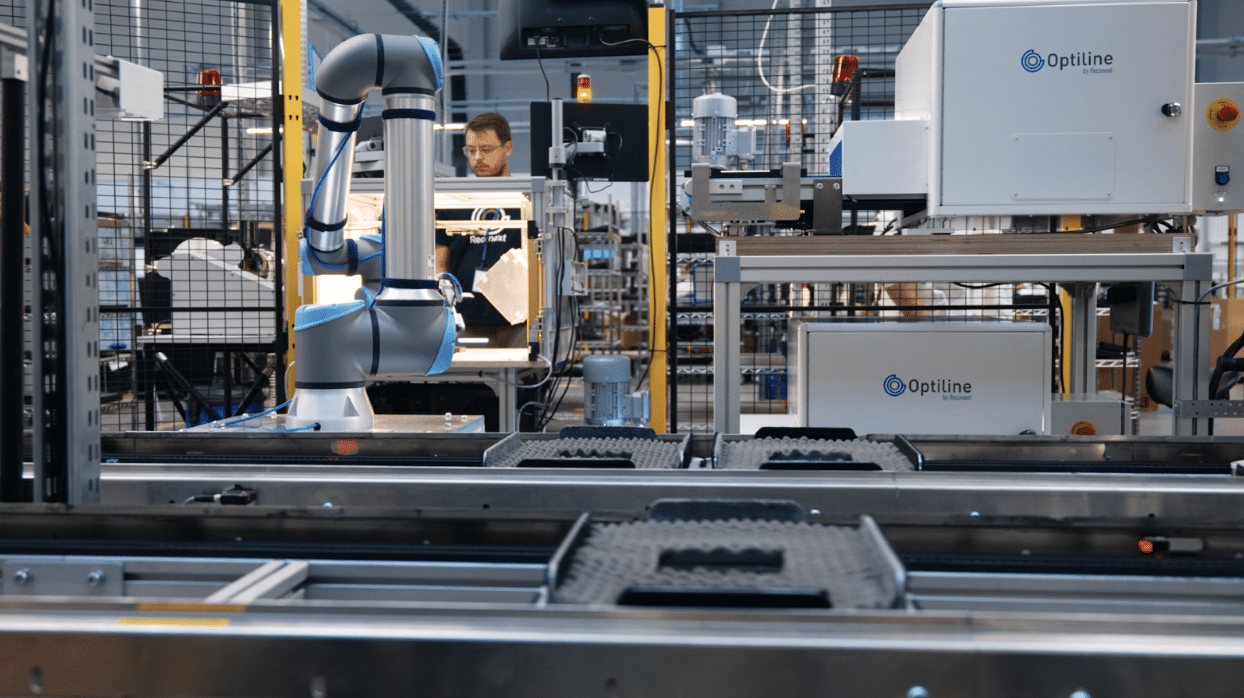
Optiline is our family of AI-enabled cosmetic grading systems. The lineup currently includes OptiX, which scans laptop exteriors, OptiY, which analyzes internal surfaces, and OptiZ, which grades headphones.
Five complete OptiX and OptiY systems are now operational across our Memphis programs, where we expect them to improve process efficiency by more than 30%.
The newest addition to the family, OptiM, is now in build at our Tallinn R&D facility. Designed for smartphones and tablets, OptiM uses the same core imaging and AI grading hardware, software, and Universal AI Grader platform as the rest of the Optiline family. What’s new is the physical fixturing that loads and positions each device for inspection, which has been rebuilt to handle devices smaller and more delicate than the laptops the rest of the line was designed for.
Pegasus
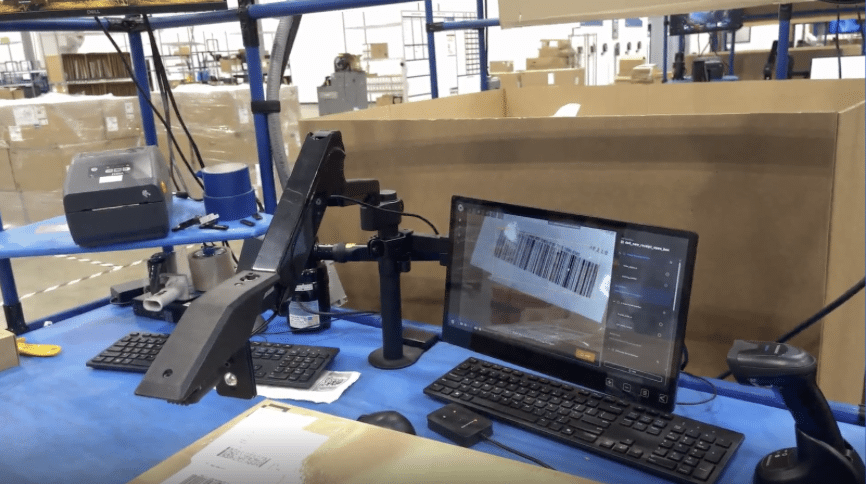
Our AI-powered optical receiving platform is now live across both of our Memphis programs. With a single scan, Pegasus reads barcodes, serial numbers, and QR codes.
The latest release adds computer vision-based object recognition, so Pegasus can now identify a product’s part number directly from its visual appearance, without needing a barcode at all.
Early results show labor efficiency improvements of approximately 40%. We’re preparing more than 10 additional Pegasus workstations for deployment in our Reynosa and Mexicali facilities.
AOI Stations, Penang
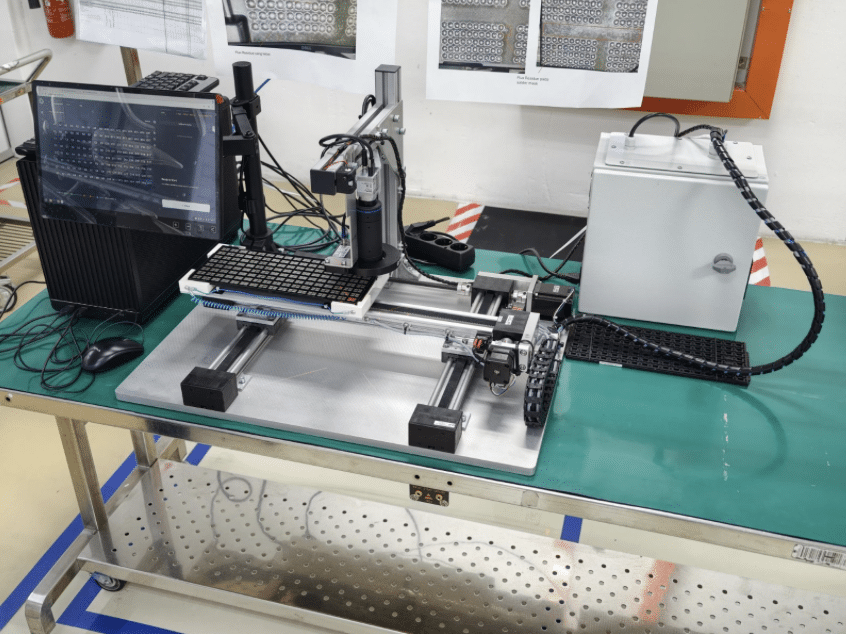
We’ve begun deploying the first four AI-powered Automated Optical Inspection stations in Penang, which inspect the quality of reballed memory chips and other BGAs with full objectivity, removing the variability that comes with manual review. Separately, new AI-based OCR stations for verifying chip markings have already cut inspection time for a 170-chip tray from more than two minutes to about 30 seconds.
Alongside both rollouts, our Penang Innovation team is finishing development on a new proprietary tester for eMMC flash memory devices. The first production systems are expected by the end of July.
Phoenix
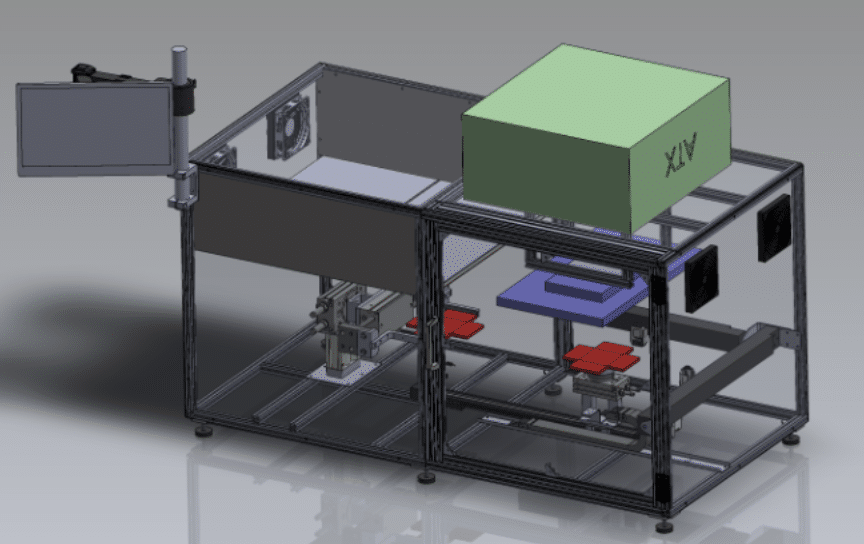
Phoenix is our FPGA-based platform for testing DDR memory modules at the signal level, running electrical diagnostics that catch intermittent faults and marginal signal issues that host-based testers miss. It’s already proven in production on DDR3 and DDR4 modules.
We’re now extending Phoenix to DDR5. The first controller board for the DDR5 variant is assembled, and firmware and software bring-up is underway with strong early results. This build introduces an advanced 18-layer PCB and the latest FPGA technology to handle DDR5’s higher speeds. We’re targeting production release in August.
What This Means for Our Partners
These platforms are past the proof-of-concept stage and moving into daily operation across our network. For our program partners, that means faster processing, more consistent quality, and a technology base that keeps pace with the devices coming through the network. We’ll keep sharing these updates as each platform moves further into production.


