Revolution: Automated Functional Testing for Smart Devices

Test results you can build on
For OEMs running high-volume returns operations, the functional test is where downstream value gets decided. Warranty cost recovery, resale grading, and engineering feedback all pull from the same test data. When that data comes from manual testing, the variance carries into every decision made after it.
Revolution runs the same full functional test on every device, with every result captured against its serial number and IMEI. The same script runs on every unit, on every station, on every site.
One station. The full test.
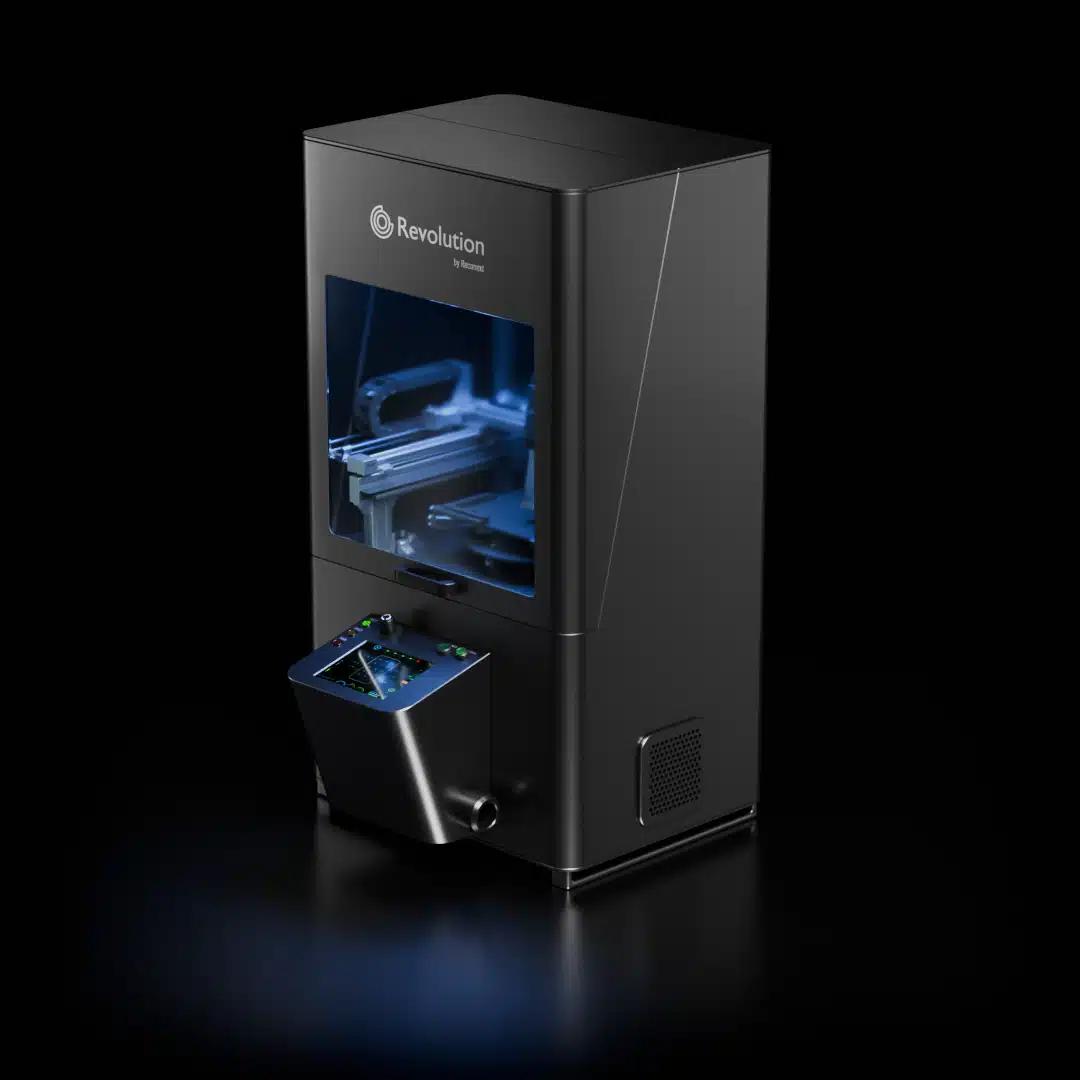
A single Revolution station handles display, cameras, audio, sensors, ports, buttons, and connectivity. Doing the same coverage manually takes four or more separate test setups and a lot of operator handling between them.
Inside the fixture, robotics drive physical inputs, the integrated vision system verifies what’s on screen, and an onboard DAQ handles the audio path. Devices stay in one fixture from start to finish.
Display testing covers RGB, HSV, MURA, and discoloration. Camera testing checks sharpness, blur, and sensor contamination, which are the kinds of failures that are easy to miss with manual inspection.
Built for production volume
Operator touch time runs under one minute per device. A full functional test cycle takes four to five minutes depending on scope. One trained operator can manage up to five Revolution stations in parallel, which turns a manual process that takes 5+ minutes of operator time per unit into a continuous flow of completed tests with the data already attached.
Throughput stays consistent across shifts because the test doesn’t change between operators or sites.
Every return is a signal
For OEMs, that record is where the value compounds. Aggregated across volume, it surfaces failure mode patterns and supports predictive fault modeling. It points to which parts are failing, which suppliers are involved, and which firmware versions correlate with which faults. Test data flows in real time and integrates with shop-floor and ERP systems, so engineering and warranty teams can act on results without waiting for monthly reports.
4–5 min
full functional test cycle, including display, cameras, audio, sensors, and connectivity
1 min
operator touch time per device
5:1
Revolution stations per trained operator
10%+
higher fault detection accuracy versus manual functional testing
How Revolution Works
Load
01
Connect
02
Test
03
Report
04

Common Deployment Questions
What devices can Revolution test?
Revolution is designed for smart devices across a wide range of form factors, including smartphones, tablets, and hybrid notebooks. The universal test adapter is mechanically adjustable to fit different sizes, and the connector engagement system handles micro-USB, USB-C, Lightning, and 3.5mm audio. Test scripts are scoped to the device under test, so the same platform can run multiple models and brands without retooling the fixture.
How does Revolution fit into an existing test or repair flow?
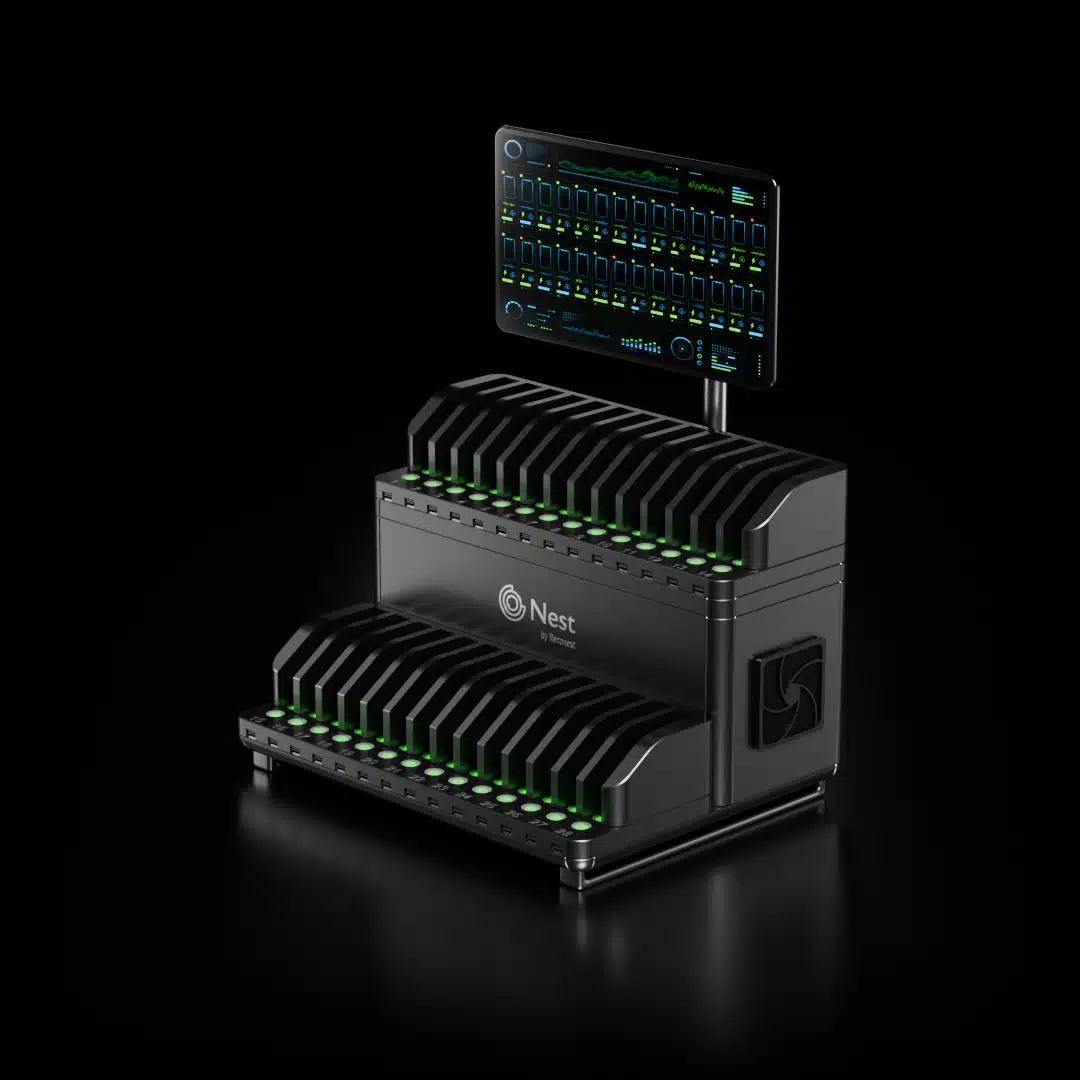
Revolution operates as a single-station replacement for what would otherwise be four or more separate test setups. It can run standalone with manual load and unload, or sit between upstream initialization (such as Nest) and downstream grading or repair routing. Test data flows in real time to the site database and integrates with shop-floor and ERP systems.
How customizable is the test scenario?
Test plans are configured per customer, per device. Reconext’s engineering team works with customers to define what gets tested, to what tolerance, and in what sequence, and to update those scripts as new models or new failure modes emerge. Engineering changes are deployed centrally and pushed to every Revolution station on a site, so updates land consistently rather than one fixture at a time.
What kind of data does Revolution produce?
Every device generates a full test record: each test step, its result, and the raw measurements behind it. That data is stored locally and made available for export into customer systems, audit trails, and analytics platforms. Aggregated across volume, it supports failure-mode analysis, predictive modeling, and engineering feedback.