Hydra: Automated Multi-Stage Surface Cleaning System
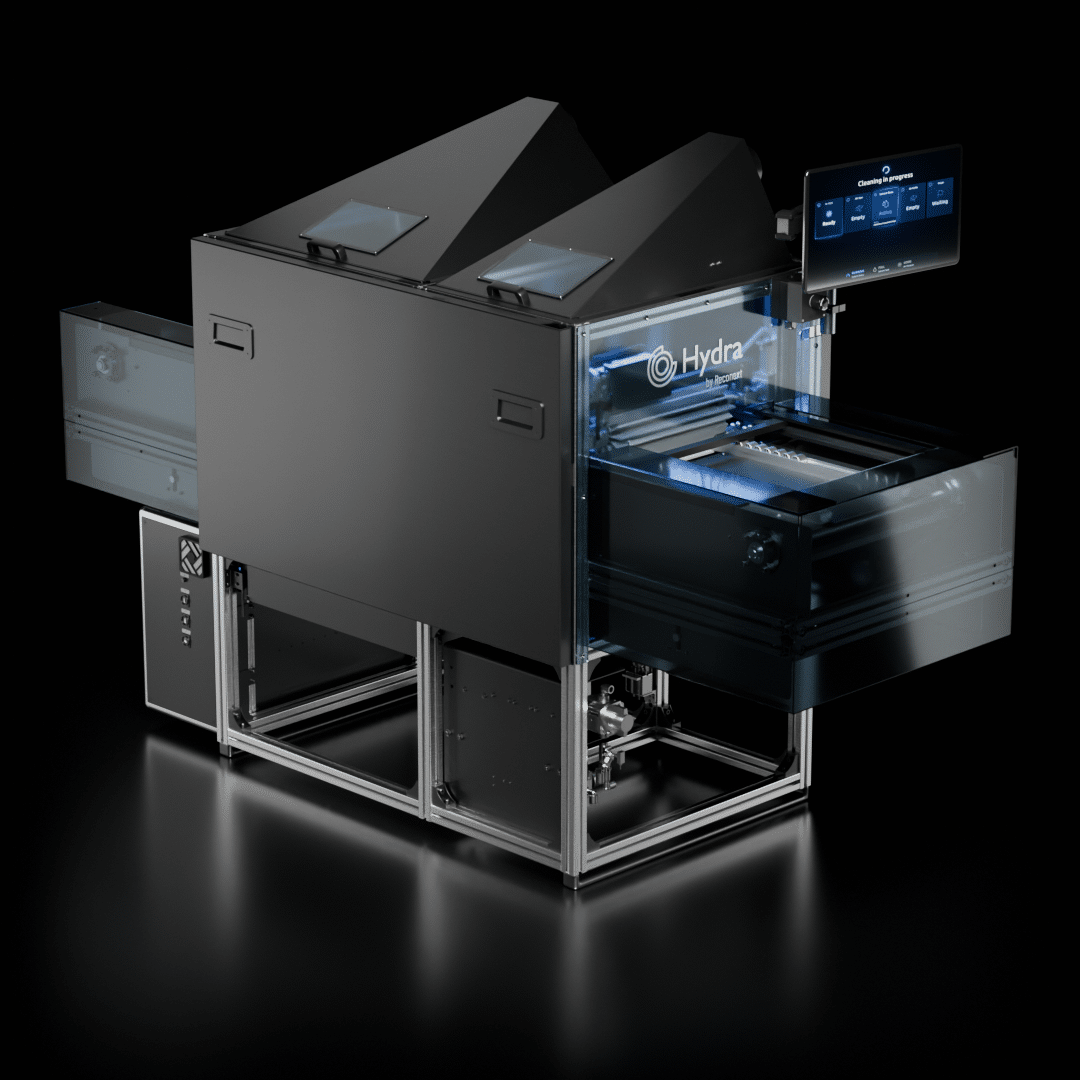

Better cleaning, better grades
In refurbishment, grading has a direct impact on resale price.
Even when devices function the same, small cosmetic issues can push a unit into a lower grade. At scale, those small differences add up.
Hydra helps control that variable. By applying a consistent, multi-stage cleaning process to every device, it ensures surfaces are clean not just visibly, but in the areas that are easy to miss.
That consistency gives each device a better chance to meet higher cosmetic standards, delivering you stronger resale outcomes.
From surface to seam
Hydra is designed to deliver a deeper, more complete clean than conventional methods.
Rather than concentrating only on exposed surfaces, it targets areas where debris typically remains, including grooves, seams, and connectors. This ensures contaminants are removed more thoroughly across the entire device, not just where they are immediately visible.
By applying a repeatable process, Hydra brings greater uniformity to surface preparation. That means devices exit the system with a consistent level of cleanliness, creating a standardized output for downstream operations.
Keep the line moving
Hydra is built for real production environments.
Manual cleaning averages one minute per unit. Hydra processes 4x as many devices in the same time. The conveyor-driven design typically feeds 250 units through the system per hour, with a maximum speed of 600 units per hour.
That same conveyor design delivers the unit directly from cleaning to the next step in our automated recovery process, with no operator handoff required.
This keeps the workflow moving and output consistent at scale.
Smarter with every run
Hydra is built on the same foundation. The more it runs, the more precisely it can anticipate how long each batch needs in the cleaning cycle, removing guesswork from throughput and pushing the entire line closer to zero wasted time at every stage.
stage deep-cleaning process
360°
high-force airflow coverage
units per hour capacity
more units processed
How Hydra Works
Load
01
Dry Clean
02
Wet Clean
03
Air Dry
04

Common Deployment Questions
How does Hydra handle heavily soiled or high-debris devices?
Hydra is designed to handle a wide range of incoming conditions, from lightly used units to devices with significant debris buildup. Its staged process removes loose particulate before wet cleaning begins, helping prevent contaminants from being spread during processing.
For more heavily soiled devices, operators can adjust conveyor speed, cleaning intensity, and the amount of solvent applied to the rollers. This flexibility allows the system to deliver a deeper clean when needed while maintaining consistent results across varying conditions.
What devices are compatible with Hydra?
Hydra is designed to support a wide range of electronics: the system has already been used with devices like laptops, routers, and set-top boxes. Its modular parts mean it can be adapted to fit different product types with minimal effort.
Adjustable top rollers automatically accommodate different device heights, while interchangeable brushes and configurable belt guides allow the system to be tailored to each application. As long as a device fits within the conveyor and can be securely guided through the system, Hydra can be configured to clean it effectively.
How can Hydra be incorporated into my recovery flow?
Hydra is designed to fit directly into line-style recovery operations. Its conveyor-driven architecture allows devices to move continuously through cleaning and into the next stage without manual handoffs, making it easy to position within existing workflows.
The system can operate as a standalone station with loading and unloading at either end, or it can be integrated between upstream and downstream processes such as intake, testing, or grading. Because devices remain on a guided path throughout, Hydra helps maintain flow, reduce handling, and keep the entire recovery line connected and moving.
How long does cleaning via Hydra take?
Hydra processes devices as they move through a continuous conveyor, with throughput reaching up to 600 units per hour and typically operating around 250 units per hour, depending on cleaning requirements.
Manual cleaning, by comparison, takes around one minute per device and requires dedicated handling. Hydra replaces that step with a continuous, in-line process, allowing far more units to be processed in the same time while delivering a consistent level of clean.