Pegasus: AI-Driven Optical Receiving and Product Identification
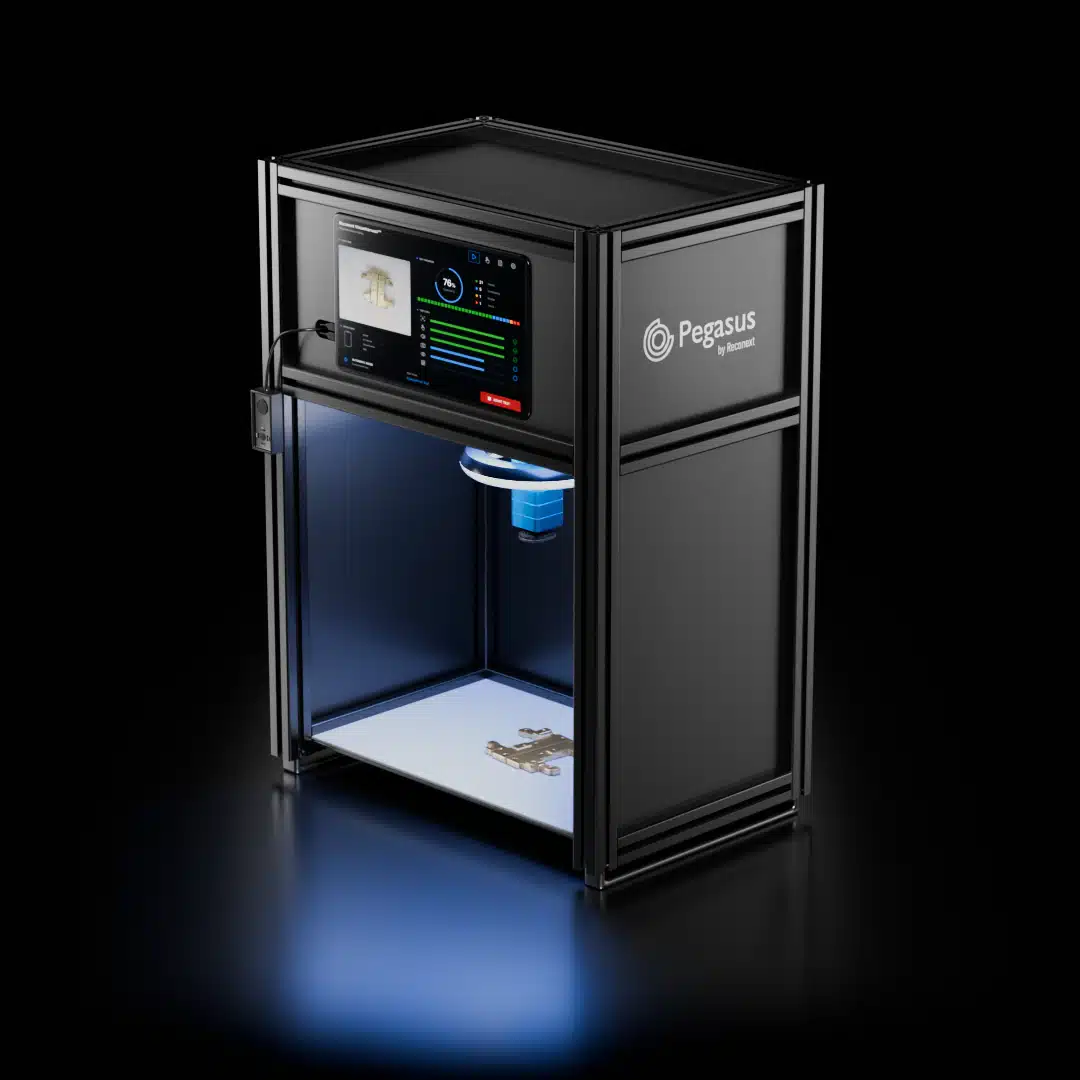
Make receiving the first point of recovery
Receiving has long been the least instrumented step in the chain. Arrival condition lived in an operator’s eyes, carrier damage was rarely documented per unit, and every downstream decision rested on what was, or was not, captured at the dock.
Pegasus turns intake into a structured decision point. It captures unit identity, condition, and receiving metadata in a single operator pass and writes an image-verified record for every unit. That record becomes the foundation for quality control, carrier claims, refund integrity, and downstream automation.
Identify any product automatically
Receiving teams often handle hundreds of product variants that look nearly identical. The detail that decides the correct part number can be a small mechanical feature, a label variation, a specific QR code, or an identifier hidden beneath an access panel.
Pegasus determines the part number from a product’s visual appearance, serial number, barcode, or label, and when a unit needs a closer look, it guides the operator through a few simple actions to expose the right feature. Operator training collapses to one instruction: present the item to the camera. The operator no longer has to decide which barcode to scan or carry the lookups in their head.
One capture, multiple outcomes
A single computer vision pass produces a structured record that supports several workflows at once, with people kept in the loop for the decisions that matter.
It assembles per-unit carrier-claim evidence by linking the arrival image to order ID, RMA, serial, waybill, and carrier, and ties physical damage to the downstream test result. It raises receiving productivity while reducing scan errors, since the same motion captures and writes every required identifier. And it supports refund and return-policy integrity by detecting missing components at unpackaging and surfacing exceptions immediately.
Built to fit any receiving environment
Full automation is not always practical. Short contracts, fast timelines, and mixed product can make heavy investment hard to justify.
Pegasus is modular. It scales from a single receiving station to a large enterprise deployment, runs as a standalone digital station, and connects to your operating platform through an API. It delivers productivity, consistency, and quality on a manual line, and it grows into a more automated environment when you are ready.
~30 sec
average receiving time per unit
%
reduction in receiving time
1 pass
captures identity, condition, and receiving metadata
Every unit
leaves an image-verified record at intake
AI
product recognition that reads part numbers from appearance
How Pegasus Works
Present
01
The operator presents the item to the camera. That is the workflow. No prior product lookup or specialized training required.