Nest: Automated Initialization and Prep for Mobile Device Recovery
Prep that's ready for what comes next
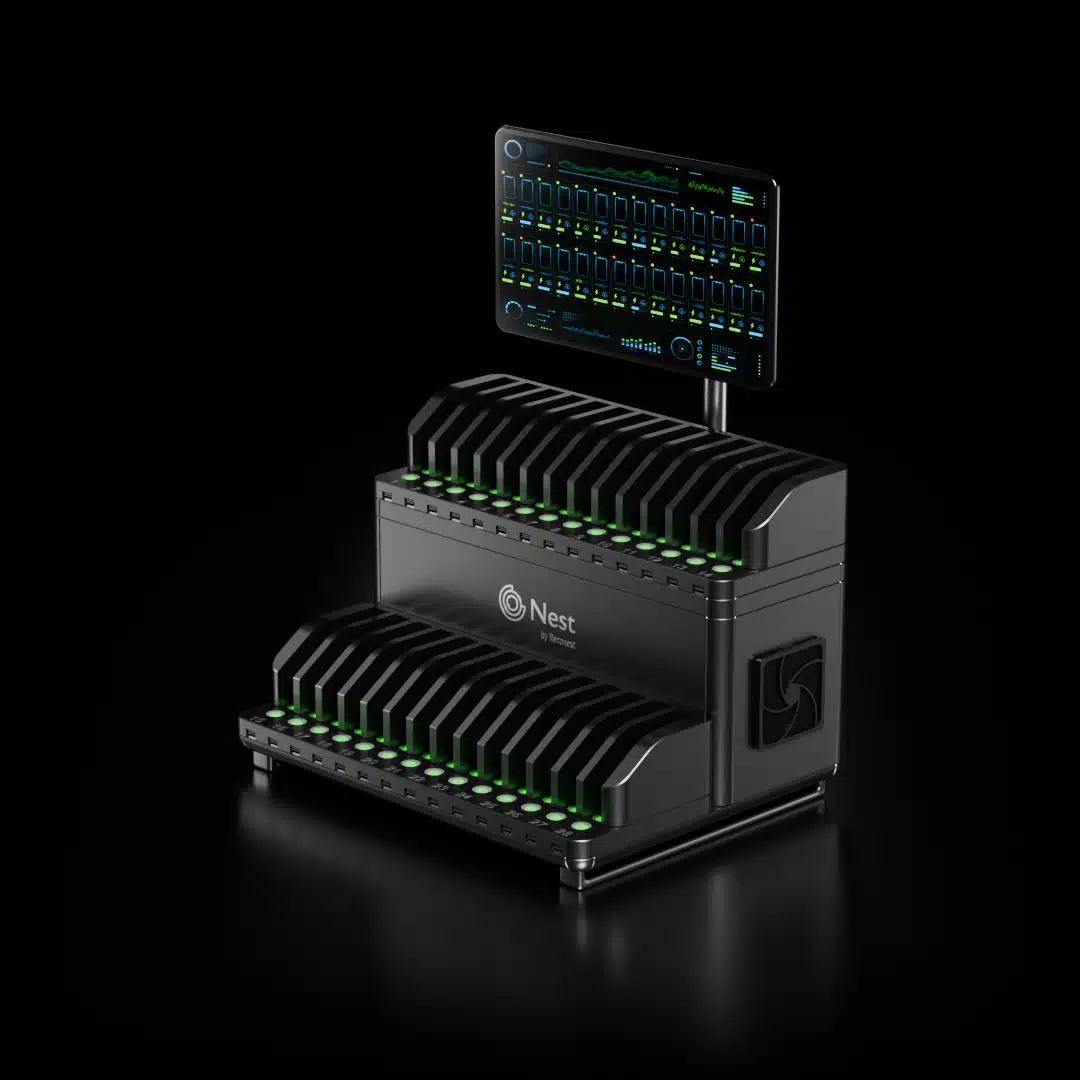
Nest is an automated initialization platform that charges, wipes, and updates mobile devices in parallel, preparing every unit for downstream testing and grading. Across 28 ports running asynchronously, it handles the prep work that has to happen before a device can be tested, graded, or returned to inventory.
For OEM returns programs, the consistency matters because everything downstream depends on it. A device that arrives at the test bench at 12% battery fails tests that aren’t really failures. A device wiped to the wrong standard creates a data security problem. Nest removes those variables before testing starts, so the test platform receives devices in a known state every time.
28 devices, in parallel, asynchronously
Each of Nest’s 28 ports runs its own initialization sequence on its own clock, so a device that needs a fresh charge isn’t holding up one that’s ready for an OS update. iOS and Android units sit side by side. The system detects each device, pulls the correct sequence for its model, and runs end-to-end without operator intervention. Tri-color LEDs signal status at a glance: in progress, complete, or failed.
Charging is intelligent: anywhere from 0.5A up to 2.1A based on what the device can accept. That cuts charging time by up to 4x compared to standard charging, which is usually the longest part of the prep cycle.
Scripted to your program
Nest’s initialization logic is scripted, and the script is defined by the customer. Battery thresholds, data deletion to OEM standard, OS version targets, and any program-specific validation steps are configured per program and run identically on every device.
That includes optional steps like battery cycle limits, model-specific routines, custom validation, and pre-loading test or customer applications. Reconext’s engineering team builds them into the sequence and deploys across every Nest on the line. Engineering changes roll out centrally, so updates land identically on every station, whether you’re running two Nests or twenty.
A logged, auditable handoff
That record carries forward into downstream testing and grading, so the next stage doesn’t have to re-detect what’s already known. It picks up where Nest left off. For OEMs running prep across multiple sites, the record is what makes the audit trail hold together.
asynchronous ports per Nest, each running independently across multiple operating systems
4×
faster charging, intelligent up to 2.1A based on device capability
~15 min
average cycle time per device, including data deletion and OS update
1:10
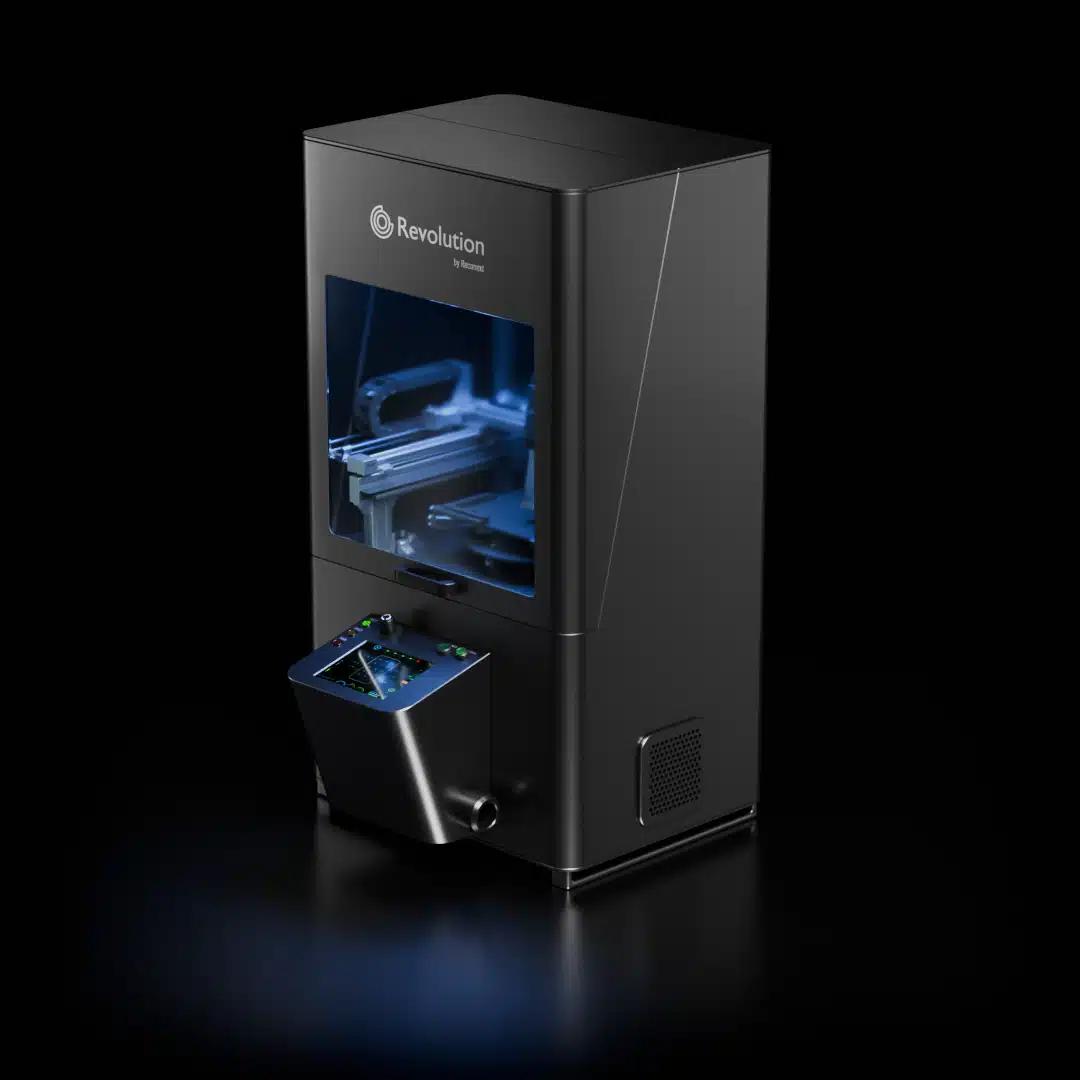
operator coverage; two Nest stations feed up to ten Revolution testers
How Nest Works
Connect
01
Detect
02
Initialize
03
Hand off
04
Common Deployment Questions
What devices does Nest support?
Nest supports iOS and Android devices across smartphones and small tablets, with exchangeable cables for micro-USB, mini-USB, Apple 30-pin, and Lightning. Maximum device size per slot is 100 × 160 × 15mm. Other operating systems, including Windows, can be added when there’s a clear program need; Nest’s initialization logic is built to be extended.
How customizable is the initialization sequence?
Fully. Reconext’s engineering team configures Nest’s scripting logic to match each customer’s program: minimum battery thresholds, data deletion to specific OEM standards, OS version targets, battery cycle limits, model-specific routines, and any custom validation steps. Engineering change requests are deployed centrally and pushed to every Nest station on the line.
Does Nest replace manual prep entirely?
Nest replaces manual handling, charging, data deletion, OS update, and any scripted validation. Operators connect and disconnect devices and monitor status; Nest handles the rest in parallel. Manual cosmetic inspection and any tests requiring physical access to the device sit upstream or downstream, depending on the flow.
How does Nest connect to the rest of the recovery line?
Nest is designed to feed downstream automated test platforms, particularly Revolution. Initialization data, including model, IMEI, battery state, OS version, and deletion confirmation, is captured at the Nest stage and carried forward, so the test platform doesn’t need to re-detect what’s already known.