According to the National Environment Agency (NEA), Singapore generates around 60,000 tonnes of e-waste in a year. Pulau Semakau is the only landfill in the country, which is expected to run out of space by 2035, retired servers add to this waste, and many still hold business and customer data.
For businesses, this makes server disposal both an environmental and a data security concern. Companies need to decide what to reuse or recycle. They also have to meet Singapore’s e-waste and data protection rules and record how they handle each retired asset.
This guide covers NEA and Personal Data Protection Act (PDPA) requirements and how to assess servers for reuse or recycling. It also sets out the steps for a secure, documented disposal process. It also highlights common mistakes businesses should avoid.
Key Takeaways
- Server disposal in Singapore involves e-waste and data protection requirements. Businesses should assess applicable NEA regulations, meet their PDPA obligations, and maintain records of secure data sanitization and asset handling.
- Reuse should be assessed before recycling. Testing, grading, and evaluating server performance can help organisations identify opportunities for redeployment, refurbishment, or value recovery before responsible end-of-life recycling.
What Singapore’s National Environment Agency requires for retired servers
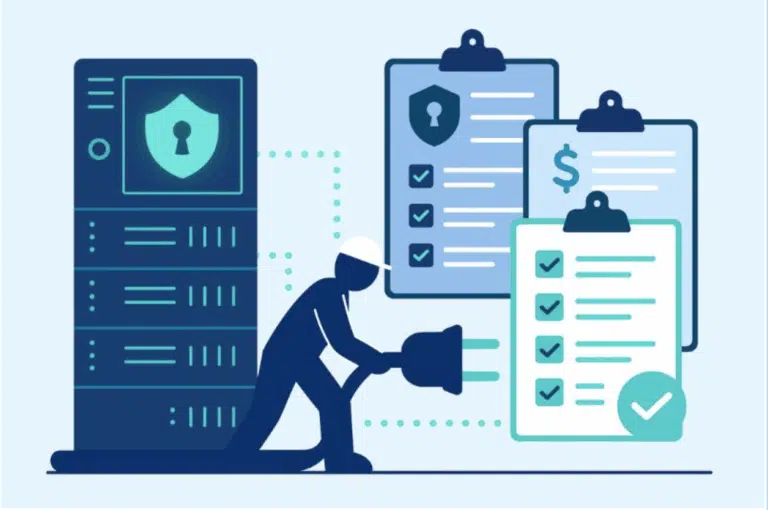
Server disposal in Singapore involves four areas of responsibility: who collects the equipment, who processes it, data protection and the rules for sending equipment out of the country.
- NEA’s e-waste system was introduced on 1 July 2021 and requires producers to collect unwanted servers from clients without charging for collection or disposal.
- Under the Resource Sustainability (E-waste Recyclers) Regulations 2021, licensed recyclers have to permanently erase or destroy data on any data-bearing device before reuse, recycling, disposal or transfer.
- The organisation is responsible for personal data under the PDPA’s Protection and Retention Limitation obligations, and these obligations also apply when a provider handles the drives as a data intermediary.
- All e-waste and its components moved across borders need an NEA Basel permit since 1 January 2025.
Collected servers have to go to a licensed collector or recycler, and producers could charge for dismantling. Ask the supplier or NEA whether older, leased servers are covered, and request the recycler’s erasure standard and the record it issues for each device.
The service agreement should specify how the provider will erase data and what evidence it will supply. It should also explain how the provider will report a data breach. The organisation is subject to all eleven PDPA obligations.
Reconext’s e-waste recycling in Singapore page covers the wider licensing and permit picture for other IT equipment retired alongside servers.
How to make server disposal eco-friendly
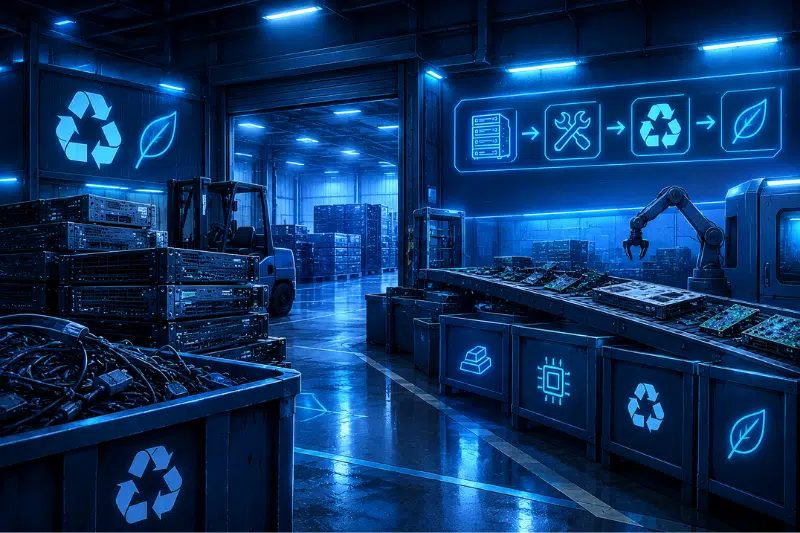
The disposal method affects how much waste is generated and how much energy is consumed. When reusing a server, check its age and power consumption when comparing it with a replacement.
Reuse old devices before recycling e-waste
The world generated 62 million tonnes of e-waste in 2022, but only 22.3% was formally collected and recycled, according to the Global E-waste Monitor 2024. The report estimates that annual e-waste will reach 82 million tonnes by 2030, with the documented collection and recycling rate dropping to 20%.
UNITAR lead author Kees Baldé said, “Business as usual can’t continue.” Reusing servers before recycling them keeps working equipment in service for longer, but any equipment that failed testing should go to a licensed recycler.
How server age affects energy use
A 2020 peer-reviewed study by Bashroush and colleagues in IEEE Transactions on Sustainable Computing looked at when servers should be replaced. They found that replacing 3-year-old servers with the latest models reduced energy consumption by only 16%, but replacing 7.5-year-old servers reduced it by 85%.
Dell’s life cycle assessment of the PowerEdge R760 found that the use phase accounted for 87-91% of the server’s global warming potential, and manufacturing accounted for 10-15%. Ask the vendor for a published life cycle assessment with details on the server’s use phase and manufacturing, and only then decide on a replacement.
Factors that decide a server’s next use
Workload is one factor in deciding whether a server should be replaced. Uptime Institute’s Tomas Rahkonen found that newer servers deliver improvements in energy efficiency under heavier workloads.
Check the server’s age and test results to decide its next use, and if you are considering a replacement, then compare the energy consumption of the old and new hardware.
| Situation | Likely route | What to check first |
|---|---|---|
| Younger than 5 years and passing tests | Redeploy internally or resell | If the workload fits the hardware |
| 5-6 years old and passing tests | Refurbish for reuse or resale, or replace if newer servers can consolidate the workload | Energy use per workload against a replacement |
| Failing tests, or too old to sell whole | Harvest parts that pass testing, then recycle the rest | Test results for every component |
| Data cannot be erased to policy | Physical destruction, then licensed recycling | Destruction record by serial number |
The Bashroush team found that refurbishing equipment could be more cost-effective when refreshing 5-6-year-old servers. But servers younger than that are better to reconfigure than replace, so use the test results and energy comparison to make the final decision.
Compare old and new servers’ energy use for a sustainable future
Let’s take an example of a data centre that has 100 servers. Here, 40 servers are less than five years old and pass testing, so these are suitable for redeployment or resale. Another 30 servers are five years old but need to be compared with new servers for energy use.
The remaining 30 servers failed testing and have to go to parts recovery to recover valuable materials before they are recycled.
All 30 servers in the middle group must be measured under their normal workload to compare results with the replacement. Make the comparison using the same metric, such as energy per transaction. Remaining service life also affects cost, as a server with 3 more usable years has a different replacement cost than a server near the end of its useful life.
How to run a server disposal project in Singapore

Make the right disposal decisions before powering down the first server so the project moves smoothly through inventory, data erasure, transport tracking, and final reporting.
Planning is particularly important for large-scale decommissioning projects. In May 2025, Reconext completed a data centre decommissioning project involving 2,500 AI servers and more than 17,000 loose hard drives across four facilities. The project used Rackwipe for in-rack server erasure and Proteus to process loose drives. Drives that initially failed testing were refurbished to extend their useful life, while recovered servers were assessed for potential reuse as complete systems.
Check the inventory before removing servers
Record the serial number, model, age, location and data classification of all servers and check the purchase or lease contract for take-back or buyback terms. Arrange access approvals and loading dock bookings in advance for server removals at a colocation facility, as these dates can affect the server removal schedule.
The application owner must confirm that the workload has moved or been retired and that backups have been verified before powering down the server.
Erase server data and hard drives before removal
Follow a recognised standard like NIST SP 800-88 Revision 2, published in September 2025, which provides guidance on media sanitization and documentation. Every drive and the baseboard management controller have to be in the erasure scope. The controller runs independently of the server’s operating system, so if you wipe only the drive, the controller still has the data.
Colocation rules or company policy may require data-bearing equipment to stay in the facility until erasure is complete. In these situations, in-rack erasure solutions such as Reconext’s Rackwipe can support secure data sanitization before equipment is removed.
Track servers from collection to e-waste recycling
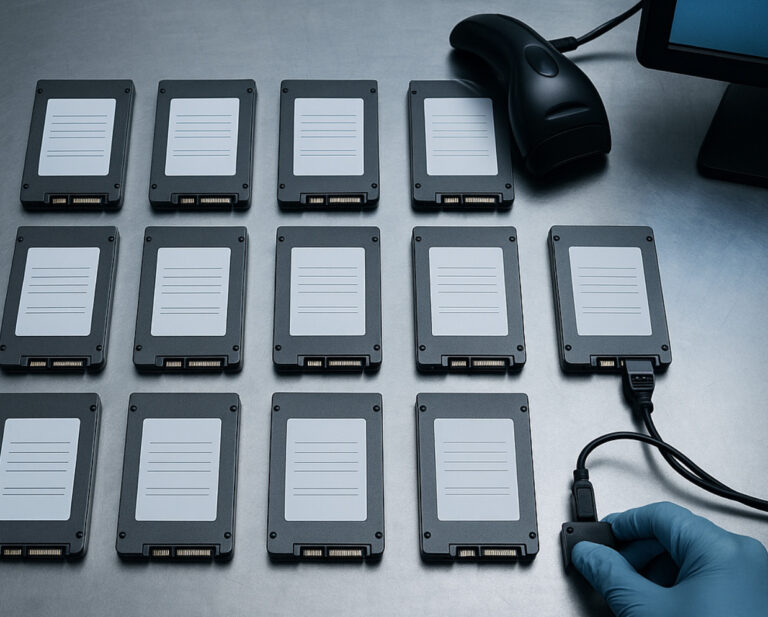
Scan every server when it leaves the facility and during loading and delivery, as every server needs a record from the hall to its destination. A drive removed from its rack has to be tracked as a separate asset, so every recovered component should have its own identifiers.
Using sealed transport and signed handover records gives a clear record of who handled the equipment. Asset counts have to match at every handover. If 40 servers leave the facility but only 39 arrive, identify the missing serial number the same day so the carrier and dock crew can help investigate.
Keep records for audits and ESG
Erasure certificates and custody logs document how every server was handled. The disposition record shows the final outcome: what was reused, resold, dismantled for parts or recycled and why. The records also serve as the basis for environmental reporting.
Reconext’s Clarity platform tracks inventory and reports environmental outcomes for decommissioning projects.
How to choose a server disposal partner
Two providers could quote you a similar price but offer different records and services, so you should evaluate them before signing any proposal. Here are some things to check in a server disposal partner:
- Licensing: A company needs to have a General Waste Disposal Facility (GWDF) Licence issued by the National Environment Agency (NEA) to run an e-waste processing and recycling facility for data centre servers and enterprise IT hardware in Singapore. Always check the licence with the provider you’re working with.
- Data erasure: Check whether the provider follows recognised media sanitization guidance, such as NIST SP 800-88 Revision 2, and can supply documented sanitization and verification results for each data-bearing device.
- Reuse assessment: You should know how the company tests and grades the servers before sending the equipment to recycling, as it tells you how they protect your data security and your financial return, and if it matches your environmental compliance.
- Downstream handling: When surveying, check where your materials go after collection and if anything is shipped to another country, ask how the provider manages that under a Basel permit.
- Final reporting: Records are one of the most important parts of server disposal. You have to confirm which records the provider supplies, and how many servers are reused or recycled.
Check provider for a sample erasure report and a disposition record from a recent job similar to yours. They’ll show you how they logged each device and what happened to it. Then ask what reuse rate they have on projects like yours and how they worked that number out. Two companies could quote the same percentage, but it could mean very different things.
Mistakes to avoid in server disposal
Server disposal mistakes can reduce resale value, increase recycling costs and lead to data breaches that can result in penalties. Here are some mistakes that put data at risk and affect the project’s finances:
- Recycling without testing: A server loses resale value when you send it to recycling, so test and grade the equipment before recycling to recover value.
- Treating a batch as one lot: If a few units fail testing, don’t send the whole batch to recycling. Sort by age and test results to identify the units that can be reused or resold.
- Scrapping parts that would have passed: Memory and drives that pass testing can be reused and recovered when recycling the chassis.
- Paying for collection a producer owes: Check take-back terms and parts value before accepting a quote to avoid unnecessary costs, as producers may be legally required to collect the servers.
- Skipping the management controller: The baseboard management controller’s accounts and settings must be included in the erasure scope, as information may remain after wiping the drives.
- Reusing drives before erasing them: If a drive isn’t erased and is moved to another system, data could carry over to the new data centre. You can avoid this by verifying erasure results and then reassigning.
- Keeping no record for each device: Every serial number should have a matching erasure record, as an auditor can’t confirm the device was properly erased if the result is missing.
- Leaving it all to the recycler: The company should keep records linked to every equipment serial number, as an auditor could ask for proof that a server was erased. A recycler could have the legal obligation to erase data, but the company is also responsible for verifying the work.
Under Singapore’s PDPA, the maximum financial penalty from October 2022 is S$1 million or, for organisations with annual Singapore turnover above S$10 million, 10% of turnover, whichever is higher.
Plan server disposal before removing the first rack
If your Singapore facility is retiring servers, you need a plan for data erasure and the equipment’s next destination before starting removal. Reconext tests retired servers for reuse, erases data in place or at secure facilities, and sends equipment that can’t be reused to audited recyclers. Every asset has a digital record of its final outcome.
Reconext’s data centre services support server decommissioning through on-site erasure and IT asset disposition. Share your server inventory and data erasure requirements with the team to discuss a disposal plan for your Singapore facility, and learn how we’ll handle and document your assets.
About this article
This article was created by Reconext’s content team in collaboration with professional writers specializing in IT asset lifecycle management and IT asset disposition (ITAD). Our content draws on reputable industry sources, recognized standards, and regulatory guidance to provide accurate, practical information that helps businesses make informed decisions about their IT assets.
FAQs
What is the process of server disposal?
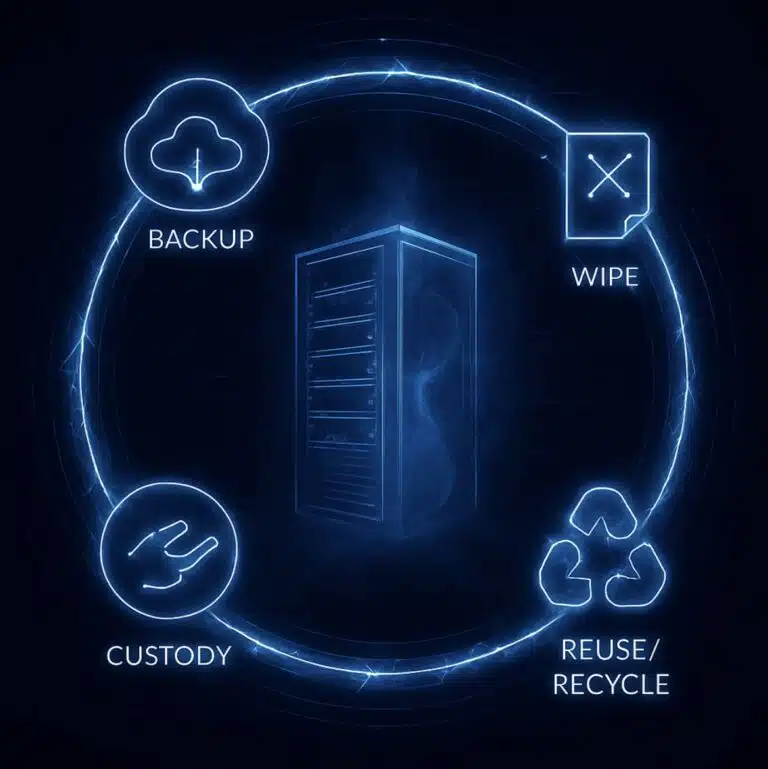
Server disposal starts with cleaning the data from equipment, and then each server is checked for reuse, resold, stripped for parts, or recycled, and a record of everything is kept throughout the process.
Who collects unwanted servers in Singapore?
Under NEA’s e-waste system, server producers have to take back unwanted units from their clients. The providers send what they collect to a licensed waste collector or e-waste recycler. You should check with the supplier if they cover old and leased servers.
Can retired servers be reused rather than recycled?
Yes, the retired servers can be reused if they pass the reuse testing and the data is cleaned. Working units can go back into service, get refurbished, or be resold.
How should servers be erased before disposal?
Use a recognised standard like NIST SP 800-88 Revision 2 and log the result for each device. The PDPC’s disposal guidance points to overwriting software, degaussers and physical destruction as ways to clear data from storage devices.
What happens if servers are disposed of badly?
In a data leak like a PDPA breach, the penalty can reach S$1 million or 10% of Singapore turnover for organisations earning more than S$10 million, whichever is higher.
Do servers need a permit to leave Singapore for recycling?
Yes, NEA has required a Basel permit for electronic waste and its components shipped across borders since 1 January 2025.