


Innovation at Reconext begins with observation. The steps that draw the least attention often hold the largest gains, and preparing returned devices for testing is a clear example.
Every returned device has to be charged, erased, and brought up to current software before testing can begin. Done one at a time, that work sets the pace for everything behind it, and the test line waits on the prep bench.
Nest removes the wait. Devices prepare in parallel rather than in sequence, so preparation stops setting the limit on what a floor can move in a shift.
How the System Works
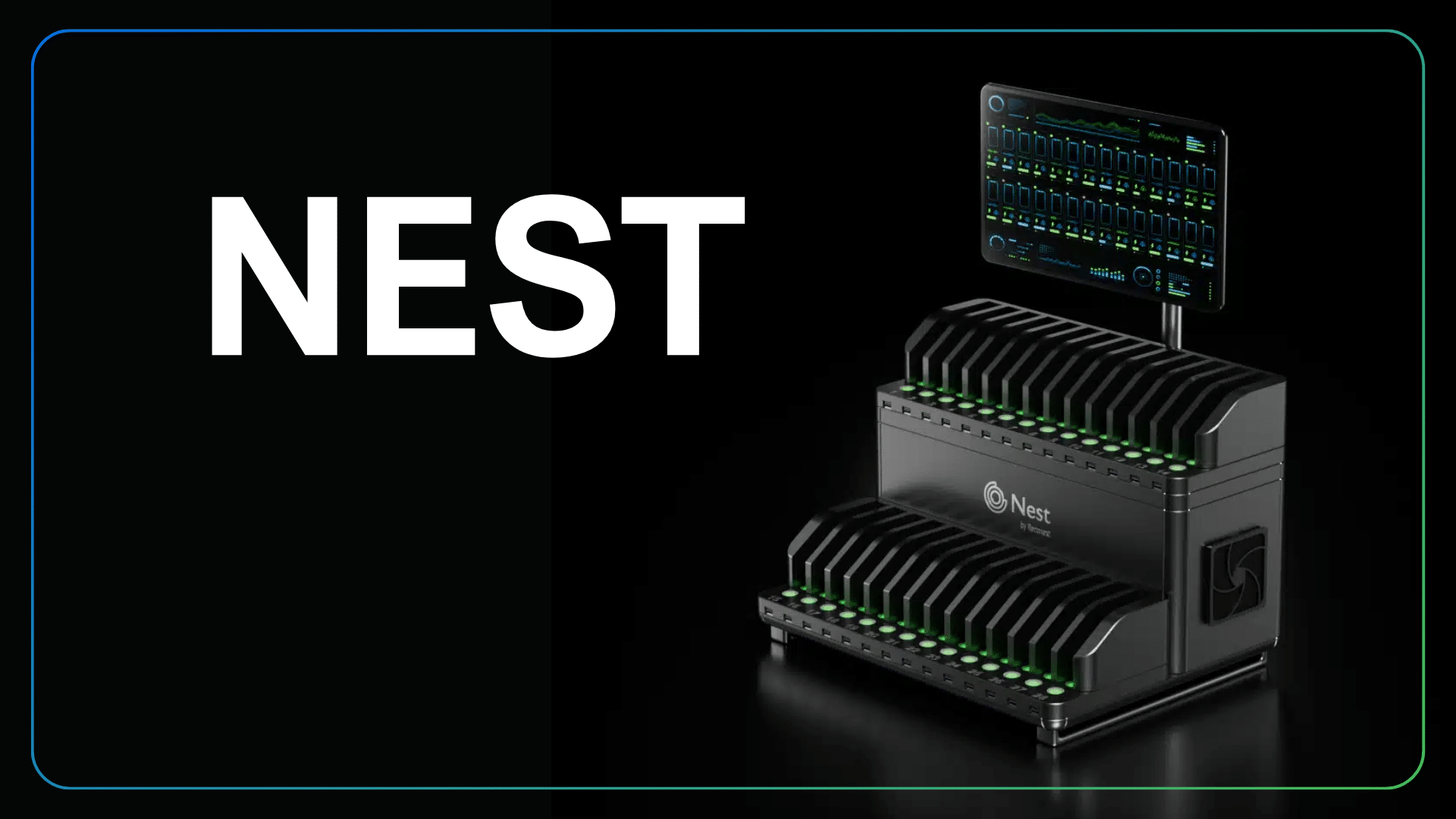
Nest is a 28-port initialization platform. An operator connects a device using the cable it takes, micro-USB, USB-C, or Lightning, then leaves it alone.
Nest recognizes what it has been handed and runs the sequence that model requires, charging the battery, erasing it, and bringing its software current. A tri-color LED tracks progress at each port, and the operator returns when it turns green.
Erasure is the step with the least tolerance for error. Nest pairs best-in-class wipe software with the deletion standard each manufacturer specifies for its own hardware, verifies the result before the device advances, and logs that confirmation against the unit’s IMEI. Every wipe can be evidenced individually rather than vouched for in bulk.
Every port runs on its own clock. A handset waiting on charge does not hold up the one beside it that needs only an OS update, and iOS and Android units initialize alongside each other.
Prepared devices move straight to automated functional testing with the test software already loaded, so testing begins on arrival rather than after a setup step.
Operational Impact
Charging is the slowest part of prep, and Nest cuts up to four times off it. Average initialization runs to roughly fifteen minutes per device, erasure and OS update included.
The gain compounds down the line. One operator covers two Nest stations, and those two stations keep ten Revolution testers supplied.
The Record Every Device Carries
Every run is logged against the device’s IMEI, capturing its battery and software state before and after along with confirmation that erasure completed.
Revolution reads that record instead of re-establishing what Nest has already determined. The same data reaches grading, and it is still there months later when someone needs to answer a question about one specific unit. Because every site runs the same sequence, a record from one facility means the same thing as a record from another.
Practical Automation, Applied Where It Counts
Nest is Reconext’s own build, so the sequence is ours to change rather than a vendor’s to license. Thresholds, erasure standards, and OS targets are defined per program, and a change reaches every station at once instead of machine by machine.
If your returns program depends on devices arriving at test in a known state, connect with our team.


