Most businesses experience huge losses from data breaches related to improper ITAD processes. According to the 2025 Data Breach Investigations Report, the average cost of these breaches in the US hit $10.22 million in 2025.
End-of-life devices are the primary targets of these data breaches because they often contain unmonitored residual data. This especially happens when there is no secure chain of custody in place. Organizations rely on secure ITAD services to avoid breaches.
This article outlines what a secure ITAD process should look like and what you should consider when choosing a partner.
Key Takeaways
- A secure ITAD process should include NIST-aligned data sanitization, with devices sorted by media type, data sensitivity, and whether reuse or destruction is appropriate.
- This process should also maintain a documented chain of custody with serialized tracking, monitored logistics, and final reporting that proves how each asset was handled and disposed of.
What Is Secure ITAD

Most organizations mistake ITAD partners for recyclers. While responsible recycling is a common ITAD practice, it is considered the last resort in asset disposition. This helps reduce landfill waste when reuse is still viable.
Secure ITAD is a controlled process. Every task in the process prioritizes data destruction, asset traceability, and regulatory compliance. That control helps maintain data security throughout disposition.
Deleting files and restoring factory settings on storage devices does not count as a secure method of protecting sensitive data. If bad actors access these devices, they can use advanced retrieval and recovery techniques to access the data.
IT asset disposition vendors that care about security stick to the recommended data erasure methods as outlined by the NIST SP 800-88 Rev. 2 standards: clearing, purging, and destroying. According to these standards, a secure ITAD sanitization process selects one of these three levels, depending on the type of device and the data it contains.
In addition to sanitization, a secure IT asset disposition process ensures a secure chain of custody and compliance documentation. Put simply, you need to vet who handles retired assets and obtain certificates confirming they were destroyed properly.
The Secure ITAD Process
A secure ITAD process starts with policy. Implementing this policy should guide the allocation of resources, define end-of-life thresholds, and the actual disposition approach. This foundation is essential before devices ever leave your control.
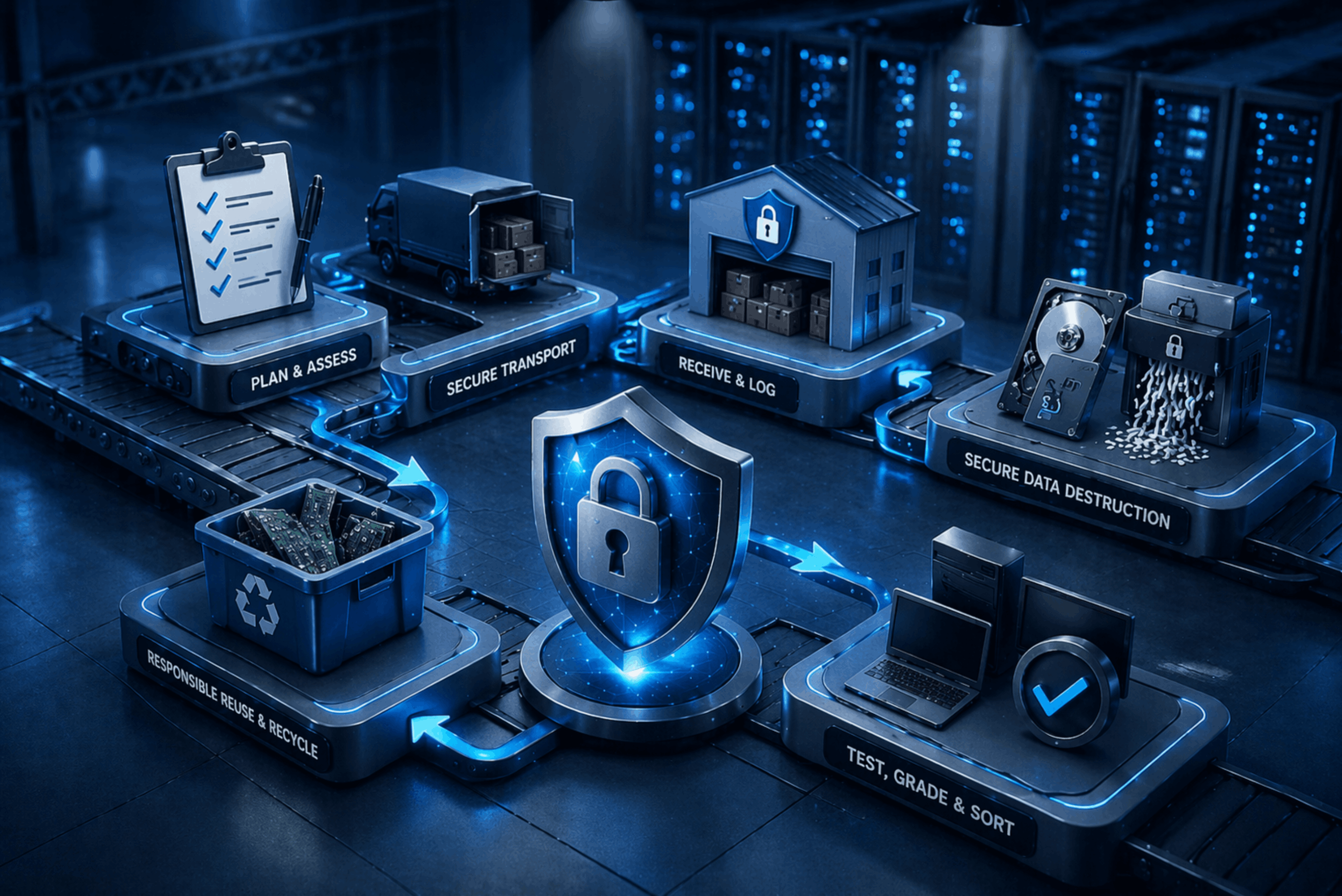
1. Secure Collection and Logistics
Most IT assets get misplaced, stolen, or diverted to secondary and unapproved markets during the transfer. Many organizations also store old electronics on-premises, which adds to the risk of misuse and a broken chain of custody.
The same risks apply when collection and logistics are not monitored. If you want to avoid these risks, you need serialized asset lists, tamper-proof seals, and lockable collection bins. Always request a documented chain of custody to know what happens when those devices leave your premises.
You should also confirm their arrival at the receiving facility. Only then will you have secured the first and most critical step of IT asset disposition.
2. Processing and Data Destruction
Once the IT assets begin the disposition process, data-bearing devices must be processed before the actual sanitization can occur.
During processing, the ITAD technician will sort devices and classify them according to the NIST sanitization guidelines. This includes sorting based on device type, level of data sensitivity stored in them, and whether remarketing is appropriate.
Data destruction is a critical component of a secure ITAD process. Media designated for certified data destruction should not follow the same path as devices prepared for reuse. It is risky to simply clear data from hard drives intended for resale and assume that sensitive information cannot be recovered. This is why it’s important to work with NIST-compliant vendors who follow verified ITAD best practices. Doing so helps reduce the risk of compliance failures and potential fines.
Keep in mind that secure data destruction comes at a cost. If a piece of IT equipment is fully destroyed, its resale value drops. It protects your data from bad actors, but it makes it impossible to resell the device. This is why it’s recommended to destroy as a last resort.
3. Asset Tracking and Reporting
Asset tracking supports secure collection and logistics throughout the ITAD process. When you first commission devices like laptops, you set up a system to track them. The same approach is what you need when they become obsolete, because it can enhance reporting accuracy.
The best tracking should start at the beginning of the asset lifecycle. Here, each device should be assigned a unique identifier that represents it.
These unique IDs help during chain-of-custody audits. They also make final certificates easier to verify.
Reporting is an essential part of a secure ITAD process. The vendor you work with should be able to outline the disposal method they used in the certificate of deconstruction. While this certificate is essential for you, it also provides legal proof of compliance. This is what auditors are looking for when they come knocking on your office door.
On-Site vs. Off-Site ITAD: Which Is Right for You?

When planning your ITAD strategy, you will also have to decide between working with an on-site or off-site partner. Both approaches have their pros and cons, meaning the method you choose has to depend on what is a priority for you.
The benefits of on-site ITAD include full control, particularly for industries or sectors with too much sensitive data.
However, it also means you will add headcount, allocate resources, and deal with all the logistical commitments involved. This can quickly affect your productivity, especially if you lack the bandwidth to support it.
On the other hand, off-site ITAD relieves you of the burden of environmental responsibility and ensures disposal by turning it over to a third party. While it might be more expensive and a bit out of your control, it is a better option for most companies.
Most off-site ITAD vendors are certified and ethical, which makes them trustworthy. That said, always ensure your off-site vendor is certified by bodies like NAID AAA and the rest.
How to Choose an ITAD Vendor
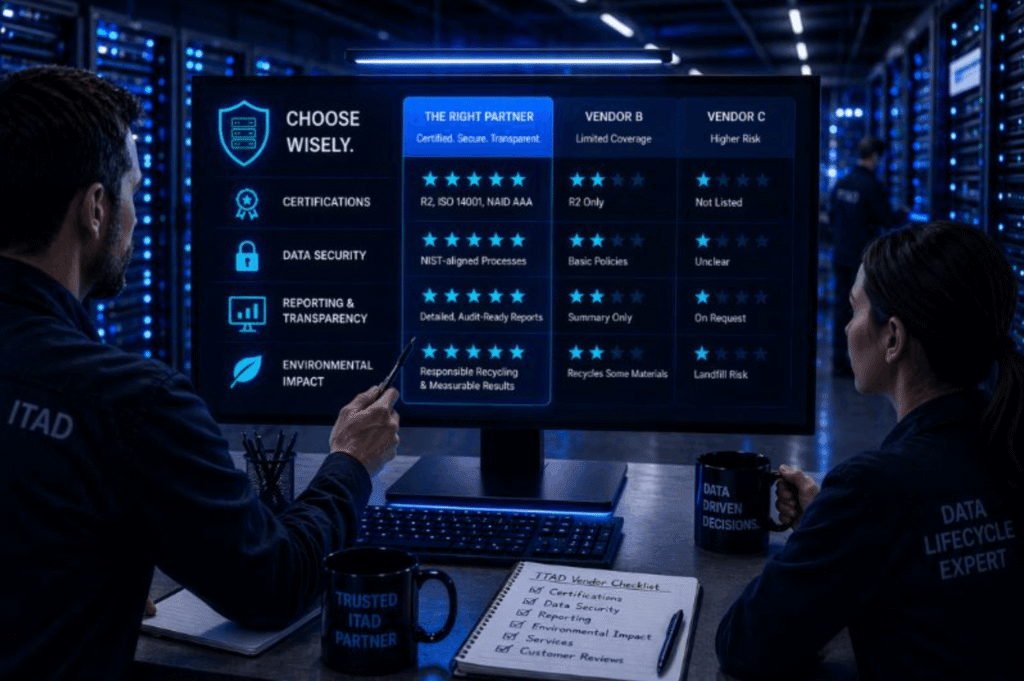
When evaluating vendors, rely on proof and not promises. Use the following as a quick checklist to narrow down easily:
- Ask whether the provider follows NIST standards and request documented evidence showing how those sanitization methods are actually carried out.
- Confirm that the vendor maintains a complete chain of custody record from pickup through final disposition.
- Any certifications should be verified directly with the issuing bodies rather than accepted at face value.
- You should also ask for serialized tracking, detailed reporting, and a clear explanation of value recovery steps.
If a vendor cannot answer these questions clearly, treat that as a red flag.
Secure Your ITAD with Reconext
Data security starts with you, but it should extend to the ITAD vendor you work with. Reconext understands the importance of data security, whether that’s during recycling or remarketing retired assets. With decades of experience in the industry, Reconext has the expertise needed to dispose of your devices safely and sustainably. Contact Reconext to plan your next disposal.
FAQs
What does a secure ITAD process include?
A secure ITAD process includes controlled collection, a documented chain of custody, NIST-compliant data sanitization, serialized asset tracking, and final reporting that proves how each device was handled.
What is the safest ITAD method for sensitive data?
Physical destruction is the safest option for highly sensitive data because it prevents reuse. NIST-compliant purging offers strong protection while preserving remarketing potential, making it a practical balance for assets.
Is deleting data enough before recycling IT equipment?
No. Deleting files or formatting drives does not remove the underlying data. Residual information can still be recovered, so these methods do not meet recognized data sanitization standards.
Can ITAD generate revenue instead of cost?
Yes. Remarketing usable devices can offset disposal costs and recover up to half of residual value, depending on asset age, condition, configuration, and market demand.