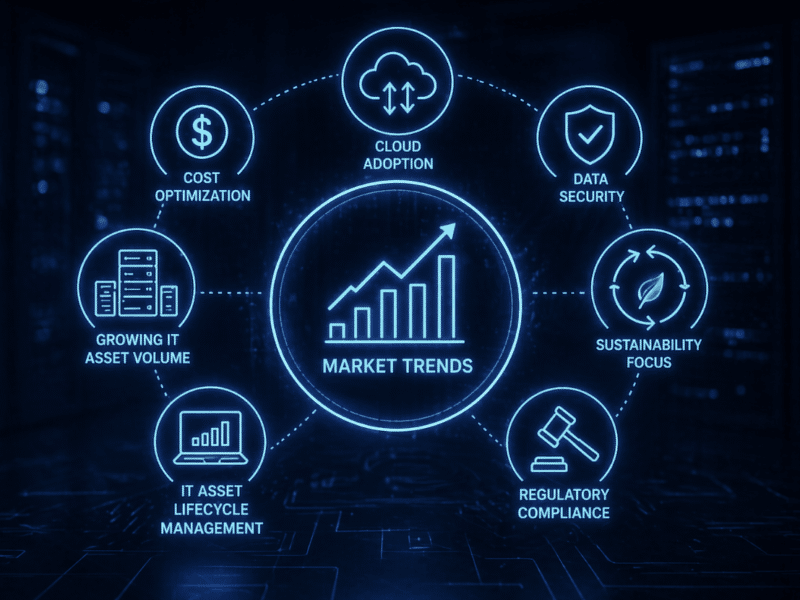
In 2022, the SEC fined Morgan Stanley $35 million after they lost servers containing customers’ PII during ITAD operations. This penalty could have been avoided if they had a clear ITAD SLA with their vendor. The incident highlighted how weaknesses in asset tracking, oversight, and vendor management can create serious compliance and security risks.
An IT asset disposition (ITAD) service level agreement (SLA) helps organizations define exactly how retired assets should be handled throughout the disposal process. For businesses managing sensitive data and large volumes of end-of-life equipment, clear standards around tracking, reporting, and data destruction are critical.
Without those safeguards, compliance gaps, operational failures, and security incidents become far more likely. This article explains what an ITAD SLA is, the key components it should include, and the common mistakes businesses should avoid when evaluating vendor agreements.
Key Takeaway
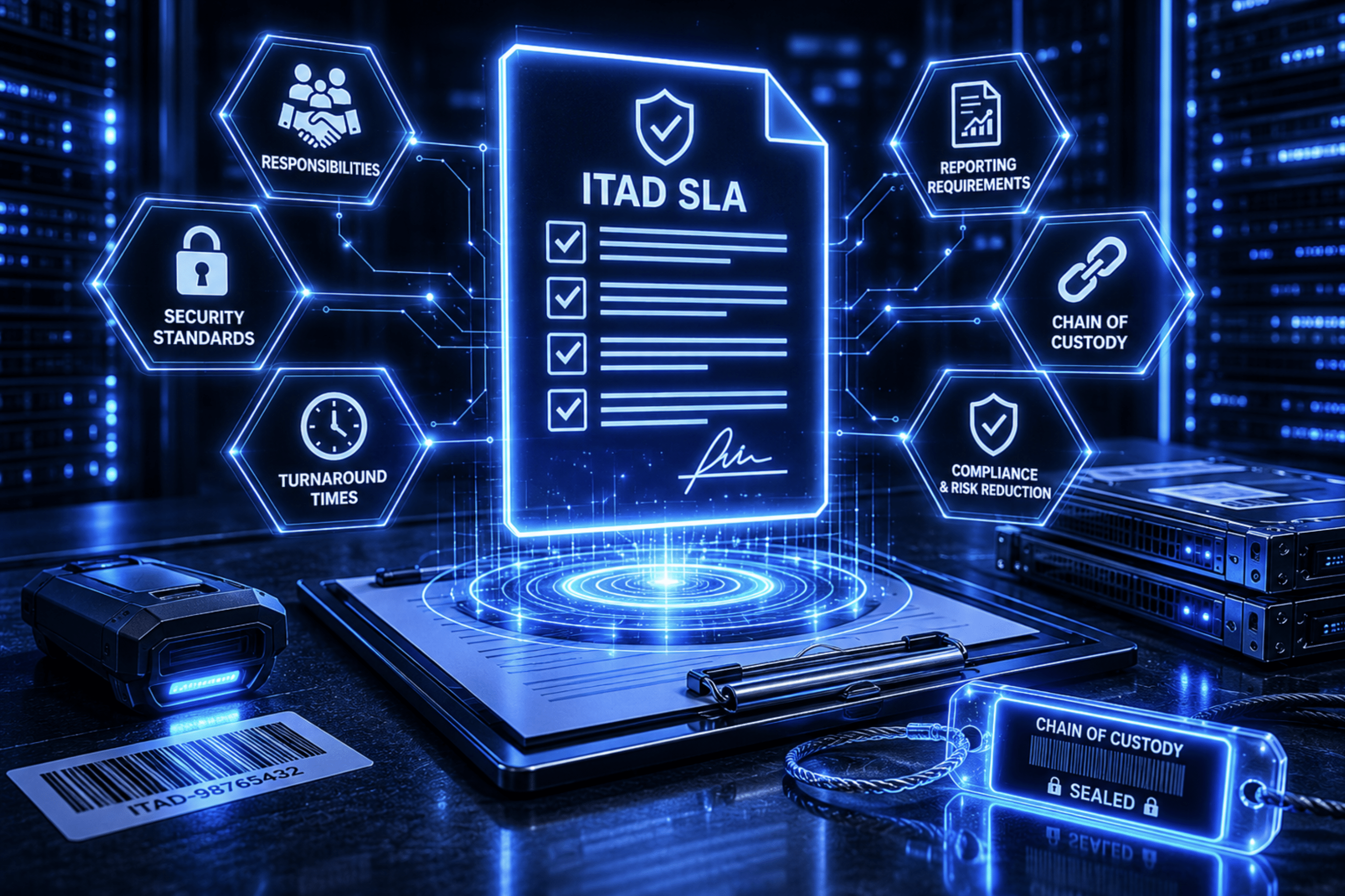
A strong ITAD SLA should clearly define responsibilities, security standards, reporting requirements, turnaround times, and chain-of-custody expectations to reduce operational and compliance risks.
What Is an ITAD SLA?
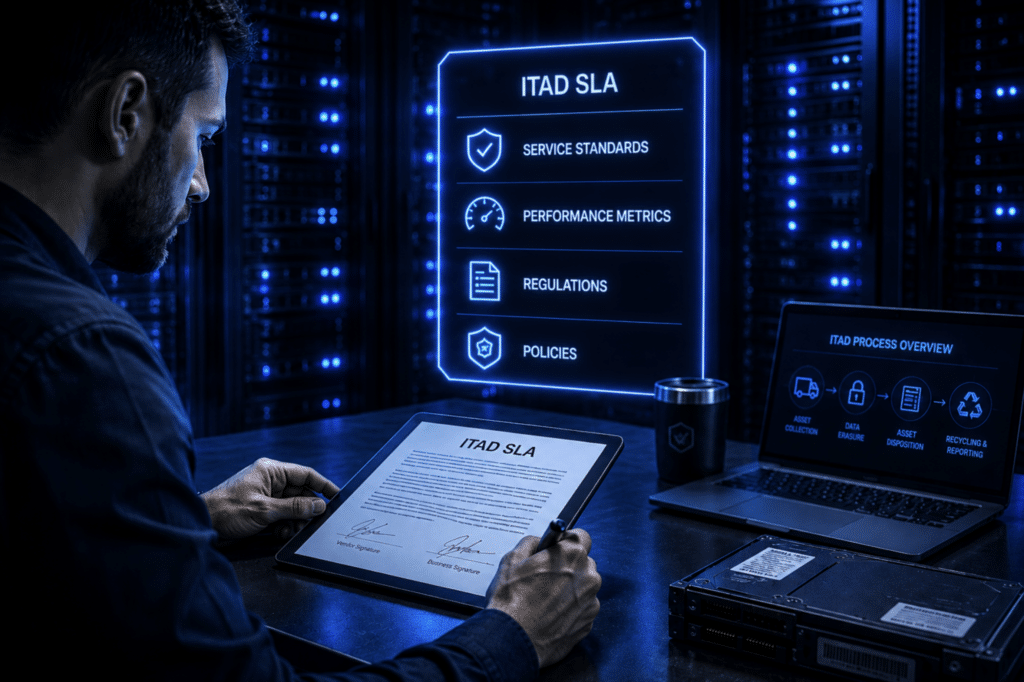
An ITAD SLA is a formal agreement that outlines the operational standards a vendor follows during the ITAD process. It covers the service standards, performance metrics, regulations, and policies that both the vendor and the business abide by. This agreement is jointly drafted by the two parties to ensure fairness.
The primary objective of this agreement is to act as a contract binder. Both parties must sign to indicate their consent. If any party fails to comply with those terms, the other may take legal action.
When drafting the agreement, the business sets requirements and risk tolerances. These include:
- Data destruction standards
- Turnaround time for asset pickup and processing
- Reporting and audit expectations
- Environmental impact and compliance obligations
- Chain-of-custody requirements
The vendor then reviews these requirements and converts them into enforceable SLA terms. They will set realistic metrics, timelines, and other standards to ensure that the business’s goals are achieved.
The Most Important Things To Include in an ITAD SLA

For SLAs to provide better clarity into the ITAD process, they need to include specific clauses and terms. Items such as chain of custody, reporting, timelines, and data destruction standards are mandatory and should be listed first in each IT asset disposition SLA.
Chain of Custody Requirements
A chain of custody is a tracking system that documents where a retired asset is during the ITAD process, who is handling it, and the operations it undergoes.
Common chain of custody requirements include:
- Accurate identification: Assets labeled with unique identifiers like serial numbers
- Documented handovers: Paper trail recording changes in custody from one party to another
- Sealed packaging: Packages that prevent tampering with assets
- Secure storage: Assets stored in access-controlled locations
- Vetted handlers: Minimal personnel approved to handle assets
These requirements help prevent security risks arising from poor ITAD logistics.
Data Destruction Standards
Data-bearing assets are typically sanitized early in the ITAD process, immediately after intake and asset verification. This helps prevent unauthorized personnel from handling sensitive data. An SLA should specify which data destruction standards the vendor will use.
Broadly, three primary data sanitization techniques are used across many industries. These are overwriting, purging, or physical destruction. For each method, there are standards that define when and how it should be used.
Most businesses adhere to NIST guidelines for media sanitization because they are recognized by regulatory bodies such as HIPAA. Therefore, they require the vendor to follow specific standards to ensure the data is destroyed.
Certification requirements should also be included alongside sanitization standards. At a minimum, vendors should provide a certificate of destruction (CoD) to verify that data was permanently destroyed.
Reporting
An SLA without reporting is non-verifiable. The reporting acts as the evidence that the terms in it were met. Without it, auditors are stuck with unverifiable claims.
Reporting focuses on the finer details of the ITAD process. If an SLA states the disposition will take two weeks, there must be a report showing it took two weeks or less. If it took longer, there needs to be a note explaining why.
The ITAD vendor should provide the following types of reports:
- Intake and inventory reconciliation report: This report documents the assets received versus the initial expectations
- Chain of custody report: A report documenting custody transitions during the disposal process
- Data sanitization report: Proof of adherence to recommended sanitization methods, followed by a certificate of deconstruction
- Disposition report: This reports the outcome of the ITAD process
- Incidence report: Says if there were any unexpected deviations from the agreed SLAs
- Environmental and ESG report: While not mandatory, some vendors provide reports detailing how they helped achieve sustainability goals
These reports provide businesses insights into their vendors’ operational efficiency, helping them review their ITAD strategy and identify growth opportunities.
Service Timelines and Response Expectations
Time is an important factor in ITAD because value, risk, and compliance all decay or escalate over time. For instance, when devices are left unattended for extended periods, theft or unauthorized access can arise.
SLAs need to set a reasonable timeline for the whole process. This timeline needs to be broken down at the lowest interval, say, one business day, to have full visibility of what happens during the process.
Timelines should be designated using time ranges to accommodate unexpected incidents. In addition, the timelines clause should include a remedy sub-clause to help resolve issues that may have caused delays.
Questions Businesses Should Ask Before Signing an ITAD SLA

Although SLAs are drafted agreements between two parties, businesses should not blindly sign them when presented by an ITAD vendor. There are still a few things they should inquire about to ensure they are not victims of SLA breaches:
- How are assets tracked during transportation?
- What reporting is included after processing?
- How quickly are certificates provided?
- What happens if assets are lost or damaged?
Most of these questions might be covered in the SLA, but asking them helps get more clarity on operating procedures. They are not meant to discredit or vet the service provider afresh, but to get a deeper perspective on the SLA.
Common Mistakes Businesses Should Avoid
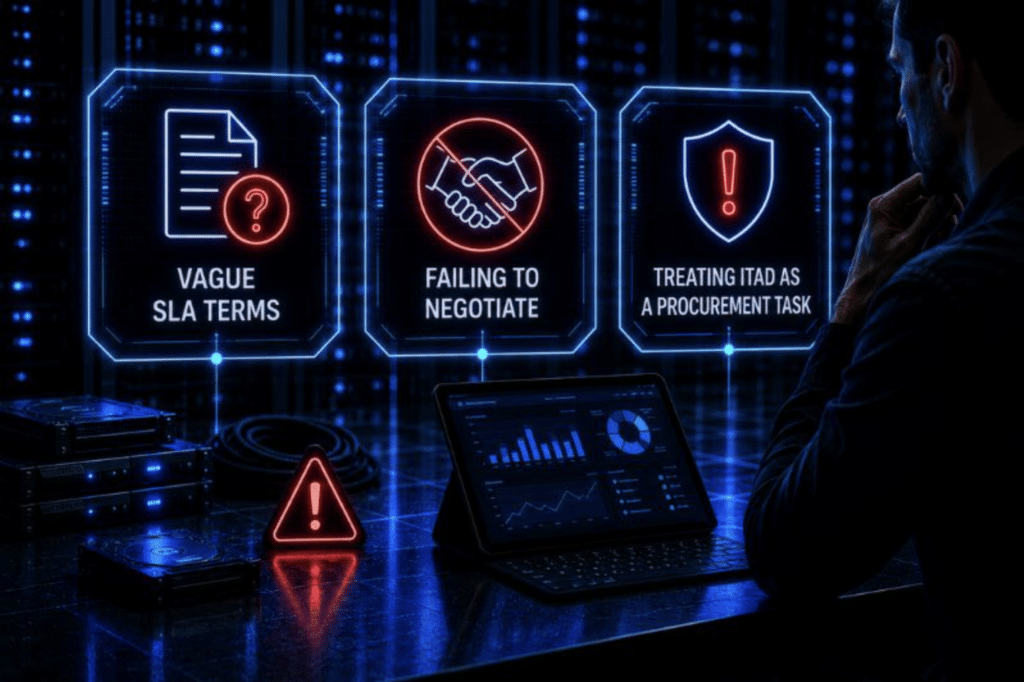
Signing an SLA signals that a vendor and a business have entered into a contract. That means liabilities could emerge if something were missed during the SLA creation. This mostly happens when businesses overlook certain aspects.
The first thing most businesses overlook is accepting vague SLA terms. If the clauses are not detailed with objections, the risk of improper ITAD is imminent. Vagueness can also be hidden in technical jargon. The best SLAs use clear, straightforward language.
Another common mistake is failing to negotiate SLA terms with vendors. In some cases, ITAD providers expect businesses to negotiate their proposed terms. The timelines may be too loose, the value recovery may be too low, or the resale program may not align with your expectations. Businesses can provide proposed alternatives or additions that fit them.
Many businesses erroneously view ITAD as a casual procurement task rather than a high-stakes risk-governance exercise. This is why ITAD providers work hard to educate businesses about the benefits of a secure asset-disposition strategy.
Conclusion
An ITAD SLA gives businesses clearer visibility into how retired assets are handled from pickup to final disposition. When expectations around custody, reporting, or data destruction are poorly defined, compliance gaps and security risks become much harder to control.
Businesses should review each SLA carefully and ensure the agreement reflects their operational, regulatory, and security requirements.
A well-defined ITAD SLA is only effective when supported by transparent processes and operational accountability. With 14 years of ITAD experience, Reconext helps organizations strengthen asset disposition programs through secure chain-of-custody controls, detailed reporting, and compliant data destruction.