Not every asset recycling program delivers the same results. Organizations that already recycle their data center equipment know this. Without quality metrics to measure the recycling process, you’re working blindly towards money-saving, data protection, and environmental impact goals.
This discussion outlines the five key performance indicators (KPIs) that define a mature, high-impact IT asset recycling program that meets industry regulations.
Key Takeaway
Success in data center IT asset recycling comes from control and visibility. By tracking recovery rates, data security, and carbon savings, recycling becomes less of an afterthought and more of a performance metric that communicates how successful you are with asset management.
Why measurement matters
If recycling were only about doing the right thing, there wouldn’t be any need to track its success. But doing it efficiently, without data breaches, and in compliance with regulations does matter, because it speaks to how you can be trusted with sensitive information and whether your business is environmentally responsible.
Enterprises are facing growing pressure to document ESG outcomes and data handling practices, proving they are:
- Diverting as much e-waste as possible from landfills.
- Establishing safe and fair practices and working conditions in their environment.
- Transparent when documenting IT inventory tracking, outdated IT equipment, and data center decommissioning.
Plainly stated, visibility in IT asset recycling is about risk management as much as it is about corporate sustainability goals. Accomplishing success in electronic recycling depends on choosing a vendor that understands these goals and can guarantee real-time tracking across every stage. For full data center equipment recycling, Reconext offers services in the Americas, Asia, and Europe.
The 5 KPIs that define effective IT asset recycling

1. Recovery rate
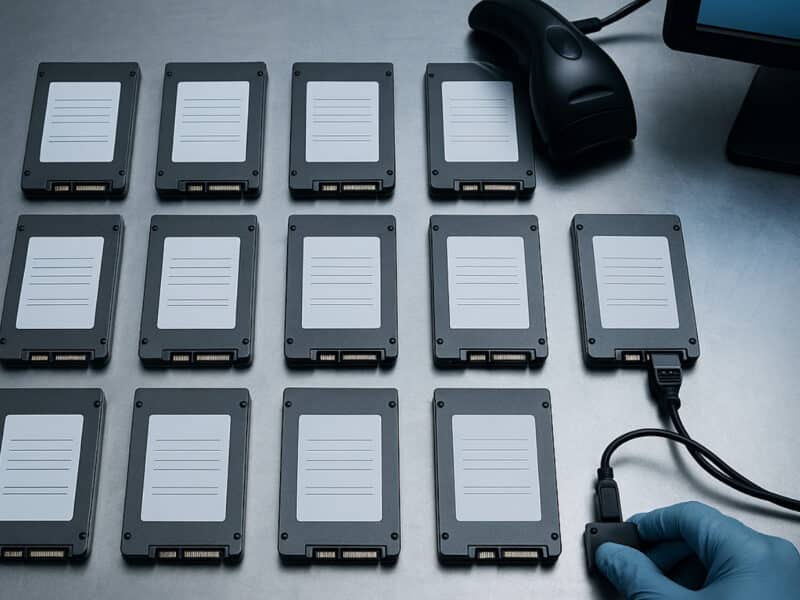
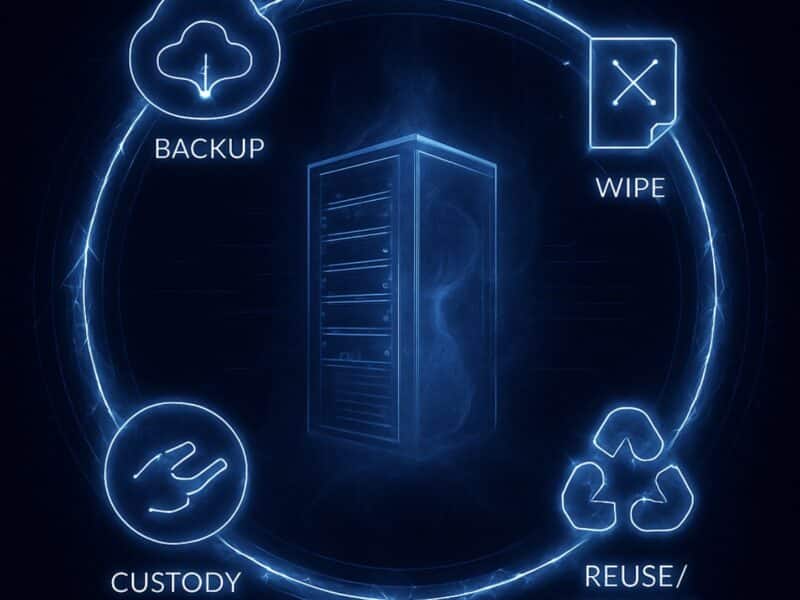
One of the clearest indicators of the success of your IT asset recycling process is how many of your retired IT assets avoid destruction and find a second life.
- Measure: The percentage of retired IT assets that are reused or resold instead of destroyed.
- Objective: Measuring recovery rates shows how effectively your organization turns retired assets into reclaimed value rather than e-waste.
- Performance insight: IT equipment demonstrates the highest recovery potential at 80-90% recovery in the first year. Furthermore, companies that begin planning asset recovery 6-12 months before retirement of equipment are more likely to achieve these rates. [1]
2. Data security compliance
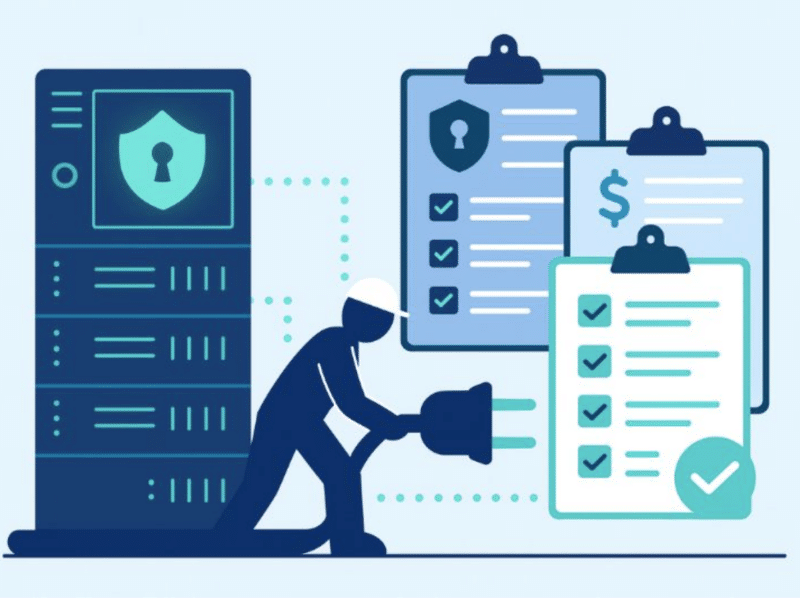
One of the biggest data center IT asset recycling myths is that verification certificates are optional – as long as the vendor can be trusted. This thinking erodes the importance of a critical piece of evidence proving secure recycling practices. Tracking certificates as a KPI shows you’re serious about securely erasing data.
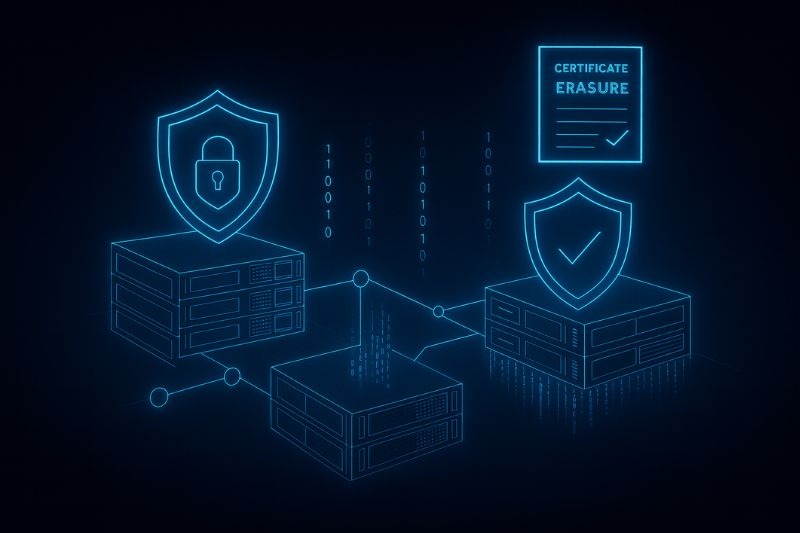
- Measure: The percentage of data-bearing devices that received verified Certificates of Destruction or Erasure.
- Objective: To prove full compliance with the protection of sensitive data and show the elimination of potential data leaks or breaches.
- Compliance evidence: Serialized certificates linked to device IDs – not batch reports. This secures a full audit trail for all devices from handover to certification.
3. Carbon savings

Carbon savings aren’t always first on the asset disposal list, but they should be measured because they tell an interesting story about your commitment to reducing the energy-intensive practice of raw material extraction.
- Measure: The estimated emissions avoided through reuse and component recovery.
- Objective: To align data center operations with corporate sustainability goals and demonstrate the tangible effect of proper sustainable practices.
- Tracking method: Use lifecycle assessment (LCA) data or verified calculators to quantify the emissions avoided by recycling rather than new production.
According to one report, each ton of e-waste diverted from landfills saves up to 3 t CO2e. This positions organizations to meet circular economy pledges and win green-procurement contracts.
4. Cycle efficiency
Time is a critical factor in recycling and secure disposal. Long turnaround times increase the risk of data exposure and cost.
- Measure: Average number of days taken to process retired IT assets from collection to certified destruction or resale.
- Objective: The reduction of idle asset time, lower disposal costs, and tracking and improving the predictability of e-waste disposal.
- Tip: Sources set this metric at between 10-20 days, which excludes asset preparation time of 1-2 weeks. However, there are various factors that affect this metric, from the type of asset to the destruction method.
5. Documentation accuracy
With documented evidence, even the safest recycling process fails compliance tests. Inaccurate or insufficient documentation affects audit outcomes, resale credibility, and ESG verification.
- Measure: The percentage of devices that have complete disposition records (including serial numbers, certification, and recycler manifests).
- Objective: The achievement of 100% traceability of all IT data-bearing assets and maintaining compliance standards.
- Compliance evidence: Automated tracking systems that log every asset’s journey, and manage detailed reporting of audits, asset lifecycle, resale validation, and secure destruction.
How to use these metrics to improve your current program
Measurement is only valuable if it leads towards action. By evaluating your current program against these steps, you’ll be in a position to draw up an actionable plan that helps you meet your asset management goals.
- Benchmark your current metrics against the five KPIs we’ve listed. Identify where the current process falls short, or where bottlenecks occur.
- Automate reporting and link recycling data to ESG or IT asset management platforms.
- Use the insights to refine your vendor SLAs and correct internal processes.
Expert advice: A comprehensive asset management platform should simplify the ITAD experience, provide sustainability reporting, carbon footprint reporting, and auditing services. Demo the Reconext platform with a member of the team.
The bigger picture: Revealing trends through tracking
As your data center recycling program matures, the focus changes from compliance to overall organizational performance. Tracking key metrics over time reveals trends or patterns that ultimately define the sustainability of your IT asset disposition strategy.
Each certificate, timestamp, and recovery report becomes one piece of information that tells a bigger story. This story is about whether you’re actively committed to proper disposal and environmental regulations, or falling back on reactive disposal. Each trend reveals how successful your program is by:
- Exposing small inefficiencies that drain value. This can be repeated delays or declining resale rates for certain equipment. Spotting these gaps early gives you the power to increase revenue streams.
- Month-on-month tracking helps you to validate the investments you’ve made in your program. This can be a new vendor, an automated inventory tracking system, or an expansion of e-waste recycling. It provides hard evidence for the initiatives you implement.
- Patterns inform future procurement and design. For instance, if older servers retain a high asset recovery value, that insight can affect future strategies.
Insider Insight: At this year’s Open Compute Project (OCP) Global Summit, Reconext CEO Shahriyar Rahmati spoke about how hardware built to last a decade now ages out in two years. In this industry insight, he reveals how every recovery process falls or stands on visibility.
Conclusion
Going through the process of data center IT asset recycling without measuring its effectiveness doesn’t give you anything concrete from which to make improvement decisions. Even just five KPIs can provide clear insight and direction into the success of your program. Clear metrics are the pathway to meeting compliance requirements and your commitment to a circular economy. With the input of an innovation-driven vendor, like Reconext, you can turn sustainability into a continuous revenue stream. Start solving your toughest challenges now. Contact Reconext.
FAQS
IT asset recycling is one stage of ITAD focusing on the responsible processing of obsolete equipment. IT asset disposition services, on the other hand, is the broader process that includes secure data destruction, asset recovery, and certified recycling.
Start by tracking every retired IT asset by serial number, and categorize the outcomes: Reused, resold, or recycled. Divide the number of reused assets by the number of resold assets to determine your recovery rate.
Use only certified data destruction methods such as NIST 800-88 software wiping, cryptographic erase, or physical destruction where reuse isn’t an option. Each method must be verified with serialized certificates.
Reuse conserves valuable materials and reduces energy-intensive manufacturing. This, in turn, results in lower carbon emissions and a greater degree of environmental responsibility than recycling alone.
The best approach is to automate IT equipment tracking, standardize handoffs, and work with vendors that can guarantee secure ITAD services from pickup to final certification.
Reconext is focused on secure data destruction, asset remarketing, and environmental compliance as top priorities. The processes are tracked by real-time dashboards and verifiable audit trails.