Shredders are loud. Certificates are quiet. But when you’re retiring a data center, it’s the quiet proof that matters most. Recycling isn’t a dramatic finale of sparks and steel; it’s the deliberate work of separating what can be reused, what must be erased, and what finally gets melted down.
Key Takeaway
Reuse first, recycle second. Secure wiping turns retired assets into inventory; certified recycling handles the rest.
Why Recycling Starts with Reuse

Every decommissioned rack represents two possible stories: one where everything is written off as waste, and one where equipment is restored to use. The second story is almost always the smarter one.
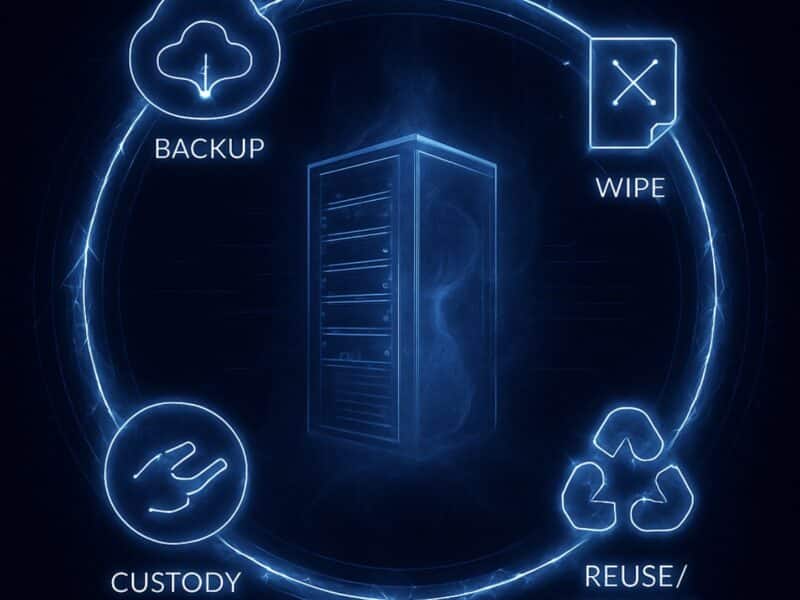
The hierarchy is straightforward: redeploy, resell, recycle. Reuse comes first because it delivers the highest return on both value and impact. A drive wiped to NIST standards can be redeployed internally or remarketed. A server resold with caddies, rails, and power supplies intact often returns multiples of its scrap value. Even optics and PDUs retain demand if they’re catalogued and preserved.
The environmental upside is just as clear: extending device life avoids new manufacturing, reduces shipments, and lowers e-waste. Regulators and customers expect those results to show up in ESG disclosures and recycling manifests.
Recycling is the endpoint for true end-of-life equipment. The most resilient programs — financially, operationally, and reputationally — are built on a reuse-first foundation.
Next: widen the lens. “Data center equipment” is the whole environment, not just servers.
What Counts as Data Center Equipment
Limiting “recycling” to racks of blades misses half the story. A full Data center decommissioning program treats the entire facility as in-scope: servers and storage arrays; networking gear (switches, routers, optics/SFPs); infrastructure like racks, cabling, and PDUs; UPS systems and battery banks; and all data-bearing media — HDDs, SSDs, and legacy tapes.
Overlooking these categories creates blind spots that unravel audits: a box of tapes forgotten in a storeroom, a mislabeled UPS battery in transit, or a pile of optics that could have been remarketed but ended up in scrap. Treat recycling as a facility-wide program so nothing slips through.
Next: once scope is clear, make sure every data-bearing device leaves with its information truly gone.
Sanitization Standards in Plain Language

Data is the usual failure point. One mislabeled drive or a half-complete wipe can undo everything else, which is why sanitization is the non-negotiable core of any recycling plan.
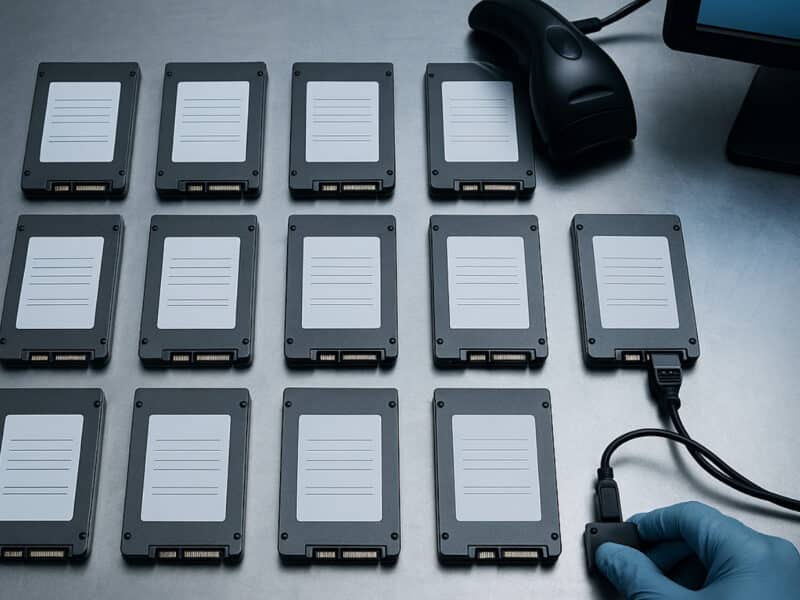
The playbook is established. NIST SP 800-88 defines software-based methods that overwrite data until it’s irretrievable; crypto-erase wipes supported drives by destroying keys; degaussing clears magnetic media; and when wiping fails or isn’t supported, physical destruction is the last resort. Whatever the method, each device needs a serialized certificate of erasure or destruction. That’s the evidence auditors and regulators expect. Without it, even the best technical wipe is just a claim.
Next: with data proven irretrievable, decide what to resell, what to redeploy, and what to recycle.
Planning the Disposition Mix (Resell, Redeploy, Recycle)
Every asset has more than one possible outcome. The job is to decide quickly, document cleanly, and extract maximum value without creating compliance gaps.
Resell when equipment is within a few generations of demand and passes functional tests. Whole-unit resale works best for newer gear; older models may yield more when parted out. Accessories — rails, caddies, optics, PSUs — significantly lift recovery.
Redeploy internally if models are still compatible with your environment. Drives wiped to NIST standards are common candidates for rotation back into service.
Recycle true end-of-life assets, damaged equipment, and failed-wipe media through certified downstream partners (R2/e-Stewards) to ensure hazardous materials are handled properly and valuable materials are reclaimed responsibly.
Match each device to its path based on model, generation, condition, and market demand. A current-gen switch may have remarketing value; a ten-year-old UPS battery belongs in the recycling stream.
Next: some streams carry outsized risk and need their own playbook.
Handling Special Streams Safely (Media, Batteries, Tapes)
Some assets look small next to racks of servers but create the biggest problems when mishandled. Batteries aren’t just heavy; lithium-ion and lead-acid units are hazardous cargo with strict transport rules. Labels, isolation, and trained carriers aren’t optional.
Legacy media is similar. Tapes and cartridges linger long after their systems are gone; they still carry sensitive data and can’t be shipped casually. Wipe, degauss, or destroy them — with evidence logged like any hard drive. Even small components matter: optics and PSUs are high-value and easily lost if tossed into the wrong bin.
Special streams often cause the worst compliance gaps and value leaks. Treat them with the same discipline as your primary assets.
Next: execute the handoff from cage to truck without breaking value or chain of custody.
Making the Logistics Work (De-rack to Transport)

A huge part of recycling happens on the floor: powering down, pulling gear from racks, and moving it out. Done carelessly, this is where resale value gets smashed and custody records fray.
Sequence matters. Power down in order, de-rack methodically to protect chassis and components, and package appropriately so reusable assets don’t get damaged. Keep sensitive streams (failed drives, tapes, batteries) segregated and clearly marked. For transport, use GPS-tracked, insured carriers and record every handoff. The point isn’t just moving hardware from A to B, it’s preserving the value of what can be reused and proving custody for everything else.
Next: that proof needs to show up in the reporting packet your auditors and ESG teams will expect.
Proof and Reporting for Compliance and ESG

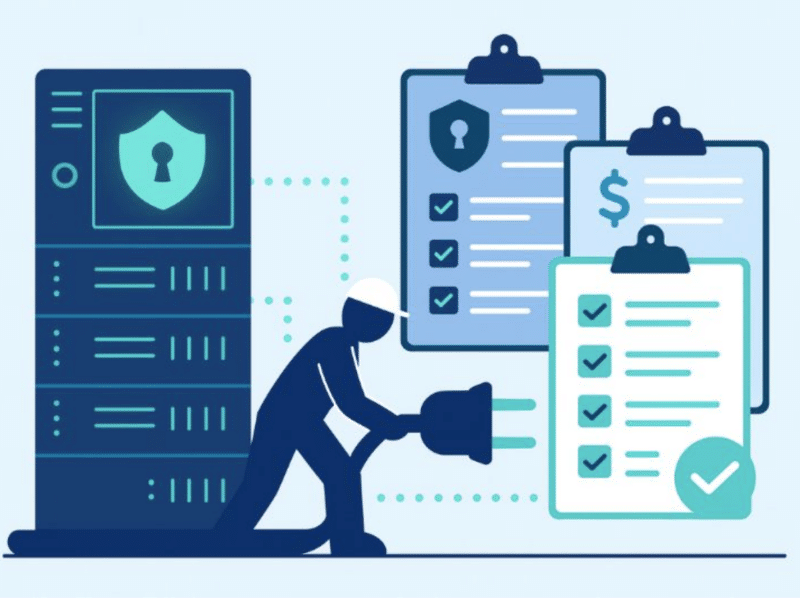
Recycling without paperwork is disposal by another name. A credible report reconciles every serial against internal records, attaches a certificate of erasure or destruction to every data-bearing device, and includes manifests from certified recyclers. For ESG, the same packet should show how much was reused versus recycled and, where available, Scope 3 estimates tied to avoided manufacturing or landfill impact.
This is the record that protects against fines, satisfies regulators, and backs up sustainability claims.
Next: whether you build that record in-house or through a provider comes down to scale, risk, and resources.
DIY vs. Professional Partner: Which Fits Your Situation?
Not every project needs a vendor. A single-site, low-sensitivity batch with generous timelines can be handled internally if you have disciplined inventory controls and someone who genuinely understands sanitization and reporting. It will be slower and remarketing reach will be limited, but vendor fees stay off the books.
Most projects aren’t that simple. Multi-site scope, tight deadlines, and customer or financial data tilt the decision toward a professional partner: audited wipe processes, remarketing networks, GPS-tracked logistics, and the kind of per-device certificates auditors won’t argue with. DIY reduces fees but increases risk and cycle time; a partner adds fees but usually offsets them with recovery and compliance coverage. It’s a risk-allocation decision.
Next: whichever route you take, avoid the predictable pitfalls.
Common Mistakes to Avoid
Factory resets treated as “good enough.” Mixing wiped and unwiped drives in the same shipment. Leaving caddies, rails, optics, and PSUs behind — the very parts that lift recovery. Incomplete manifests that turn clean execution into an audit headache. None of this is glamorous, and all of it is avoidable with clear processes, disciplined execution, and proof that stands up.
Next: if you bring in help, choose a partner that aligns with a reuse-first program and not a shred-first default.
Choosing a Partner You Can Trust
The wrong vendor will shred everything and hand you a generic certificate. The right one will prove every step and maximize what you get back.
What to look for is simple: a reuse-first policy, not shred-first. Standards-aligned sanitization with serialized certificates. Remarketing channels that can move servers, drives, and even components like optics into secondary markets. Certified downstream recyclers — R2 or e-Stewards — for what can’t be reused. And logistics you can defend: GPS-tracked, insured, and auditable from site to facility.
Ask for sample reports. Check their SLAs. Call references. A trustworthy partner won’t flinch at the request, they’ll welcome it.
With the right approach, recycling stops being a cost center and becomes a way to protect data, recover value, and reduce e-waste in one move.
Next Steps
Data center equipment recycling is an engineering discipline. Reuse comes first: secure wiping and resale wherever possible. Certified recycling handles the rest. Done right, the process protects sensitive data, recovers real value, and keeps e-waste out of the landfill.
Want to know which path fits your project? Let us review your inventory and build a tailored plan.
FAQs
In most cases, yes. Resale revenue plus reduced disposal costs often offset or exceed service fees.
Yes, if they’re wiped to NIST standards, anonymized, and backed by serialized certificates.
Not always. Some teams manage inventory and prep in-house, then bring in a partner for sanitization, resale, or certified recycling.
Relying on weak erasure methods or shipping drives without proof of wiping. Both create compliance risks and lost value.