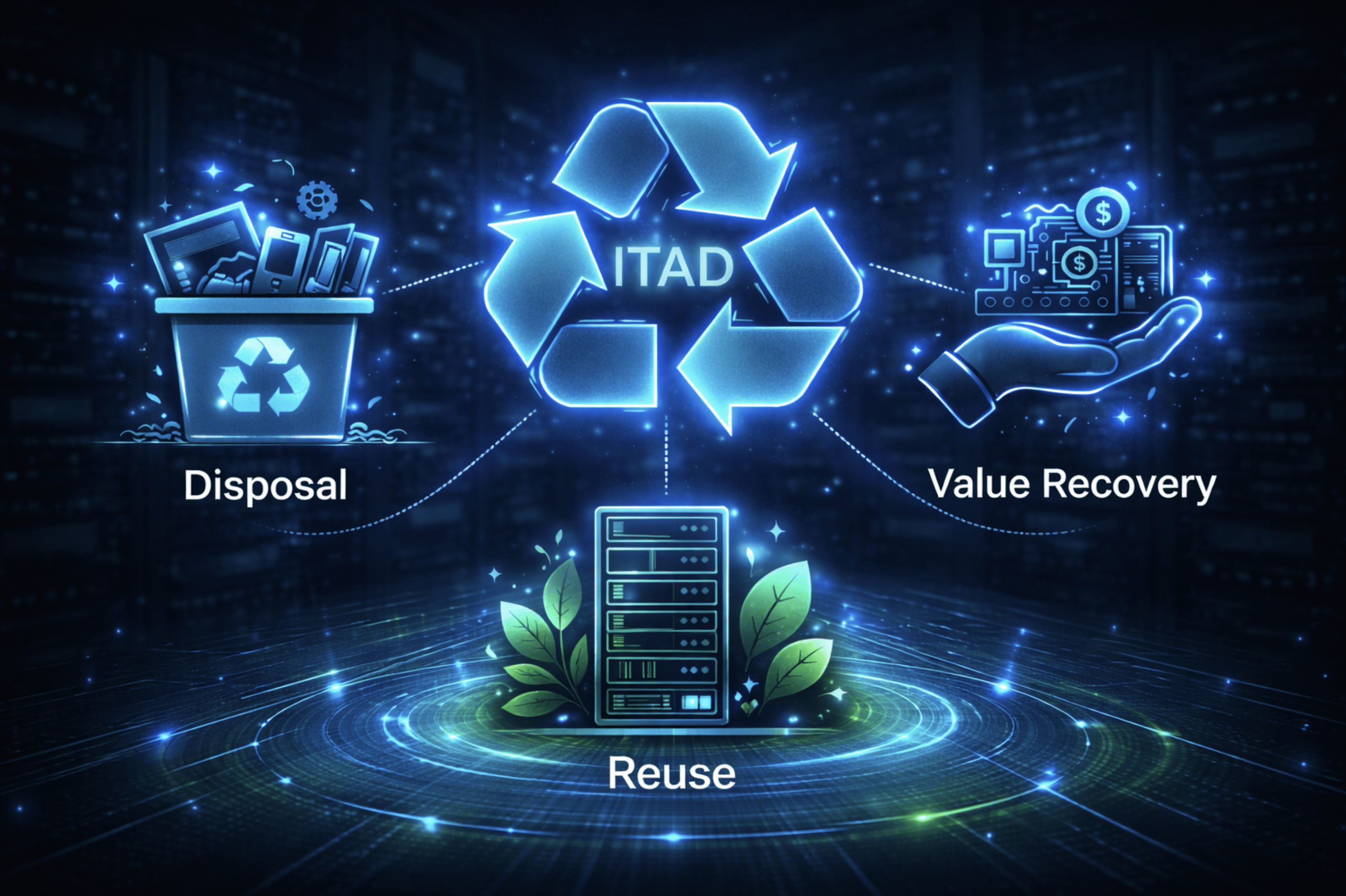
Sustainability in IT asset disposition is often viewed as a simple goal: keep electronic waste out of landfills. In practice, it is much more complex. Every disposition decision can affect data security, value recovery, and environmental outcomes, forcing organizations to balance competing priorities.
For example, physically destroying a device may eliminate security concerns, but it can also eliminate opportunities for reuse or refurbishment. Extending a device’s lifecycle may improve sustainability outcomes, but only if data can be securely removed and the asset remains viable for continued use.
Effective ITAD programs recognize these trade-offs and are designed to balance security, sustainability, and value recovery. This article explores how organizations can achieve that balance while making more informed end-of-life asset decisions.
Key Takeaways
- Sustainable ITAD requires organizations to balance three competing priorities: security, value recovery, and environmental responsibility.
- Extending asset lifecycles through reuse and refurbishment delivers the greatest sustainability benefits by reducing e-waste, lowering demand for new manufacturing, and preserving the value embedded in existing IT equipment.
What Sustainability Really Means in ITAD
In ITAD, sustainability means disposing of retired IT assets in a way that minimizes the carbon footprint and increases asset value. When it’s done right, an ITAD program can achieve both. Yet, most programs are so rigid that they limit device reusability, with the excuse of compromising data security.
Data security remains the primary objective of most ITAD programs. Most vendors automatically destroy data-bearing devices, reducing the value of recovery efforts.
Sustainability encourages organizations to design IT asset management programs around circular-economy principles. These principles dictate that devices should be kept in use for as long as possible.
Redesigning an ITAD program around these principles starts with a structured approach to end-of-life IT asset management, bringing asset lifespans and value recovery to the forefront of strategy.
How the ITAD Chain Reduces Environmental Impact
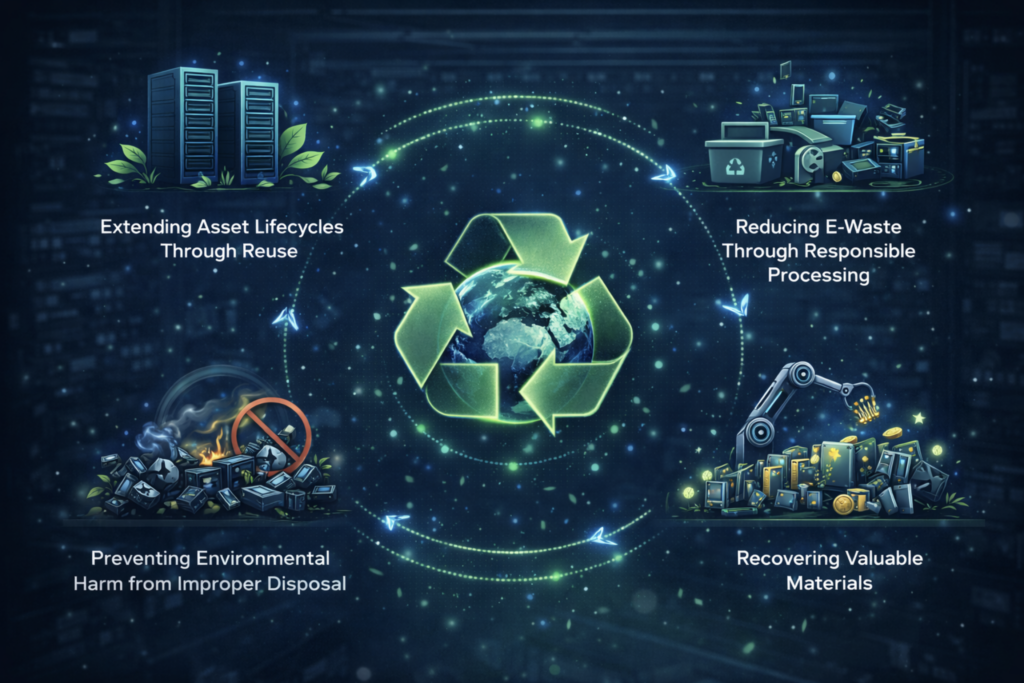
The environmental value of ITAD depends less on disposal itself than on how effectively the chain preserves asset utility through reuse, refurbishment, repair, and material recovery.
Extending Asset Lifecycles Through Reuse
Reuse is a sustainable ITAD practice that encourages the continued use of IT equipment after they have retired. This approach applies only to devices that are still in working condition and do not require significant rebuilding.
Many organizations maintain devices, such as laptops, until the last day of their planned service life, unless an unexpected failure occurs. While they continue to work properly, they are often retired because organizations adopt newer technologies and systems.
Reuse programs refurbish these devices and use them internally or resell them to secondary markets. This, in turn, extends the functional life of IT assets and reduces capital expenditure and lifecycle emissions.
Reducing E-Waste Through Responsible Processing
Global e-waste is projected to hit about 82 million metric tons by 2030. This puts a lot of pressure on ITAD vendors to adopt better waste reduction strategies. Responsible processing is one such method.
In ITAD, responsible processing calls for controlled handling of retired equipment. In this context, control means having a secure chain of custody plan, alongside using recommended data destruction and disposal methods.
A responsible chain of custody ensures that retired IT assets are safely moved through the agreed channels. Without a proper succession plan in place, they would be handed over to unauthorized personnel, who could easily dump them in landfills. Disposal experts have a framework that guides recycle, reuse, or physical destruction of IT equipment.
Recovering Valuable Materials
Functional or not, retired electronic devices contain rare earth elements that can be reused during the manufacturing of new equipment. Mining these materials creates a significant environmental footprint, and recovering them from unused devices helps fulfill sustainability goals.
Resource efficiency is among the main goals of sustainable ITAD programs. Major corporations are constantly optimizing their value chain to avoid resource depletion. Parts harvesting is one of these value recovery approaches.
Demanufacturing is the official term for this recovery process, which can be either manual or automated, depending on the scale of disposal and the nature of materials.
Preventing Environmental Harm from Improper Disposal
Improper e-waste management extends beyond environmental degradation to become a public health concern. Electronic devices often contain hazardous materials that can contaminate soil and water resources if released into the environment, posing risks to human health.
Most reputable ITAD service providers dispose of waste with human health in mind. To do this, they first remove any toxic materials and dispose of them separately using appropriate methods. Afterward, the non-toxic materials are either recycled to make other things or incinerated.
Because improper disposal can result in regulatory violations, certified ITAD providers generally avoid such practices. Standards such as R2v3 require vendors to follow strict disposition procedures and environmental controls. However, organizations also bear responsibility for ensuring their assets are handled by qualified, certified partners.
Measuring ITAD Sustainability: What Actually Matters

ITAD sustainability is best assessed by quantifying its impact through relevant ESG metrics. These metrics measure how much ITAD practices are impacting the environment, community, and governance.
Environmental Metrics
These metrics measure an organization’s energy efficiency and waste diversion efforts. If an organization scores highly on this category, its ITAD program is considered sustainable.
Common environmental metrics include:
- E-waste diversion rate: These metrics measure the amount of e-waste prevented from entering landfills.
- Carbon footprint reduction: Carbon savings measure the amount of CO2 emissions prevented by avoiding manufacturing.
- Material recovery efficiency: These metrics measure the efficiency of downstream recycling processes. KPIs here include recovery yield, quality and purity of recovered materials, and the recycling efficiency rate.
Social and Community Metrics
ITAD programs impact the community. If the program’s impact can be quantified, an organization can use it as a metric to gauge its ITAD sustainability.
Social and community metrics could include:
- Number of devices donated: Instead of destroying working devices, organizations can choose to donate them as a sustainable disposal route.
- Health and safety incident rate: Sustainable solutions result in low rates of health and safety incidents.
Governance Metrics
In ESG, the governance pillar calls for accountability practices through risk management, ethical practices, and transparency. For an ITAD program to be considered sustainable, the parties involved must comply with regulatory requirements and fulfill their own environmental responsibilities.
Governance metrics include:
- Chain of custody completeness: This is the percentage of assets with documented tracking from collection through final disposition. A high rate indicates a strong operational policy.
- Audit pass rate: This metric shows the percentage of ITAD audits completed without major findings.
- Compliance incident rate: These are the number of violations related to environmental regulations, data protection requirements, or disposition procedures.
The Role of ITAD Providers in Sustainable Outcomes

While organizations have the primary responsibility for promoting sustainability efforts in ITAD, vendors also play a role. ITAD providers help organizations refurbish devices, recover value through reselling, and minimize e-waste through responsible recycling.
Refurbishment is a common retired asset management plan carried out by ITAD vendors. The aim of refurbishment is to restore the value of worn-out devices. It can involve functional repairs or cosmetic restoration, depending on the device’s condition.
ITAD providers help organizations achieve sustainability by remarketing devices rather than sending them to e-waste facilities. As long as devices have some residual value, they can be repaired and sold to secondary markets. This helps organizations recover some of the device’s original value.
When IT assets can no longer be reused or refurbished, downstream recycling becomes the last opportunity to recover value and prevent environmental harm. ITAD providers play a critical role by ensuring these assets are directed to qualified downstream recyclers rather than informal disposal channels.
Conclusion
Sustainable ITAD is about more than responsible recycling. The greatest environmental benefits often come from extending the life of IT assets through reuse, refurbishment, and value recovery before recycling is considered.
Achieving these outcomes requires organizations to balance sustainability goals with security requirements and business objectives.
As organizations face growing pressure to meet sustainability targets and manage technology lifecycles responsibly, choosing the right ITAD partner becomes increasingly important. Reconext helps enterprises reduce e-waste, recover asset value, and support circular economy initiatives through secure, end-to-end ITAD solutions.
FAQs
What is ITAD sustainability?
ITAD sustainability refers to managing retired IT assets to minimize environmental impact while maximizing value recovery. This includes prioritizing reuse, refurbishment, responsible recycling, and secure data destruction to reduce e-waste, conserve resources, and support broader ESG and circular economy objectives.
Why is sustainability important in ITAD?
Sustainability helps organizations reduce e-waste, lower their environmental footprint, and recover more value from retired technology. It also supports compliance requirements, ESG initiatives, and circular economy goals by keeping products and materials in use for longer before recycling becomes necessary.
How does ITAD reduce electronic waste?
ITAD reduces electronic waste by extending the life of technology through reuse, refurbishment, and remarketing. When assets can no longer be used, responsible recycling recovers valuable materials and prevents hazardous components from entering landfills or informal disposal streams.
What role does reuse play in sustainable ITAD?
Reuse is a core component of sustainable ITAD because it keeps functional devices in circulation and delays the need for replacement products. Extending asset lifecycles helps conserve resources, reduce manufacturing demand, and maximize the value recovered from retired IT equipment.
How can organizations measure ITAD sustainability?
Organizations can measure ITAD sustainability using metrics such as reuse rates, refurbishment rates, e-waste diversion rates, carbon emissions avoided, and material recovery rates. These indicators help quantify environmental impact, resource efficiency, and the effectiveness of asset recovery programs.