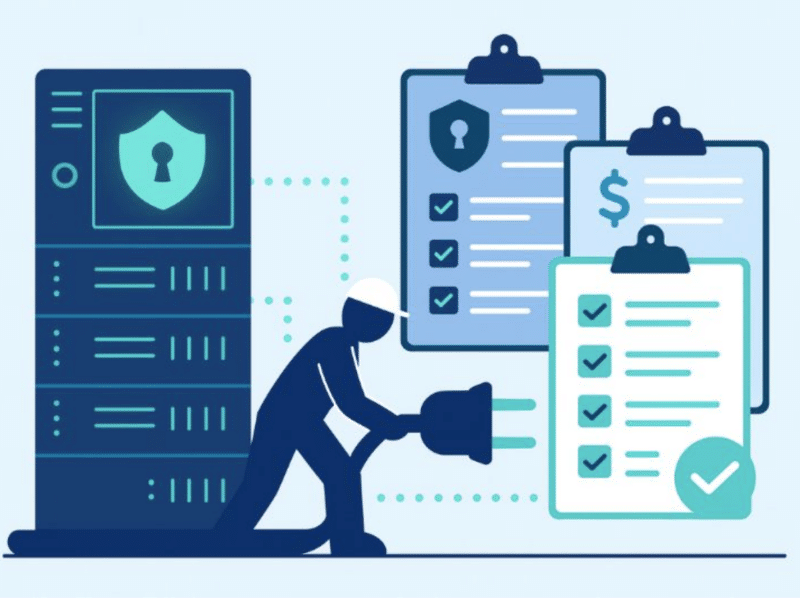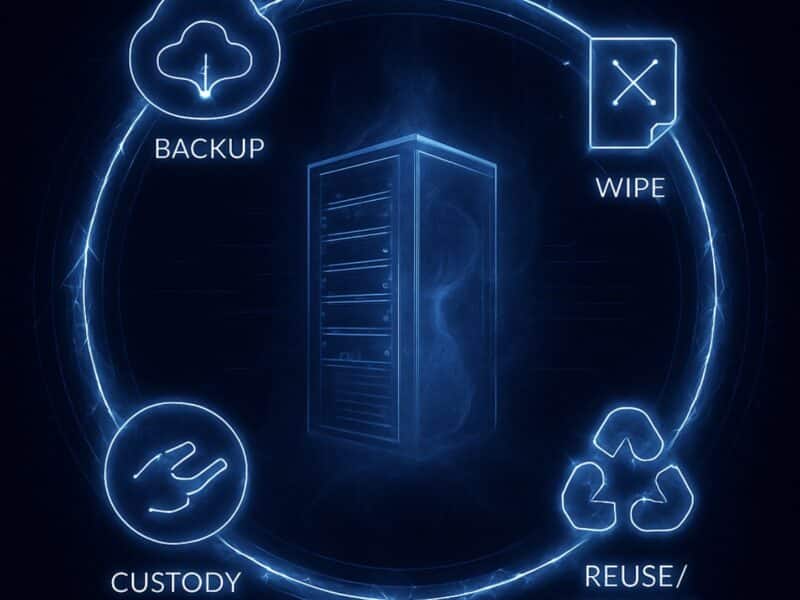
Strip a server down and you’ll find the same things every time: processors, DIMMs, GPUs, boards, power supplies, storage. None of it is waste until you decide to treat it like waste. The server recycling process is about making those decisions in the right order. Disassembly with intent, not demolition by default.
Handled well, the process secures data, captures resale value, channels hazardous material into certified streams, and delivers metrics your compliance and ESG teams can defend. Handled poorly, it turns usable hardware into scrap metal and exposes you to gaps auditors will pounce on.
This isn’t junk removal. It’s engineered recovery.
And the stakes keep rising. Equipment refresh cycles are shortening. E-waste volumes are climbing. ESG reporting is tightening. The UN estimates more than 50 million tons of electronics are discarded annually, with servers a growing fraction. When the difference between secure recycling and careless shredding can mean millions in lost value, compliance penalties, or wasted components that could relieve shortages, the process deserves more attention.
01. Start with detailed asset profiling
Every recycling process begins with a basic question: what do you actually have?
It sounds obvious, but it’s the most common failure point. Skipping inventories means servers disappear without record, resale potential is missed, and compliance collapses when auditors ask for proof that never existed.
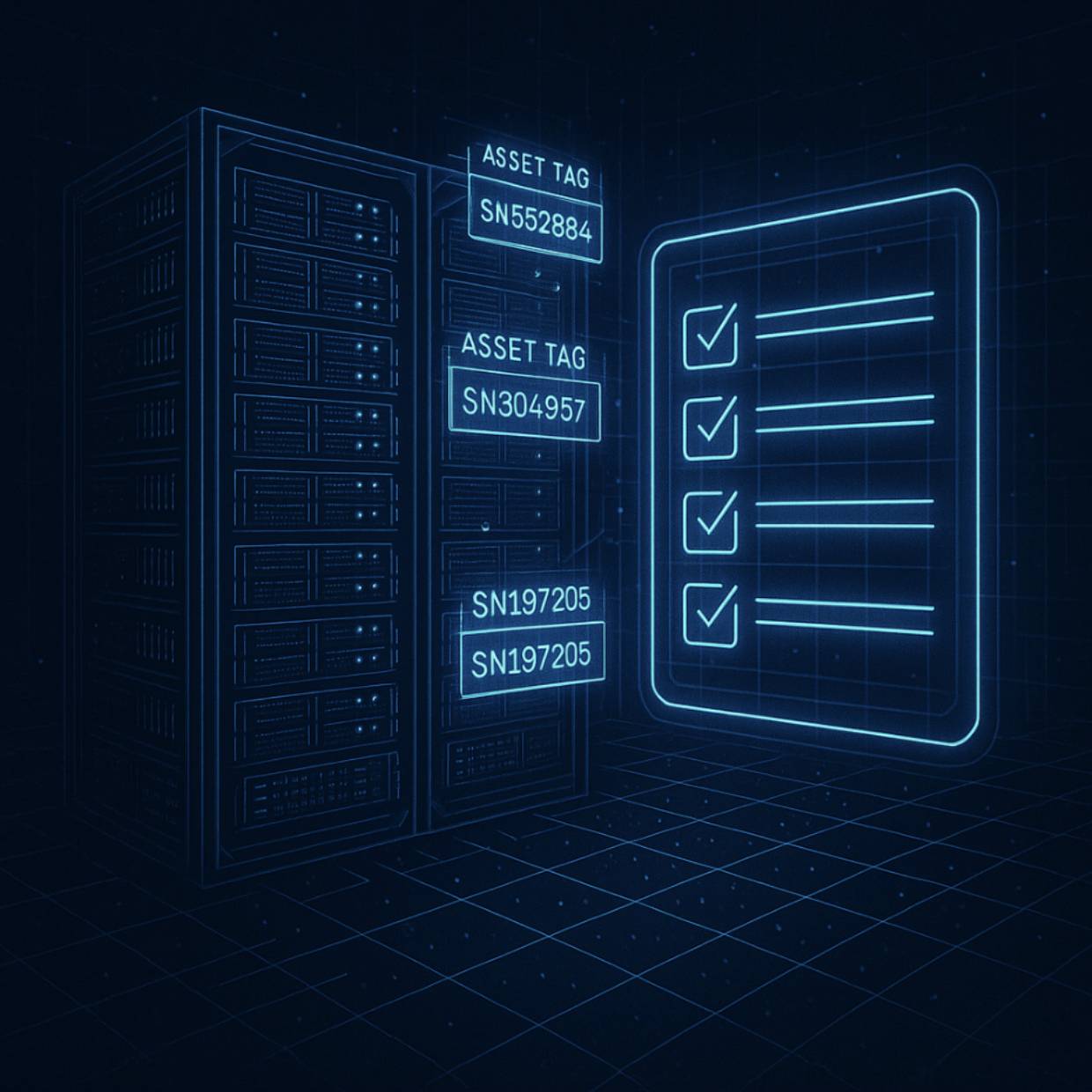
That’s why the first step isn’t forklifts or shredders. It’s asset profiling. Each server is logged by serial, scanned, and digitally fingerprinted. Intake inventories capture not just the machine but its components: processors, DIMMs, controllers, and drives. Until that profile is complete, nothing moves.
When done right, inventorying creates both a roadmap and a safety net. It ensures nothing valuable is overlooked, and it ties every downstream certificate back to a specific asset.
Trap to avoid: Recycling before profiling. In one enterprise case, a retired RAID controller was nearly scrapped before its role was noticed. It held the only copy of critical transaction logs. Profiling flagged the anomaly, and the data was migrated before recycling. Without that step, the organization would have faced a regulatory nightmare.
Reconext’s approach: Forensic intake and digital asset profiling that lock identity in from the start. Every decision downstream — wiping, resale, recycling — is built on that foundation. Why it matters for compliance: From SOX in finance to HIPAA in healthcare, regulations expect auditable inventories that tie devices to final outcomes. Without an intake record, you can’t prove an asset’s history.
02. Erase the data, not the hardware
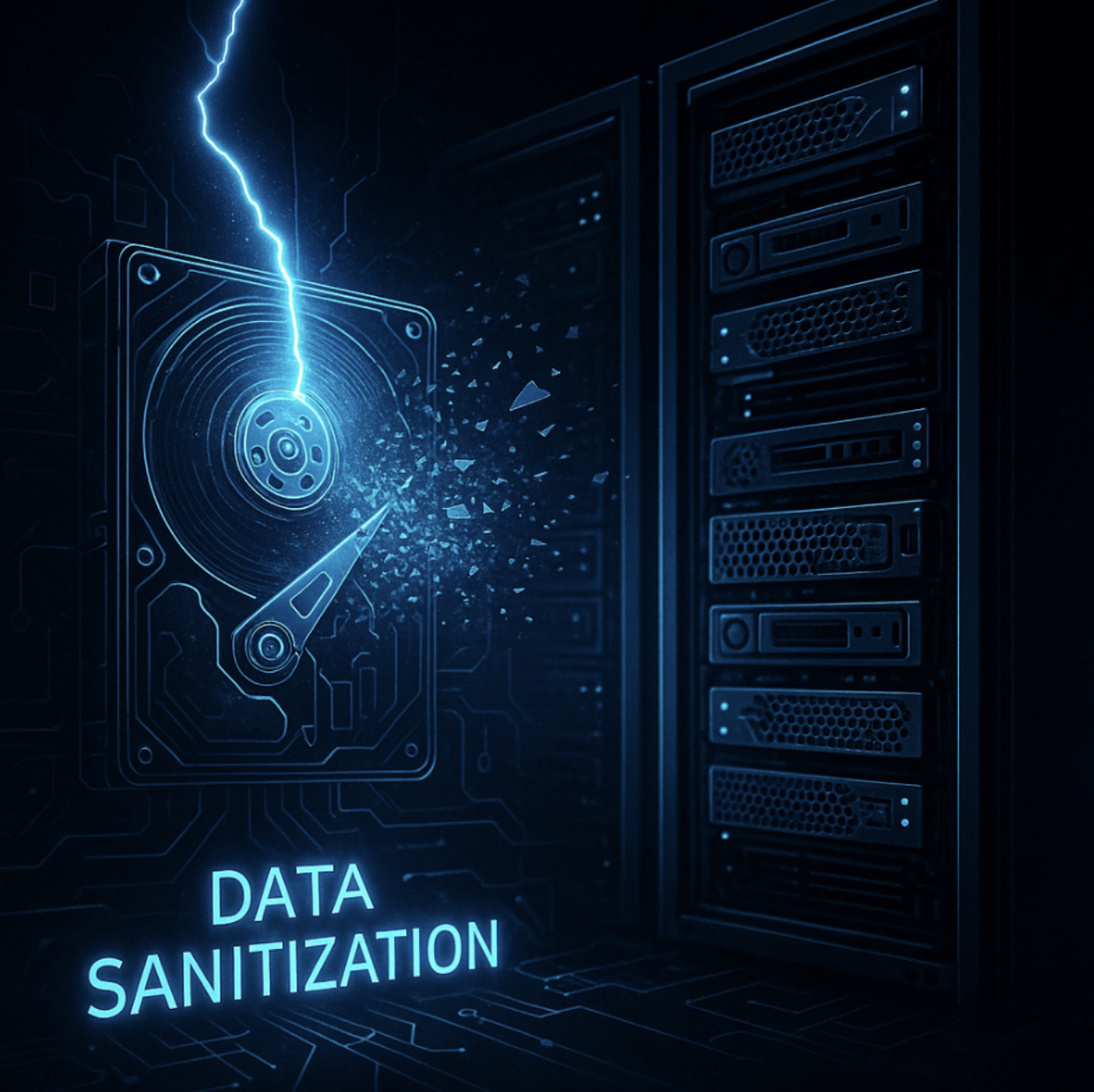
The hardest thing to recycle in a server isn’t steel or silicon. It’s the data. Until that’s gone, nothing else can move.
Some organizations default to shredding because it feels safer. Smash the drives, and the risk is gone, along with every ounce of resale value. But shredding isn’t security. It’s waste.
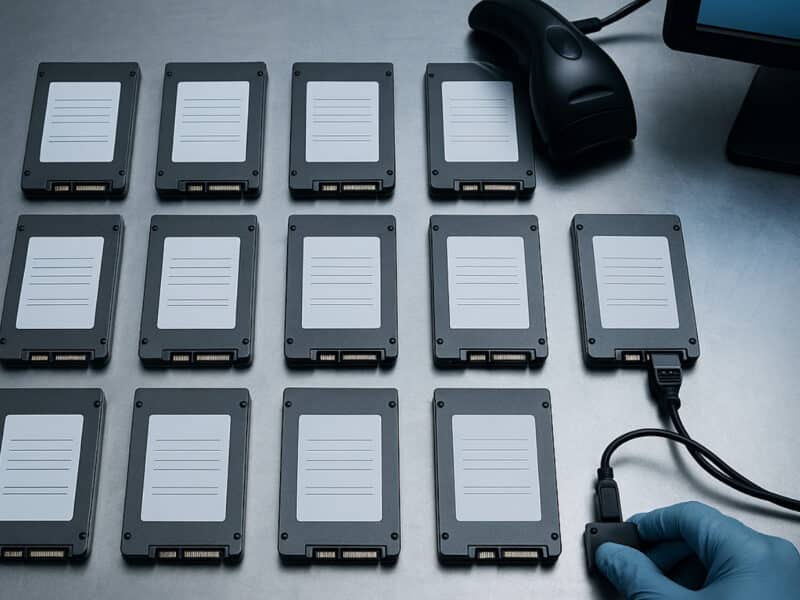
Certified wiping achieves the same security outcome while keeping hardware intact. Reconext deploys a dual toolset for scale:
- Rackwipe → wipes entire racks in parallel via network boot, clearing hundreds of drives at once.
- Proteus → portable, asynchronous drive erasure validated under ADISA reviews, logging command-level proof for each drive.
Both issue serialized certificates that prove compliance with NIST 800-88 and IEEE 2883 standards.
Trap to avoid: Confusing “destroy” with “secure.” In one project, network switches were resold without sanitizing their IP configurations. The moment they were powered up by the new buyer, they began calling home to the original OEM, creating instant panic. Proof of sanitization is the only way to close the loop.
Beyond security, wiping has financial and environmental benefits. Drives and systems that pass wiping can be resold, redeployed, or even donated to schools and nonprofits. That extends useful life, reduces demand for new manufacturing, and cuts carbon.
Technical nuance: SSDs require different erasure techniques than HDDs. While magnetic drives can be overwritten, SSDs may need cryptographic erasure or full block resets to comply with standards. In some cases, PXE offline wipes are the only option in facilities where internet connections are banned — engineers bring in a laptop and trigger wipes entirely inside the network fabric. Reconext’s approach: Data destruction without hardware destruction. Wipe when possible, destroy only when required.
03. Recover components that drive real value
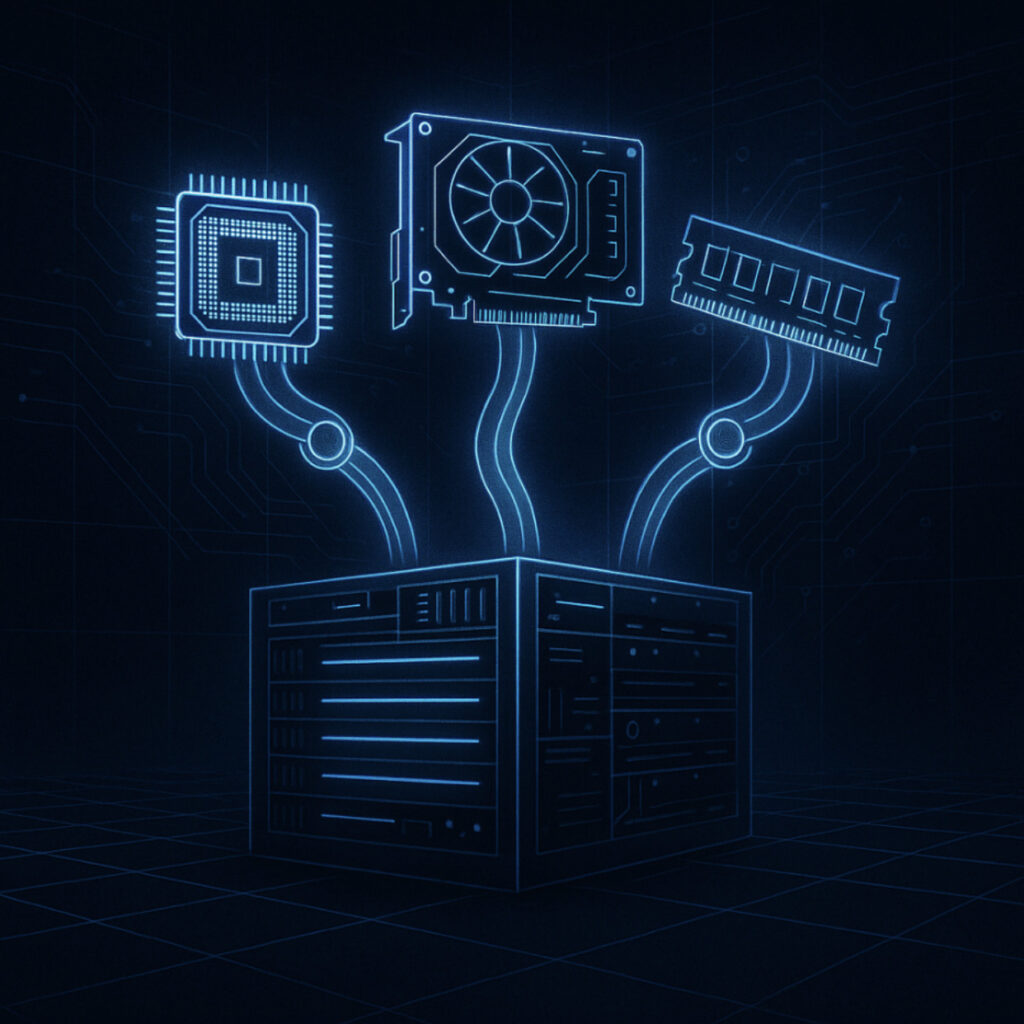
They aren’t just bulk steel. Inside are CPUs, DIMMs, GPUs, PSUs, and storage devices that often carry 10–20 times more value than their scrap weight. The trick is knowing which parts hold demand now, and processing them without erasing that value.
Current market reality (2025):
- GPUs are the standout. Newer generations with AI and HPC capabilities command premium resale, provided they’re restored to both functional and cosmetic “as new” condition.
- CPUs hold value if they’re non–client specific. Model and part number drive resale potential.
- DIMMs are volatile. Right now DDR4 sticks, especially higher-capacity ones, are spiking due to supply constraints – in some cases outpricing DDR5.
- Storage devices (HDDs and SSDs) consistently top the value charts. High-capacity SSDs in particular are in demand as enterprises scale AI workloads, while HDDs remain attractive for cost-per-TB.
- PSUs and other subsystems carry less resale upside but still matter for complete system builds. Hot-swap PSUs require special compliance handling because of embedded batteries.
Trap to avoid: treating servers as monolithic scrap. During past shortages, reclaimed GPUs and DIMMs kept OEM production lines alive. Shredding those units would have created unnecessary downtime and inflated replacement costs.
Reconext’s approach:
- Component-level intelligence replaces guesswork with repeatable, machine-driven grading.
- Adaptive test platforms validate functionality quickly and at scale.
- Global commodity monitoring ensures recovered parts flow into demand markets rather than being dumped, which protects value and avoids dilution.
The payoff isn’t just financial. Failed boards and drives reveal supplier weaknesses and usage patterns. That recovery intelligence feeds back into procurement, so clients don’t just recycle hardware – they recycle knowledge.
04. Keep custody airtight and audit-ready
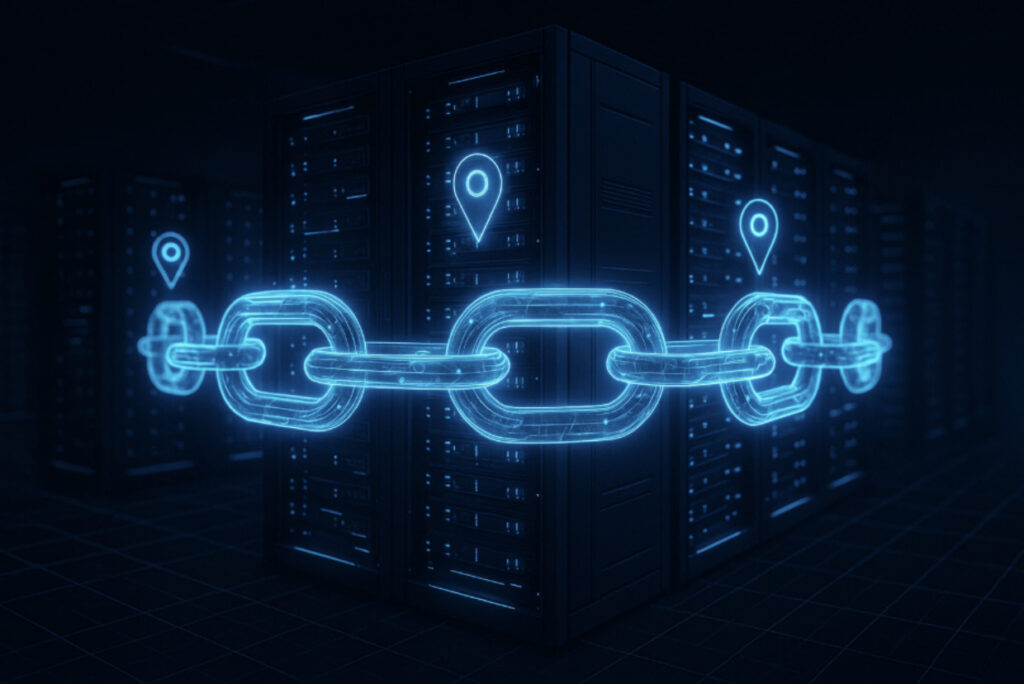
Inventory and sanitization mean little without proof of custody. Traditional chain-of-custody models rely on logging at endpoints and faith in between. That’s where assets vanish, records don’t align, and compliance collapses.
Trap to avoid: Blind spots. If custody can’t prove continuity, auditors assume gaps = risk.
Reconext’s Continuous Custody Intelligence (CCI):
- Digital asset profiling at intake.
- GPS + cellular tracking on transport, with live alerts on route deviations.
- AI-monitored facilities that flag anomalies in real time.
- Parent–child architecture linking components to their original servers.
- System-enforced “hard stops” if verification fails – no human override.
In one logistics case, a transport stopped outside its expected corridor for nearly two hours. Traditional models would have missed it; CCI triggered live alerts, and the chain of custody remained intact.
Custody is fragile currency. Lose it once, and trust is gone. That’s why system-enforced controls matter more than human promises. Reconext’s approach: Custody that’s continuous, digital, and audit-ready. In compliance, “probably” isn’t a category.
05. Handle hazardous streams responsibly

Once the data is gone and the valuable components are recovered, what’s left isn’t just scrap. Servers carry hazardous materials — lithium packs in hot-swap PSUs, lead solder, brominated plastics — that demand more than a trip to the recycler down the street. Mishandle these streams and you’re not just breaking rules, you’re creating liabilities that can last years.
Compliance reality: Batteries are tightly controlled, with restrictions that vary by region. Europe’s WEEE Directive and RoHS updates require specialized handling and movement controls, while in the U.S. the EPA enforces hazardous waste standards. Asia-Pacific adds another patchwork. What passes in Singapore may not in India.
The smarter path is controlled downstream:
- Certified partners (R2v3, ISO 14001) who can demonstrate proper disposal of every hazardous fraction.
- Tracking and reporting that tie each stream back to the originating asset, closing the loop for auditors and ESG teams alike.
- Recovery metrics that show how much steel, plastic, and rare earths were reclaimed rather than discarded.
Handled this way, recycling stops being a compliance chore and becomes a measurable contribution to sustainability targets. Boards don’t want anecdotes about “responsible recycling.” They want proof: tonnage, carbon avoided, hazardous waste mitigated.
06. Turn recycling into measurable results
At the end of the server recycling process, what separates recovery from waste is evidence. Without documentation, even the best-engineered workflow collapses under scrutiny.
Boards, regulators, and ESG teams expect more than reassurances:
- Serialized certificates of sanitization or destruction, tied to each device.
- Custody logs that trace assets continuously from intake to final disposition.
- Resale and recycling reports quantifying value recovered, waste reduced, and hazardous streams handled under R2v3 or ISO 14001 standards.
The depth of reporting matters. ESG disclosures under GRI, CDP, or SASB demand measurable evidence: how many drives were wiped, how many GPUs resold, how many kilograms of plastics and rare earths recovered.
But reporting isn’t just defensive. Done right, it turns risk into recovery intelligence. Failed DIMMs expose supplier weak points. Storage performance data informs lifecycle planning. Hazardous material flows map to avoided carbon. Every data point is both compliance proof and operational feedback.
When this stage is executed properly, the closeout packet does more than satisfy auditors. It arms boards with hard numbers, ESG teams with disclosure-ready data, and procurement teams with intelligence to guide the next refresh cycle.
The outcome isn’t just “we recycled responsibly.” It’s “here’s the proof, and here’s the value it created.”
Routine recovery is the benchmark of success
Recycling servers isn’t demolition. It’s engineered disassembly. Treat it like scrap and that’s all it’ll ever be. Treat it like recovery and it becomes intelligence.
Reconext’s approach — with Proteus, Rackwipe, Precision Recovery, and Continuous Custody Intelligence — makes recovery routine. And in this field, routine is the benchmark of success.
Whether you’re managing routine server refreshes or planning a full-scale data center decommissioning initiative, Reconext delivers secure recovery, audit-ready documentation, and maximum asset value.