

Automation does not need to be flashy to be useful. In many warehouses, the biggest gains come from quietly removing friction that everyone has learned to work around.
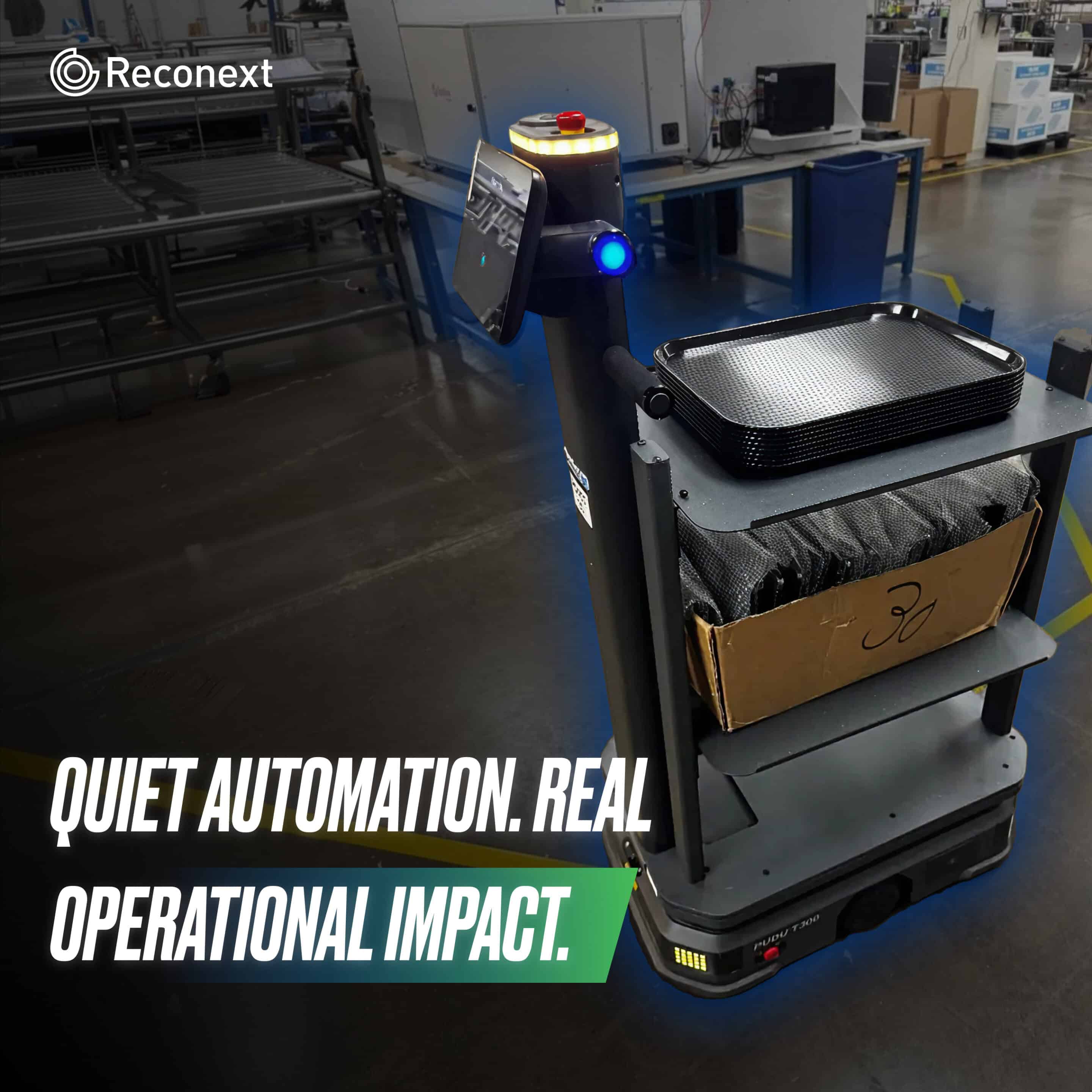
In December, the Reconext Grapevine site deployed autonomous mobile robots to support routine material movement within the warehouse. The objective was straightforward. Reduce unnecessary manual handling and make daily flow more predictable as volumes and mix fluctuate.
Warehouses tend to bottleneck in familiar ways. Staging areas fill up. Transport tasks pull people away from higher-value work. During peak periods, small delays compound quickly. The result is not a dramatic failure, but a gradual loss of rhythm that makes everything feel harder than it should.
The robots support defined transport routes and routine movement tasks. By handling those consistently, they help stabilize handoffs between processes and reduce congestion in high-traffic zones. Early observations showed smoother transitions and fewer interruptions during busy shifts.
What matters most is not the technology itself. It is how it fits. The deployment was designed to support existing workflows, not force the operation to reorganize itself around a tool. That distinction is often where automation succeeds or quietly causes trouble.
Used this way, automation becomes a reliability aid. It frees teams to focus on work that requires judgment, improves safety by reducing unnecessary movement, and makes real bottlenecks easier to see. Over time, those benefits stack. Not dramatically, but meaningfully.


