IT Asset Disposal vs Disposition: Key Differences Explained
As organizations continue to refresh and replace technology, managing retired IT assets has become a critical part of the asset lifecycle. How those assets are handled has direct consequences for data security, regulatory compliance, sustainability targets, and value recovery.
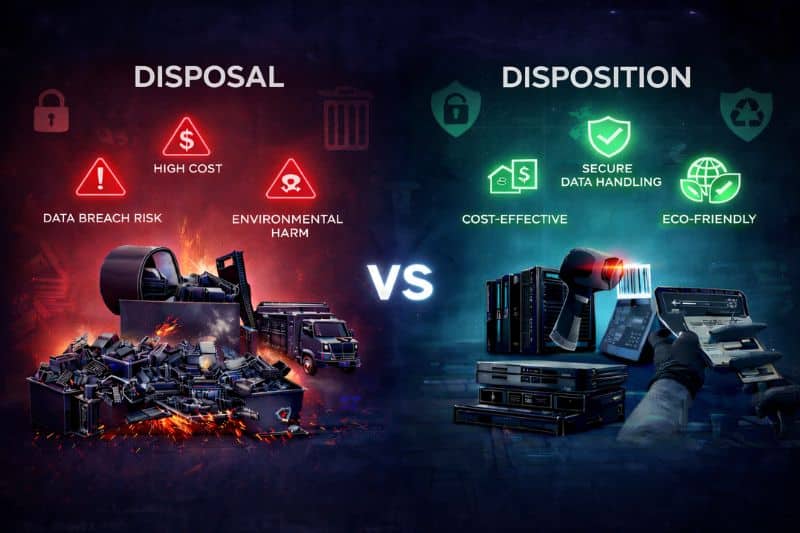
The terms IT asset disposal and IT asset disposition are used interchangeably across the industry, but they describe different processes with different outcomes. Understanding that distinction helps organizations reduce exposure, protect sensitive data, and recover measurable value from retired equipment.
Key Takeaway
- IT asset disposal focuses on removing retired hardware, often with limited emphasis on security, value recovery, or sustainability.
- IT asset disposition (ITAD) is a strategic end-of-life approach that incorporates secure data destruction, refurbishment, value recovery, and regulatory compliance.
- A structured ITAD program helps organizations reduce risk, maximize the value of retired assets, and support long-term sustainability goals.
What Is IT Asset Disposal?
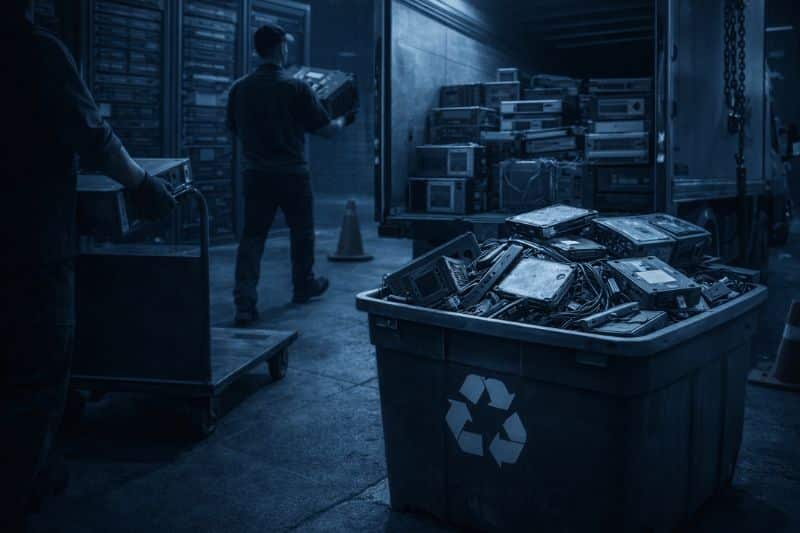
IT asset disposal is the process of discarding obsolete IT equipment. While it helps organizations clear retired assets from their inventory, the focus is often on physical removal rather than secure data protection, regulatory compliance, or maximizing the remaining value of the equipment. In many cases, the equipment is permanently destroyed or reduced to raw materials, resulting in zero residual value.
Risks of Improper IT Asset Disposal
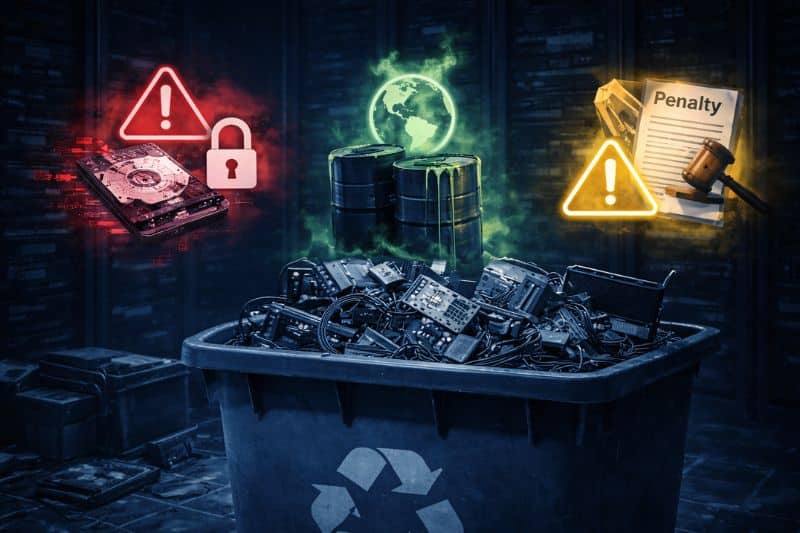
Improper IT asset disposal can expose organizations to significant risks that extend far beyond the loss of retired equipment.
- Data security exposure from devices that left service without documented sanitization
- Environmental liability from regulated materials, including lead, mercury, and cadmium, that cannot be landfilled under RCRA and applicable state e-waste law
- Regulatory penalties under HIPAA, GDPR, CCPA, and PCI DSS represent only part of what non-compliant handling costs organizations, it also causes organizations to lose asset value that a structured ITAD program would have recovered.
Without a structured end-of-life strategy, retired IT assets can quickly become a source of security, environmental, and compliance risk.
What Is IT Asset Disposition (ITAD)?

IT asset disposition (ITAD) is a strategic approach to retiring IT assets at the end of their lifecycle. Unlike traditional IT asset disposal, which focuses primarily on removing equipment, ITAD encompasses the entire end-of-life process, including secure data destruction, refurbishment, resale, and environmentally responsible recycling. It provides organizations with a structured framework for managing retired technology assets in a secure and responsible manner.
Benefits of IT Asset Disposition
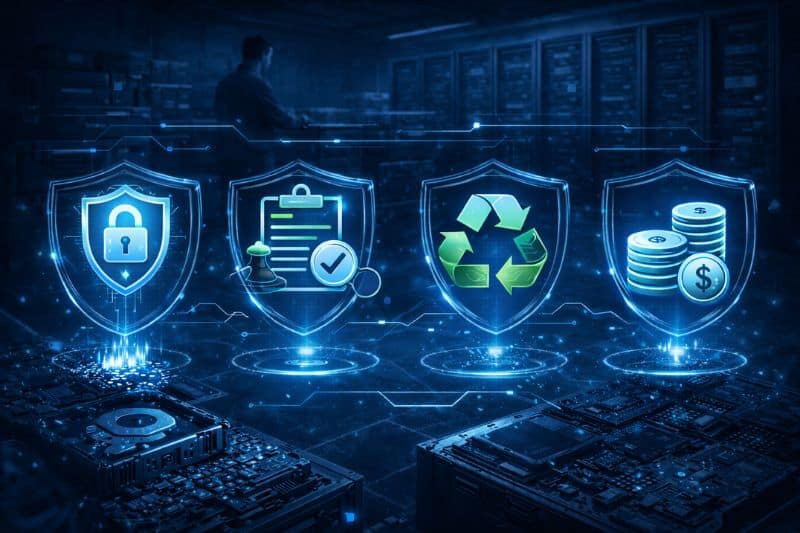
A well-executed ITAD program delivers benefits that extend beyond simply retiring outdated equipment. It addresses data security risk, satisfies regulatory compliance requirements, recovers financial value from retired assets, and supports measurable sustainability outcomes.
Data Security in ITAD
Retired IT assets do not stop being a security risk when they leave service. Hence, protecting sensitive data remains one of the most important considerations when retiring IT assets. As devices reach the end of their lifecycle, sensitive data must be permanently removed. The assets can then be processed through refurbishment, reuse, or recycling. Certified data destruction provides a documented and verifiable process for achieving this outcome, helping organizations reduce the risk of unauthorized access, data breaches, and the exposure of confidential information.
Environmental Responsibility
Sustainability plays an increasingly important role in how organizations manage retired IT assets. The world generated 62 million metric tonnes of e-waste in 2022, yet only 22.3% was formally collected and recycled, according to the UN’s Global E-Waste Monitor 2024.
A structured ITAD program focuses on keeping equipment, components, and materials in circulation for as long as possible through reuse, refurbishment, harvesting, and responsible recycling. This reduces the volume of electronic waste sent to landfills while extending the useful life of valuable resources.
When assets can no longer be reused, materials such as copper, aluminum, precious metals, and rare earth elements can often be recovered and returned to the supply chain. This reduces the need for new resource extraction, conserving natural resources while lowering environmental impact and material costs.
Financial Recovery
Two companies retire the same batch of laptops. One sells them as scrap. The other refurbishes them first. The financial gap between those outcomes is the clearest argument for why ITAD strategy matters.
Additional value is captured through resale and remarketing programs that connect retired equipment with secondary markets. Depending on asset type, condition, and demand, organizations can generate revenue through direct resale, wholesalers, liquidators, or trade-in programs.
When a device no longer has value as a complete unit, individual components often retain independent market value. Harvesting reusable parts creates another recovery opportunity before an asset reaches end-of-life recycling.
By leveraging multiple recovery channels, organizations convert retired IT assets from depreciated equipment into a measurable financial return.
IT Asset Disposal vs ITAD: Key Differences
| Aspect | IT Asset Disposal | IT Asset Disposition (ITAD) |
| Primary Focus | Removing retired IT equipment from service | Managing the complete end-of-life lifecycle of IT assets |
| Data Security | May not include documented data destruction processes | Includes certified data destruction and chain-of-custody controls |
| Value Recovery | Equipment is typically destroyed or recycled with little to no value recovered | Prioritizes refurbishment, resale, remarketing, trade-in programs, and component harvesting |
| Regulatory Compliance | Limited focus on compliance requirements | Supports compliance through documented processes and audit trails |
| Asset Lifecycle | Ends when the asset is removed or destroyed | Extends asset value through reuse, refurbishment, harvesting, and recycling |
| Environmental Impact | Can contribute to unnecessary e-waste and resource loss | Reduces e-waste by prioritizing reuse and responsible material recovery |
| Business Outcome | Asset removal | Risk reduction, value recovery, compliance, and sustainability |
Security
Traditional disposal is often untracked, with equipment discarded without verified sanitization. Deleting files or reformatting a drive does not permanently remove data and is reversible using commercially available recovery tools.
ITAD applies certified destruction methods, including NIST-compliant overwriting, degaussing for magnetic media, and physical destruction where required. Each process is documented by serial number before any asset is reused, refurbished, harvested, or recycled.
Compliance
Traditional disposal typically lacks the chain of custody, serialized asset tracking, and data destruction records required to demonstrate compliance. Without this documentation, organizations cannot verify what happened to retired assets once they left their control. If data is later recovered from a disposed device and exposed, the organization that owned it retains full liability for the breach, including penalties under HIPAA, GDPR, and CCPA. Improper handling of regulated materials can generate separate environmental violations.
ITAD addresses this through a fully documented process. Assets are tracked by serial number throughout the disposition lifecycle, data is sanitized using certified methods, and records are maintained for audits and regulatory reviews. Providers operating under R2 or e-Stewards certification supply documented proof that assets were processed in accordance with recognized environmental and data security standards.
Value Recovery
Traditional disposal typically ends with the asset being destroyed or recycled, leaving little to no opportunity to recover value.
ITAD, by contrast, prioritizes refurbishment, resale, remarketing, and component harvesting to maximize the financial return from retired assets before they reach the end of their lifecycle.
Environmental Impact
Traditional IT asset disposal may result in equipment being discarded before its remaining value or useful life has been fully realized, increasing the likelihood of electronic waste entering landfills.
ITAD takes a more circular approach by prioritizing reuse, refurbishment, harvesting, and responsible recycling, helping keep equipment, components, and materials in circulation for as long as possible while reducing the environmental impact of retired IT assets.
Conclusion
The way organizations retire IT assets has lasting business implications. A structured ITAD strategy protects sensitive data, maximizes the value of retired technology, and supports a more sustainable approach to asset lifecycle management.
ITAD combines secure data destruction with value recovery throughout the asset retirement process. A structured approach to refurbishment, resale, component harvesting, and responsible recycling helps organizations maximize retired asset value, advance sustainability goals, and turn end-of-life technology into long-term business value.
Ready to maximize the value of your retired IT assets while maintaining security and compliance?
FAQ
What is the difference between IT asset disposal and IT asset disposition?
IT asset disposal refers to simply getting rid of old IT equipment, while IT asset disposition (ITAD) is a secure, comprehensive process that includes data destruction, resale, and recycling. ITAD focuses on security, compliance, and maximizing asset value.
Why is data security important in ITAD?
Data security is critical because sensitive information on retired devices can be stolen if not properly erased. Certified ITAD providers ensure permanent data destruction, protecting both the company and its clients.
Can ITAD help recover value from old IT assets?
Yes, ITAD can unlock financial value by refurbishing, reselling, or recycling equipment responsibly. This approach often offsets IT costs and contributes to sustainability initiatives.
How does ITAD support environmental responsibility?
ITAD minimizes e-waste by refurbishing devices and recycling components responsibly. This process reduces landfill impact and aligns with corporate sustainability goals.