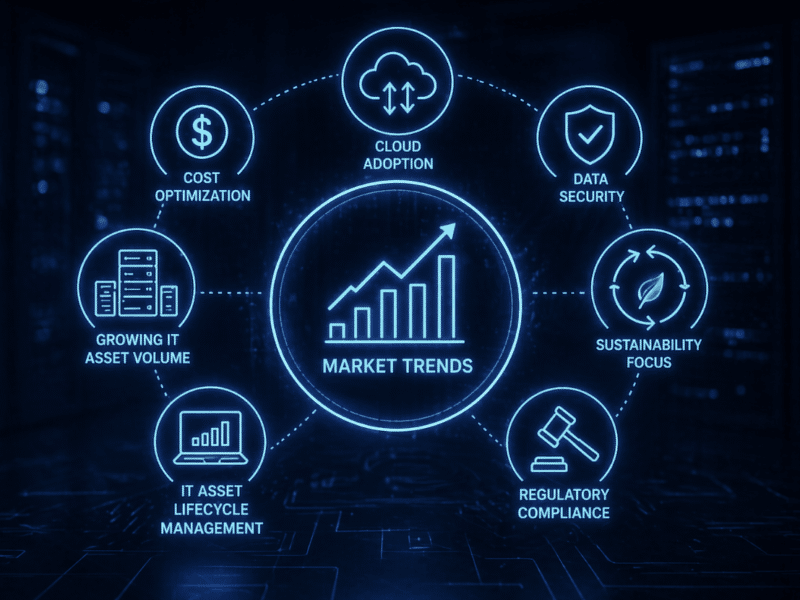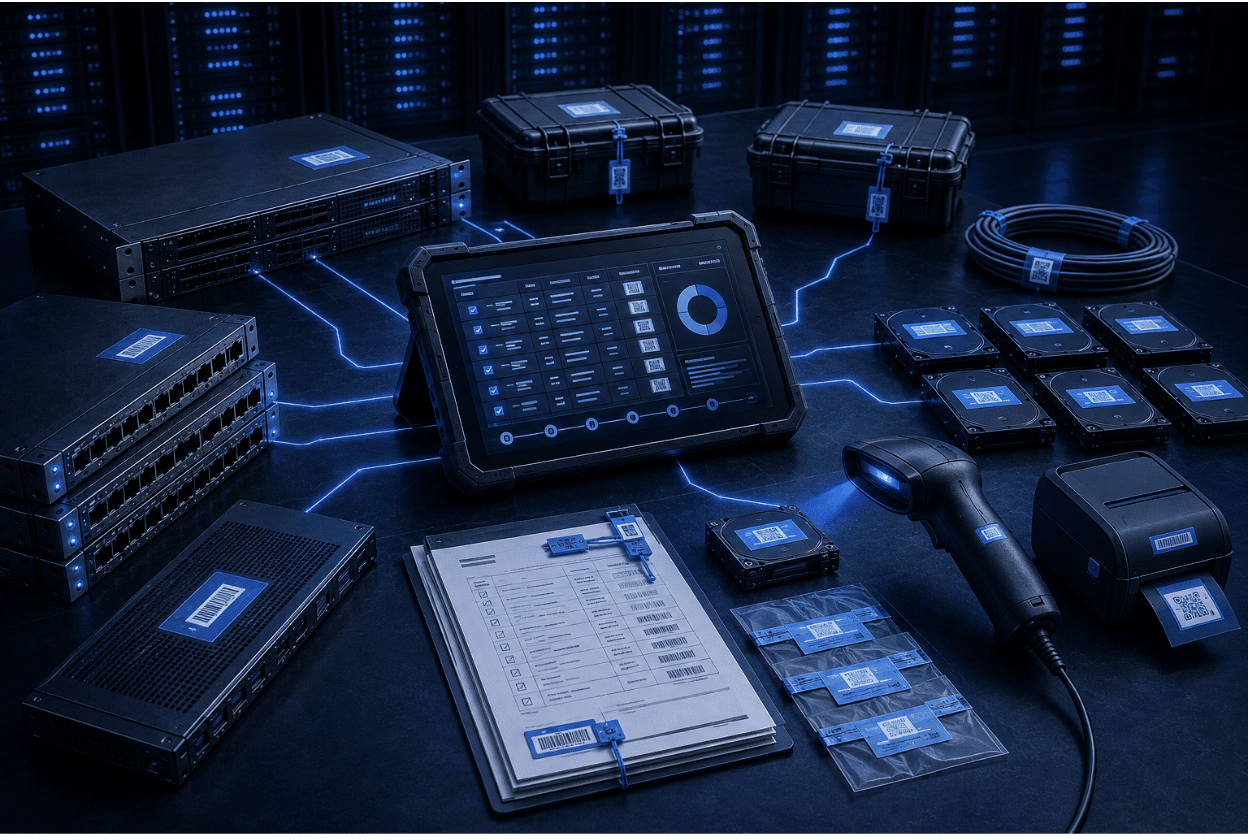
Having an IT asset inventory is a good start, but it does not guarantee audit readiness. Many organizations can produce a list of devices, yet struggle to prove that those records accurately reflect their current IT stack.
During an audit, reviewers need evidence that assets exist, ownership information is correct, custody changes are documented, and lifecycle activities can be traced. This becomes increasingly difficult as devices move between employees, facilities, vendors, and ITAD providers.
In this article, we explore eight practices that organizations can use to build and maintain an audit-ready IT asset-tracking system.
Key Takeaways
- Achieving audit-readiness for IT asset tracking systems requires hands-on involvement in the tracking program. This means physical validation, involving ITAD vendors early, better documentation, and standard processes.
What is an Audit-Ready IT Asset Tracking System

An audit-ready IT asset tracking system provides organizations with reliable evidence about every asset in their environment.
This system allows teams and auditors to verify key details, including:
- Asset identity
- Current location
- Ownership
- Lifecycle status
- Custody history
- Final disposition
A basic asset tracking system answers a simple question: “What assets do we have?” An audit-ready system answers much more.
For example, basic tracking may show: “Here is our list of laptops.”
Audit-ready tracking shows: “Here is every laptop, who used it, where it is located, when it changed hands, who handled it after retirement, and documentation proving what happened to the data.”
Building this level of visibility requires more than maintaining an inventory database. An audit-ready system should include:
- Accurate inventory records that reflect the actual assets in use
- Physical validation to confirm assets exist and match recorded details
- Lifecycle tracking from procurement to retirement
- Chain-of-custody documentation for every transfer or movement
- Compliance evidence that supports audit requirements
- Standardized reporting for consistent recordkeeping
IT asset disposition (ITAD) is where tracking becomes especially important. Once assets leave an organization, ownership and control move to external parties. For data-bearing devices, companies must prove that assets were securely handled, data was properly erased, and final disposition followed approved processes.
However, audit readiness does not begin when assets reach the end of their lifecycle. It starts from the moment an organization purchases, assigns, and tracks each device. Strong asset records throughout the lifecycle make audits easier and reduce compliance risks.
8 Ways to Make Your IT Asset Tracking System Auditable
An audit-ready IT asset tracking system is built through consistent operational practices. The following eight strategies help organizations improve asset visibility, strengthen documentation, and maintain reliable audit evidence.
1. Verify Physical Asset Records

An audit-ready asset tracking system must show that recorded assets match the equipment an organization physically owns. Inventory records alone do not prove that an asset exists, where it is located, or who has control of it.
Organizations should regularly validate asset records against physical equipment to identify:
- Missing assets
- Incorrect ownership information
- Outdated location records
- Devices that bypassed standard lifecycle processes
Physical verification helps uncover gaps that may not appear in an asset database. For example, a laptop may still be assigned to an employee who left the company months ago, or equipment may have moved between facilities without updated records.
Regular validation helps ensure documented records reflect what is actually happening in practice, giving organizations more reliable evidence during an audit.
2. Maintain Chain of Custody
Assets rarely move directly from an employee’s desk to their final disposition. They often pass through collection teams, transportation providers, processing facilities, and other parties before retirement is complete.
Each transfer creates a point where organizations need clear documentation. A complete chain-of-custody record should show:
- When an asset was collected
- Who handled it during transportation
- When it arrived at the processing facility
- What processing activities were performed
- How it reached final disposition
Organizations should be able to reconcile what left their facility with what arrived at an ITAD provider. Asset details, quantities, and documentation should match at every stage.
Any mismatch can raise questions during an audit. A clear custody trail helps organizations show where each asset was, who handled it, and how data-bearing devices were managed throughout the process.
3. Track Every Data-Bearing Device
Many organizations track common endpoints such as laptops and smartphones but overlook other devices that can store information. Any asset with internal storage should be included in the tracking process.
Forgotten devices can create audit challenges because they may contain stored data even after they stop being part of daily operations.
For example, an old printer in a storage room may still contain documents in its internal memory. A retired server may still hold business information that requires secure handling.
An audit-ready tracking system accounts for every data-bearing asset, not just the devices employees use regularly. This helps ensure that stored data is not overlooked and that each device can be traced through retirement and final disposition.
4. Document Every Lifecycle Stage

An audit-ready asset tracking system maintains records throughout the entire asset lifecycle. Organizations should be able to trace an asset from acquisition to final disposition without gaps.
Lifecycle documentation should capture:
- Deployment and asset assignment
- User ownership and location
- Maintenance and repairs
- Transfers between users or facilities
- Retirement and collection activities
- Data sanitization and final disposition
For retired assets, organizations should maintain evidence such as pickup records, receiving reports, sanitization records, destruction certificates, and resale or recycling documentation.
The key is creating records as events happen. Reconstructing asset histories when an audit begins often leads to incomplete records and missing details.
Keeping lifecycle documentation up to date provides auditors with a clear record of how each asset moved through the organization and how each stage was managed.
5. Validate Certifications and Processing Locations
Certifications provide assurance that an ITAD provider follows recognized standards. However, a certification only has value when it applies to the actual facility and processes handling an organization’s assets.
Organizations should verify that:
- Certifications are current and valid
- The certification scope covers the required services
- Processing takes place at approved locations
- Downstream partners follow the same security requirements
A common audit risk occurs when organizations review one facility, but their assets are processed somewhere else. The same applies when providers use undisclosed subcontractors that operate outside the organization’s expected controls.
Before selecting or continuing a relationship with an ITAD provider, organizations should confirm where assets are processed and who handles them throughout the process.
Audit readiness depends on more than having certification documents on file. Organizations need evidence that certified practices match actual operations.
6. Standardize Tracking Processes
Consistency makes IT asset tracking easier to manage and easier to audit. Large organizations often struggle when different offices, regions, or departments use separate systems and processes.
A standardized approach creates a reliable baseline for asset management. Organizations should use consistent methods for recording assets, updating information, and generating reports.
This includes maintaining:
- Centralized tracking platforms
- Consistent asset identifiers
- Standardized reporting formats
- Repeatable tracking procedures
Without standardization, organizations may have conflicting records across different locations. One facility may track asset movements in detail, while another may rely on incomplete spreadsheets.
A single system and reporting method give auditors a clearer view of the organization’s asset environment. It also makes it easier to identify gaps, verify records, and maintain accurate information across the entire lifecycle.
7. Involve ITAD Partners Early

IT asset disposition should not begin only when an organization has retired equipment waiting for disposal. Early involvement with ITAD partners helps organizations prepare for secure and compliant asset transitions.
By involving ITAD providers before assets reach the disposition stage, organizations can define requirements for transportation, data sanitization, documentation, and reporting.
This approach helps identify potential issues before assets leave organizational control. It also ensures that teams understand what evidence they need to collect throughout the process.
For example, organizations can establish expectations around pickup procedures, chain-of-custody records, and final disposition documentation before any equipment moves offsite.
Early ITAD involvement creates a smoother transition from active use to retirement. It also reduces the risk of missing records or unclear responsibilities during the final stage of the asset lifecycle.
8. Monitor Risks Continuously
Audit readiness is not a one-time exercise. Asset environments, vendor relationships, and compliance requirements change over time, so tracking controls need to be reviewed regularly.
This includes monitoring vendor performance, downstream partners, certification status, security controls, and inventory accuracy. Regular reviews can help identify issues early, such as an expired certification, a process change, or asset records that no longer reflect where equipment is located.
By checking that controls remain effective over time, organizations can keep records accurate and maintain the evidence auditors may request. This makes audit readiness an ongoing part of asset management rather than a last-minute preparation exercise.
Evaluating an ITAD Provider’s Asset Tracking Capabilities

Choosing an ITAD provider involves more than checking certifications. Organizations should evaluate whether the provider can consistently produce accurate records, maintain traceability, and provide evidence that stands up to an audit.
Start by validating the provider’s certifications.
Don’t rely solely on certificates supplied by the vendor. Verify that they are active through the issuing certification body’s registry.
Also, confirm that the facility you evaluate is the one that will actually process your assets. Some providers showcase one location while work takes place elsewhere.
If subcontractors are involved, ask who they are and what role they play. Undisclosed downstream partners can create compliance gaps.
Next, assess how quickly the provider can produce documentation. A mature tracking system should provide records on demand, including:
- Receiving reports after assets arrive
- Data erasure certificates
- Historical audit records
- Supporting documentation
Operational consistency is another important indicator.
Ask whether the provider uses the same tracking platform, reporting format, and procedures across every processing facility. Consistent processes produce consistent audit evidence.
Experience also matters. Providers that regularly support large, regulated organizations have typically undergone extensive customer audits and refined their tracking processes over time.
Finally, look beyond the sales presentation. Search public records for environmental violations, data breaches, fines, or lawsuits. A provider’s operational history often reveals more than its marketing materials.
The best providers also offer closed-loop reporting. Every asset should be traceable from pickup through transportation, processing, and final disposition. Supporting documentation should clearly connect each asset to the facility where it was processed and its outcome.
Conclusion
Many asset tracking programs lose visibility when equipment leaves the organization. That final stage often determines whether an organization can demonstrate complete accountability during an audit.
Reconext extends asset tracking beyond retirement with secure logistics, end-to-end traceability, and documentation that supports regulatory and internal audit requirements. Contact us to learn how our ITAD solutions help organizations maintain visibility through every stage of the asset lifecycle.
FAQs
What makes an IT asset tracking system audit-ready?
An IT asset tracking system becomes audit-ready when it provides accurate, verifiable records for every asset. It should document ownership, location, custody, lifecycle events, and final disposition. Supporting evidence must be readily available for auditors, both internal and external.
How does IT asset tracking support compliance audits?
IT asset tracking supports compliance audits by providing evidence that assets are managed securely throughout their lifecycle. It helps organizations verify ownership, trace asset movements, and demonstrate compliance with data security and disposal requirements.
What information should be included in an IT asset tracking record?
An IT asset tracking record should include the asset’s identity, location, ownership, lifecycle status, custody history, and final disposition. It should also capture transfers, maintenance activities, and supporting documentation where applicable. This information should also be individualized for each IT asset.
What are the most common causes of IT asset audit failures?
The most common causes of IT asset audit failures are inaccurate records, missing documentation, and incomplete chain-of-custody information. Organizations also struggle with outdated inventories, untracked assets, and inconsistent tracking processes across locations.