Imagine this: you are standing in Woking, Surrey, England, within the McLaren Technology Centre. In front of you is the championship-winning McLaren MCL39, the body cosmetically restored to like-new condition after its past year of hard racing.
CEO Zak Brown eagerly explains the aerodynamic setup that brought the team to victory last season. 2025 Formula 1 World Champion Lando Norris describes the transcendent feeling of rushing down a track at 350 kilometers per hour, man becoming one with machine. Mere words are not enough for you, and you yearn for a taste of that same unfettered terrestrial flight.
Then, just as you collect the courage to ask if you can take the race car out for a spin of your own—
An engineer comes and sets the entire gleaming beast on fire. The carbon-fiber shell twists and blisters away; jets of flame erupt from the sidepod vents. Norris stares into the violent inferno, red-yellow-white flickering across his corneas, his features impassive to the carnage in front of him.
You are aghast. That was a marvel of human engineering, you cry! A museum could have bought that! A sponsor could have bought that! I would have paid tens of millions of dollars to have something like that sitting in my own garage!
Zak Brown contorts his face into a look of delicate confusion. Why in the world would we keep that old thing from 2025? It’s 2026 now.
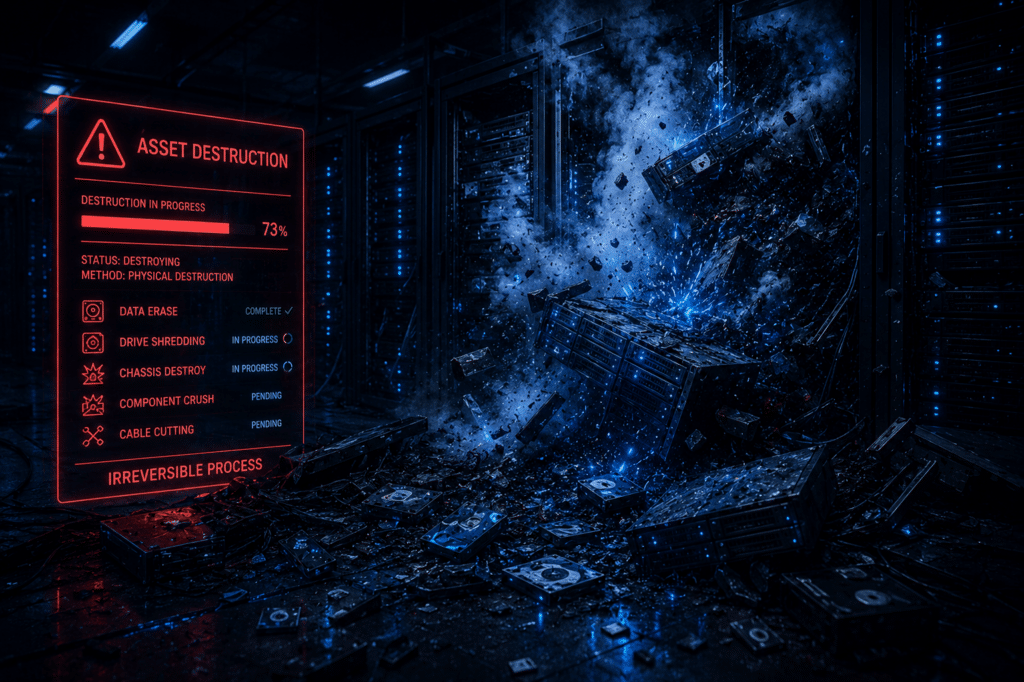
That’s how nonsensical it sounds when a data center shreds drives and dismantles still-functional equipment simply because it has reached a planned hardware refresh cycle.
Rack Lifecycles Are Shrinking, But Useful Lives Aren’t
Spend a day in the data center industry, and you’ll quickly learn that rack lifecycles are shrinking.
Each new chip generation arrives faster than the one before it. Power density per rack keeps climbing. GPUs run punishing AI training workloads. Hyperscalers and enterprise operators now refresh infrastructure four times more frequently than they once did.
But does a shorter refresh cycle actually mean the hardware itself has reached the end of its useful life?
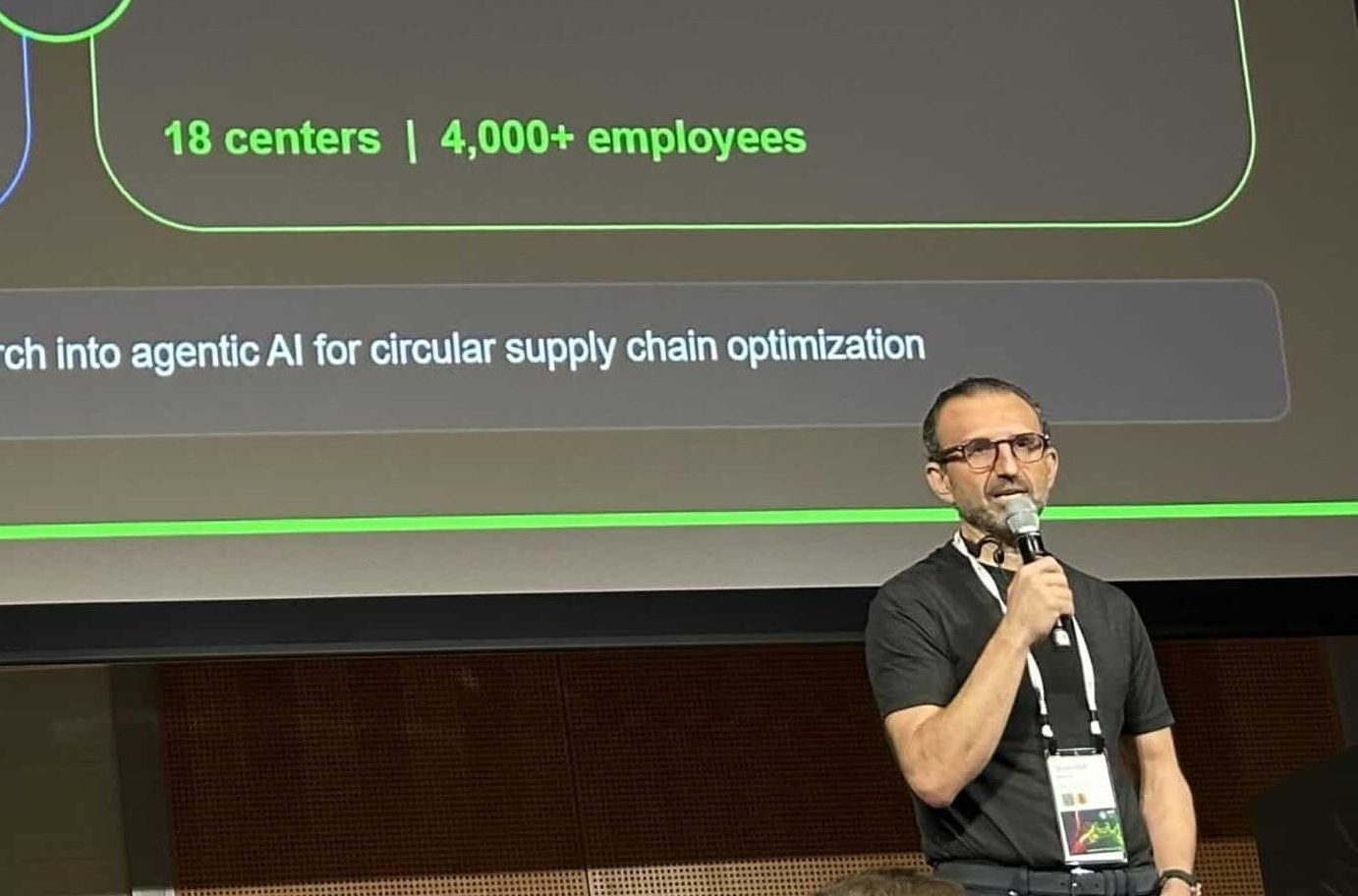
At the 2026 OCP EMEA Summit, Reconext CEO Shahriyar Rahmati argued that the answer is no, instead introducing an AI-driven lifecycle optimization framework. The system analyzes telemetry data already generated by hardware to predict remaining useful life, then determines whether those assets should continue operating, move into different workloads, be resold, or, eventually, be harvested for parts and recycling.
Your Hardware Is Already Reporting Its Own Health
Modern servers generate enormous amounts of telemetry data every second. The question is whether anyone is listening.
Power delivery systems can warn months in advance that a board is beginning to fail. Storage drives continuously report wear levels and remaining write endurance. Thermal systems reveal stress patterns. GPUs expose utilization behavior and workload strain.
Some systems can predict component failure up to three months in advance, not as blind guesses, but as real-time condition reports the hardware is constantly updating on its own.
The problem is that most organizations still make lifecycle decisions the old-fashioned way: around calendar-based refreshes, fixed depreciation schedules, and new product launches from OEMs.
Rahmati argued this system destroys an enormous amount of untapped value. A GPU cluster no longer ideal for AI training can still be highly useful for telecom workloads, cloud services, or secondary markets.
Yet instead of redirecting that equipment into new use cases, the industry often jumps straight to harvesting components and recycling materials, dismantling highly integrated systems into lower-value parts.

From Telemetry to Decision: How the Framework Works
The framework Reconext proposes uses AI to close that gap.
First, telemetry is directly ingested from hardware using infrastructure monitoring systems like Redfish APIs and analyzed by AI.

That data is then transformed into a Remaining Useful Life model, which estimates how much operational value the hardware still retains.
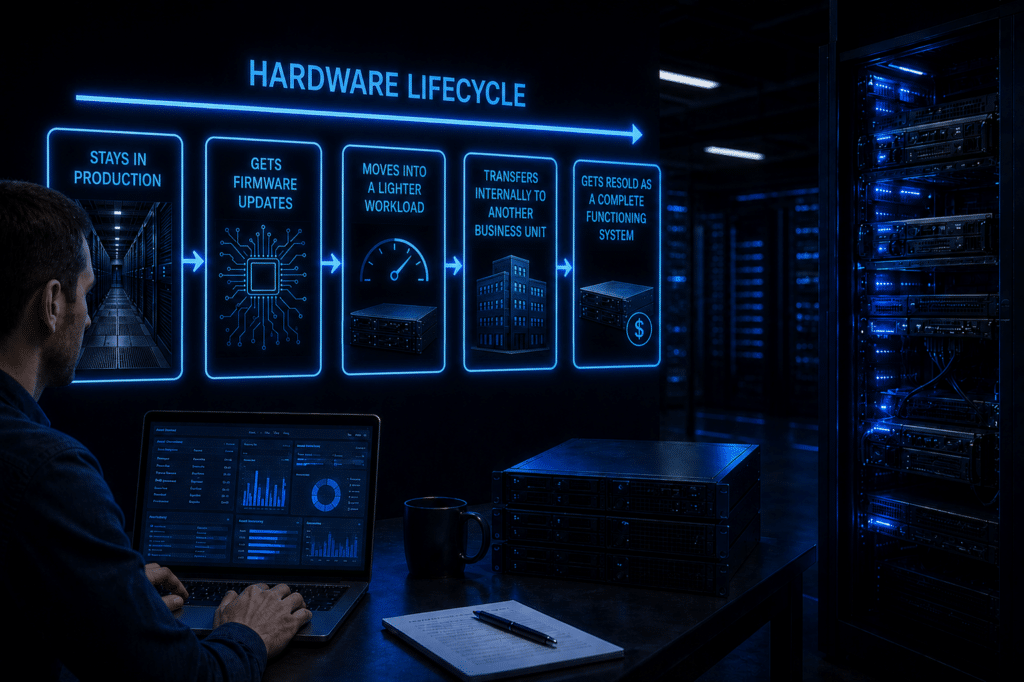
From there, the system determines the best next action for each asset. Only after higher-value options are exhausted should equipment be dismantled for parts or recycled.
The underlying logic rests on two thresholds.
The first is a performance threshold: has workload demand exceeded what the system can efficiently deliver? The second is a depreciation threshold: is the asset approaching a major drop in market value? The real challenge is applying those decisions across massive fleets of hardware operating in real time.
Fortunately, infrastructure telemetry is already highly structured and relatively clean, which makes it particularly well-suited for AI systems. Unlike messy human language, hardware telemetry is precise, meaning relatively small, inexpensive AI models can process it with low latency and low drift.
Reconext’s multi-agent framework reflects this modular approach, using three specialized agents with distinct functions:
- One monitors and identifies hardware condition
- A second evaluates economic value and reuse priorities
- A third determines the optimal path through the lifecycle decision tree.
Together, the system mimics the decision-making process that a highly experienced infrastructure operator would go through manually: just faster, continuously, and at fleet scale.
Sustainability and Profitability, Aligned
The broader implications extend beyond cost savings.
Current carbon accounting frameworks largely focus on the first life of a piece of hardware, rarely accounting for second or third deployments. That creates an incentive structure where organizations are rewarded for replacing equipment even when it retains enormous operational value.
Rahmati argues that sustainability and profitability are not actually in conflict here. In many cases, they are perfectly aligned. Extending infrastructure life reduces waste and preserves embodied carbon, while simultaneously lowering capital expenditure and extracting more economic value from the same physical hardware.
The future of sustainable computing may not depend entirely on building better hardware. It may depend on building better judgment about when not to throw perfectly good hardware away.
Because solving that problem requires industry-wide coordination, interoperability, and shared intelligence across the lifecycle ecosystem, Reconext is sharing the multi-agent infrastructure discussed here with anyone interested in exploring these ideas further. Reach out to learn more or collaborate.