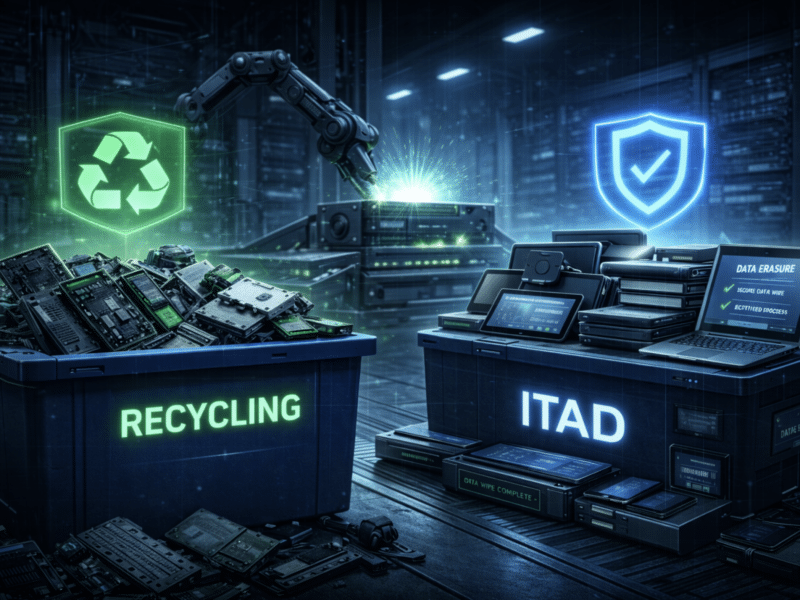
ITAD vs ITAM: what’s the difference? The two terms are frequently confused because they both concern company devices, such as laptops, servers, and storage media. However, they serve two different purposes within the asset lifecycle.
IT Asset Management (ITAM) controls technology assets while they’re in use, tracking and managing them, whereas IT Asset Disposition (ITAD) controls risks at asset retirement, ensuring secure disposal and responsible handling of retired IT assets.
Although ITAM and ITAD sit in the same lifecycle, they handle different stages. When companies blur the line between them, data breach risk increases, risk management practices weaken, and compliance gaps surface.
What Is ITAM?
IT Asset Management is how a company tracks and manages its technology while it’s in use. Strong lifecycle management begins when hardware, software, or cloud services are purchased and continues through deployment, lifecycle tracking, asset performance monitoring, and retirement planning. At its core, ITAM helps companies understand what they own, where it is, and how it’s being used.
The Primary Goals of ITAM
An ITAM company seeks to manage the functional life of IT equipment in four main ways:
Ensure Accurate Inventory and Visibility
Effective ITAM strategies keep an up-to-date record of all hardware and software, including location, assigned user, and status. Accurate inventory tracking prevents loss, duplication, and unnecessary purchases.
Control Technology Investments
ITAM strengthens cost management and cost optimization by aligning assets with licensing agreements and vendor contracts, helping organizations control IT investments.
Improve Asset Utilization
ITAM monitors asset performance and identifies underused devices, licenses, and cloud subscriptions so teams can reassign them before making redundant purchases. This reduces waste, increases operational efficiency, and generates cost savings.
Minimize Audit and Compliance Risk
ITAM maintains defensible records that align inventory with purchase documentation and license entitlements. Strong documentation makes audits smoother and reduces data breach risk, strengthening overall risk mitigation practices.
What Types of Assets Does ITAM Track?
ITAM systems typically track both physical devices and the software that runs on them.
Hardware
- Laptops and desktops
- Servers
- Networking equipment
- Mobile devices
- Data center infrastructure
Software
- Operating systems
- Enterprise applications
- Security software
- Cloud subscriptions
In remote and hybrid work environments, inventory management and IT asset lifecycle tracking become even more critical to manage distributed assets.
What Is ITAD?
IT Asset Disposition is how a company handles retired IT assets. It begins when a device leaves service and continues through secure disposal, asset remarketing, and responsible handling of electronic waste. It manages risk by ensuring data is removed, assets are processed responsibly, and remaining asset value is recovered.
The Primary Goals of ITAD
An ITAD company aims to manage the end-of-life disposal of IT equipment in four major ways:
Protect Data and Prevent Security Breaches
ITAD helps protect sensitive data by performing data wiping or destroying data through physical destruction. These disposal processes reduce data breaches and lower data breach risk.
Maintain Environmental and Regulatory Compliance
ITAD is important in ensuring compliance with data protection laws, proper handling of hazardous materials, and responsible processing of electronic waste. These efforts reduce environmental impact and support sustainable practices.
Recover Residual Value
ITAD aims to recover value from retired equipment through refurbishment and resale when appropriate. Effective testing and grading protect resale returns.
Support Financial Transparency and ESG Reporting
ITAD produces documentation that supports audits, financial reconciliation, and sustainability reporting. Clear records demonstrate responsible end-of-life management and help support sustainability goals, demonstrating environmental responsibility.
What Happens During the ITAD Process?

- Receiving and Intake
Devices are received at the processing facility and logged into an inventory tracking system. The provider verifies asset details anddocuments custody from the start. - Data Destruction
Technicians wipe or destroy all data-bearing components using approved methods. This ensures no recoverable dataremains before the device moves forward. - Final Disposition
After data destruction, teams decide what happens next based on the device’s condition. Assets may enter asset remarketing channels for asset recovery or be recycled as electronic waste through approved vendor agreements. - Reporting and Certification
Documentation confirms compliant disposal, proper handling of hazardous materials, and completion of disposal processes.
Where ITAM Ends and ITAD Begins
This shift begins when an asset moves from active use into retirement. ITAM may mark it as retired in a system, but ITAD must take control of the physical device to manage data destruction and final disposition.
Risk increases at this point because the asset is leaving direct organizational control. Data security exposure rises, and environmental and regulatory requirements come into play.
Companies often mishandle this stage.
- They close the asset record but fail to manage custody of the device.
- Ownership becomes unclear between teams, and there is no clear trigger that moves the asset into a controlled disposition process.
- Disposition gets treated as paperwork instead of a managed control function.
This is where things break down. Without clear ownership, documented custody, and alignment between ITAM records and ITAD reporting, companies lose visibility at the most sensitive point in the entire lifecycle.
Why ITAM Alone Is Not Enough
ITAM tracks assets during active use, but it does not manage what happens after retirement.
ITAM can mark a device as retired, but it doesn’t confirm that the data was securely destroyed. It doesn’t manage physical custody once equipment leaves the building. It doesn’t oversee downstream recycling or environmental reporting.
Tracking an asset and securely disposing of it are not the same responsibility. Without a dedicated end-of-life process, organizations lose control at the point where risk is highest.
The Risks of Treating ITAD as an ITAM Extension
Most asset breaches happen after devices leave service. When companies treat disposition as paperwork instead of a controlled process, risk increases at the worst possible time.
How ITAD And ITAM Work Best Together
Knowing the difference between ITAM and ITAD matters, but the real value comes from how they connect. Organizations need a clear process that moves assets from active management into controlled disposition without losing accountability.
ITAM manages devices during active use. ITAD takes over once those devices leave service. When that shift is clearly defined, assets remain tracked and controlled until they fully exit the organization.
That coordination keeps end-of-life risk from becoming an afterthought.
Integrating ITAM Systems With ITAD Processes
Key asset data, such as serial number and asset performance history, should flow directly into IT asset disposal processes. This ensures that what was scheduled for retirement matches what was received and processed. Clear ownership and custody tracking in lifecycle management carries that accountability through final disposition.

Common Misconceptions About ITAD and ITAM
Many organizations assume that because ITAM tracks assets through retirement, it also covers disposal. But marking a device as retired in a system does not confirm that data was destroyed or that the device was handled properly.
Others believe that strong tracking makes ITAD unnecessary. Tracking improves visibility, but it does not replace secure data destruction, compliant recycling, or documented custody.
Tracking and disposing are different responsibilities. Treating them as the same creates blind spots at end-of-life.
Which Comes First: ITAD or ITAM?
In practice, ITAM comes first. Companies focus on buying, deploying, and managing assets during active use.
That doesn’t mean ITAD should wait until retirement. Decisions made at procurement, such as lease terms and refresh schedules, directly affect how devices leave service.
When companies postpone ITAD planning, retirement becomes reactive and harder to control. Thinking about disposition early keeps the end of life from becoming an afterthought.
When Organizations Realize They Need ITAD
Software or Security Audits
Audits tied to licensing agreements often expose missing data destruction records or unclear custody for retired assets.
Technology Refresh Cycles
Large laptop or server replacements can leave companies with a surge of retired equipment that must be handled securely and efficiently.
Mergers and Acquisitions
Integration efforts often uncover inconsistent records and unmanaged legacy devices that require controlled disposition.
Data Center Closures or Consolidations
Server decommissioning increases risk and requires careful data destruction and documentation.
Sustainability and ESG Initiatives
New reporting requirements push companies to verify recycling practices and document responsible end-of-life handling.
In many cases, organizations recognize the need for ITAD when risk or scrutiny increases. Planning keeps these moments from turning into fire drills.
Conclusion: ITAD and ITAM Are Complementary, Not Competing
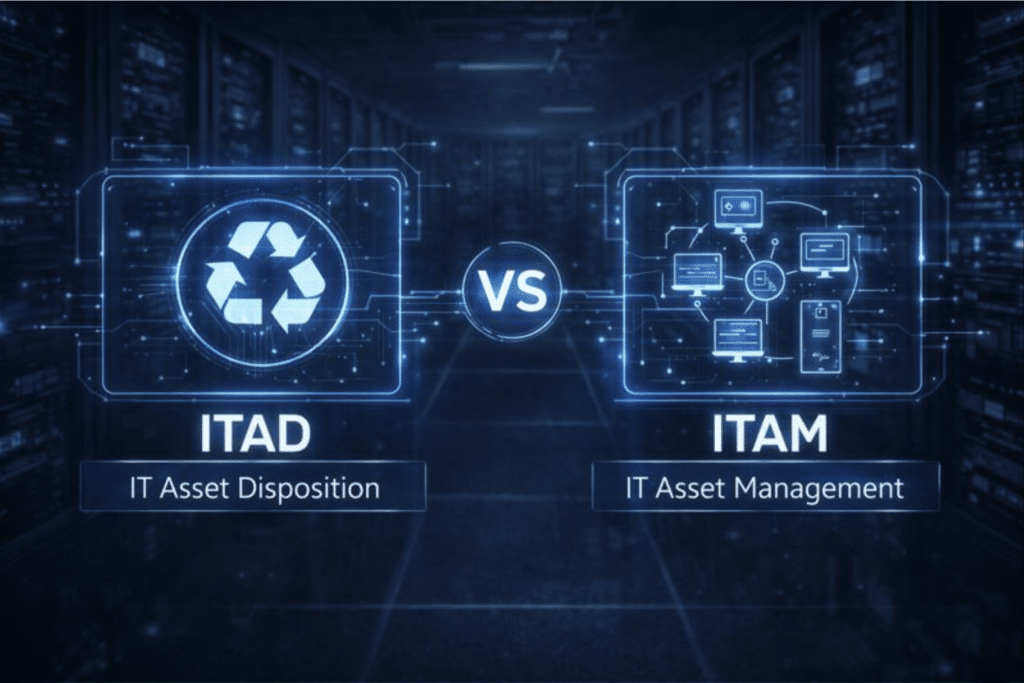
ITAM and ITAD serve different purposes, but they are strongest when they work together. ITAM manages assets during active use, while ITAD takes responsibility when those assets leave service. One does not replace the other.
When organizations treat them as separate but connected disciplines, they maintain control from purchase through final disposition. Devices stay accounted for, data is destroyed properly, and reporting remains accurate.
ITAM answers, “What do we own and how are we using it?”
ITAD answers, “What happens when we are done with it?”
Together, they form a complete lifecycle approach: not competing functions, but complementary ones that focus on protecting value, minimizing risk, and closing the loop on asset responsibility.
Reconext connects ITAM data with structured ITAD execution so assets remain controlled from active use through final disposition. By integrating asset records into disposition workflows, Reconext helps organizations reconcile what was retired with what was physically received, processed, and certified. This approach ensures security, compliance, and value recovery remain aligned.
If your organization needs a controlled, end-to-end approach to IT asset disposition, explore Reconext’s ITAD services here: https://www.reconext.com/lifecycle-services/itad-services/