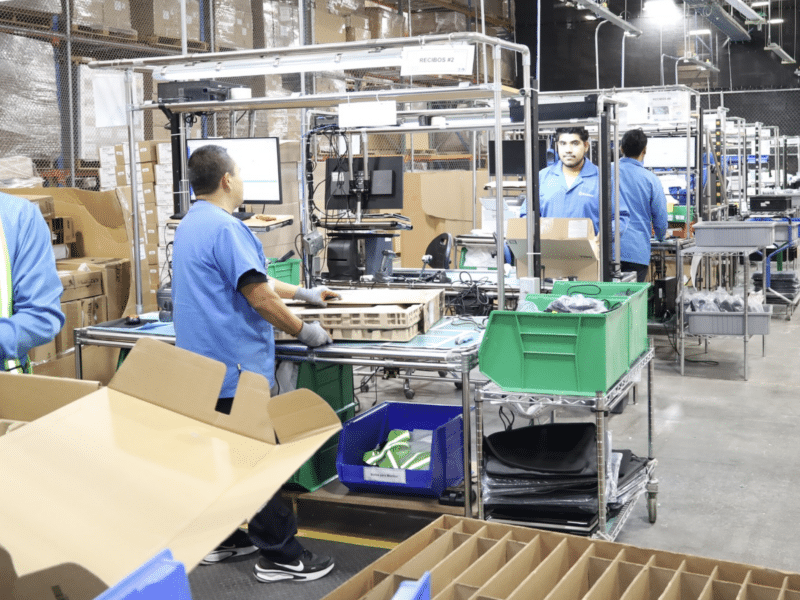
In Bydgoszcz, more than 250 testers sit along a conveyor-fed test line and run CPE tests automatically. Yet a technician still has to place every device in a tester, plug it in, and pull it out again afterward. We’ve now set up the first robotic cell built to take over that work.
As robots take over routine handling, our technicians can move into more engaging, high-skilled roles, focusing on the devices that require diagnosis. It’s where their experience is worth the most and has the most impact on what goes back into service.
How Titan Works
Returned CPE, including modems, gateways, and set-top boxes, is handled by Titan, our automated test platform.
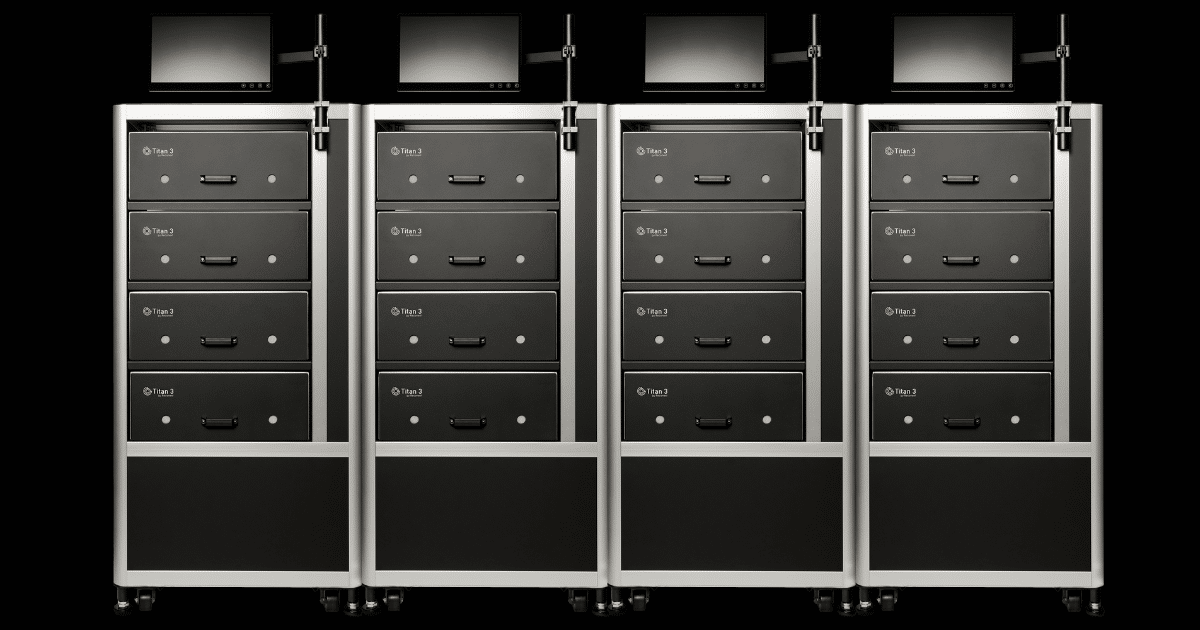
Each Titan tester is a cabinet of drawers, with one device per drawer. Once a device is in place, Titan checks everything from Wi-Fi to RF signal, then records the results for every unit. Over time, it learns what checks a given model never fails, so they can be cut.
The Robotic Cell
In the new cell, a robot arm picks each device off the conveyor and sets it into an open Titan drawer. As the drawer closes, a connector panel built for that model plugs into the device’s ports. Mechanisms inside the drawer then press its buttons and check its lights. When testing finishes, the robot lifts the device back out.
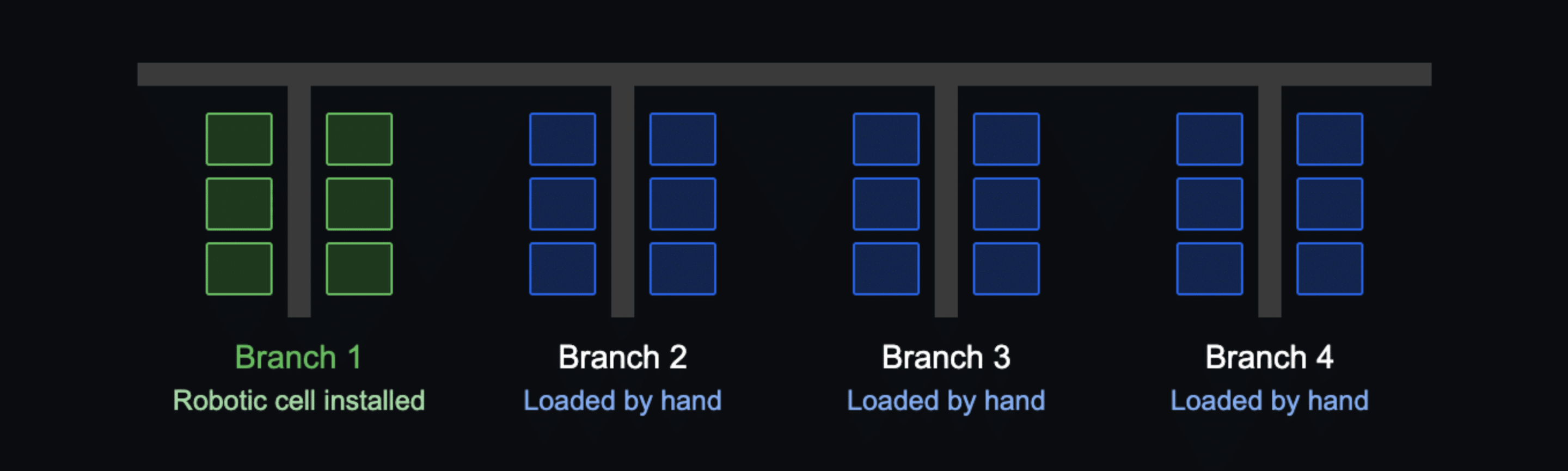
The test line is split into four branches, each with its own bank of Titan testers. The first robotic cell has been installed on one of them. Once it’s validated in production, we plan to add cells to the other three.
Capacity Without Added Headcount
Testing capacity has historically relied on headcount. The loading step meant every additional device needed an operator to handle it.
Today, each branch of the test line needs four to five operators per shift for loading and unloading. Across four branches and three shifts, that adds up to 48 to 60 operators.
With cells in place line-wide, the line can gain handling capacity without adding staff. A new program or a seasonal surge in returns can be absorbed on the existing line instead of waiting for hiring and training.
More Consistent, Traceable Results
The robot also seats and connects every device the same way. This reduces the risk of false failures, where a working device fails because it wasn’t connected properly.
It also means every step from conveyor to test result is machine-controlled and recorded. For OEMs that use Titan’s data to track failure patterns, cleaner inputs lead to more reliable conclusions.
Built to Scale
The cell is built to be repeated. The robot itself is a standard collaborative arm on a mobile base, and the product-specific engineering sits in the drawers and connector panels. That makes it practical to bring the cell to other sites running Titan.
The same approach can also work beyond Titan, and our laptop test line is a candidate. And because Titan already operates in customer-owned facilities, the design could eventually support testing there as well.
We’ll share results from the first cell once it has run in full production, along with the next steps for rolling it out!