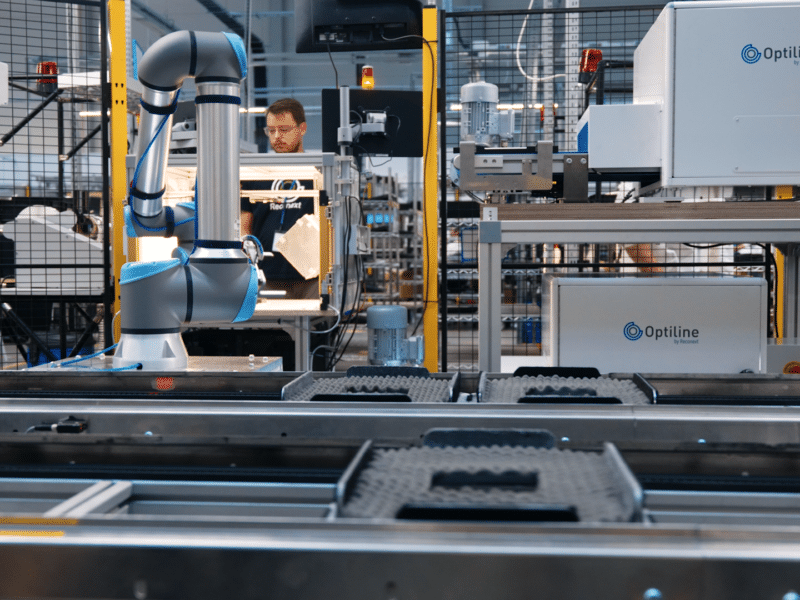
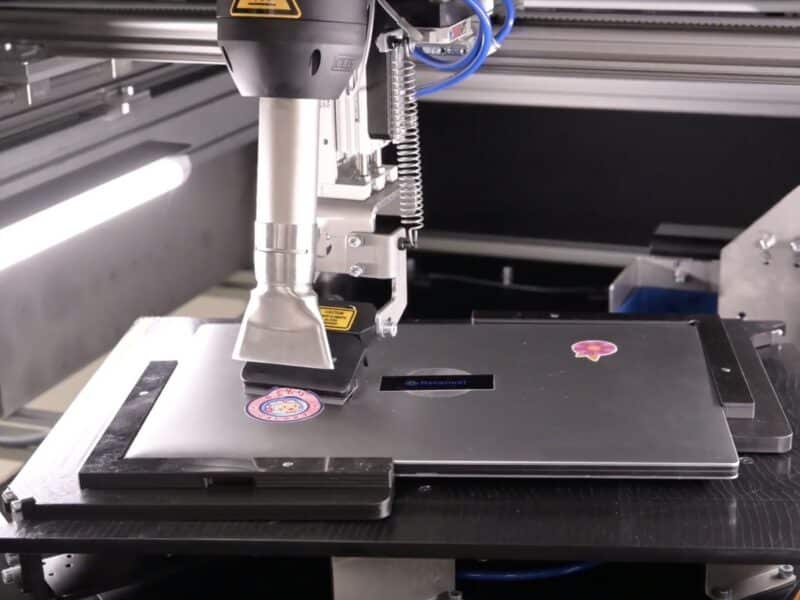
There is a moment in every returns program where a device first meets a technician. The technician looks it over, checks its condition, notes damage, and decides what should happen next. That moment shapes everything that follows. The more consistent it is, the better the outcomes for the customer and the clearer the path for the team.
For years, our R&D group in Tallinn has been working on ways to make that moment both faster and more reliable. Their answer is a platform called OptiZ. It uses a combination of lighting, optics, and controlled workflows to take grading decisions that normally depend on individual judgment and turn them into repeatable steps that can be deployed at scale.
This month, two additional OptiZ units shipped out of Tallinn and into our site in Grapevine. That gives the site four machines in total, enough to support fully automated grading on one of our fastest growing wearable device programs. The work did not stop there. The team in Tallinn is already refining a version of OptiZ that supports a wider mix of devices, including larger wearables and headsets. The goal is a single grading architecture that can be adapted to different hardware families without forcing every site to redesign their process from scratch.
This is where the value starts to reveal itself. When a new product enters the network, the Tallinn team studies its surfaces, components, materials, and typical failure patterns. They then adjust the OptiZ workflow to account for these details. Once the approach is validated in the lab, it can be cloned to any site that needs it. Operators receive the same interface, supervisors receive the same data, and customers receive consistent results regardless of where the device enters the system.
It also becomes easier to improve the process over time. If a certain cosmetic issue shows up frequently, it can be added to the grading library. If a new product variant appears, the workflow can be updated. All of this helps sites move with the pace of the market while keeping quality stable.
The expansion in Grapevine is one step in a much larger roadmap. The team in Tallinn is designing the next generation of OptiZ with better sensing, tighter integration into downstream decision tools, and faster setup for new products. The big idea is simple. Every device should move through a clear, consistent, data-driven process the moment it arrives. When grading improves, everything improves. Recovery value, processing speed, customer confidence, and operator focus all get a lift.
This is what quiet innovation looks like. A team builds a tool. Another site puts it to work. A customer sees steadier results. Then the cycle repeats. Over time, the little upgrades accumulate, and the entire network becomes stronger for it.