We couldn’t be prouder of the Memphis operation: not because the launch was smooth, but because the team took every challenge as an opportunity to strengthen it.
Today, 5010 Tuggle Road operates as a fully scaled enterprise asset recovery and systems processing center built entirely from the ground up. Within five months of go-live, the site achieved ISO 9001, ISO 14001, ISO 45001, and R2v3 certifications, validating the operational governance installed from day one. In less than a year, the Memphis facility has processed more than 1.2 million devices across enterprise programs.
None of that came pre-assembled.
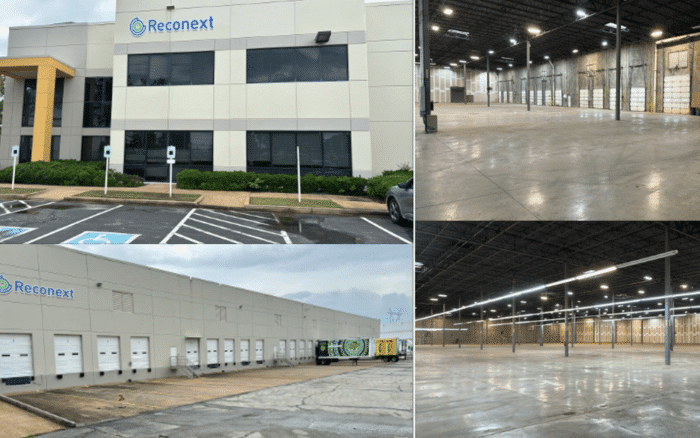
When we say the facility began as a shell, we mean it literally. We didn’t inherit a running site. We didn’t inherit infrastructure, staff, or embedded documentation from a prior operation. We didn’t even inherit a functioning lighting system.
In November 2024, we signed the lease and secured occupancy, with execution beginning in December. Before processing a single device, the team built the operation from the ground up: completing office buildouts, production space, lighting, flooring, security, and warehouse configuration. The site went live in late February 2025, and by May, the full OEM program had transitioned from the prior provider and was operating at planned volume.
It was a true greenfield launch, led by a new team operating in a fully integrated environment built under tight deadlines and complex conditions.
That’s when the real challenge surfaced.
When Long-Standing Enterprise Systems Meet a Newly Built Operation
The Memphis operation was established to support a major global technology OEM program that had been managed by an incumbent provider for more than two decades. Transitions of that scale do more than shift work from one location to another. They reveal the depth of integration required to sustain enterprise-scale performance.
Large enterprise programs rely on interconnected platforms that evolve. Manufacturing data feeds service operations, service platforms connect to licensing controls, and configuration records drive automated testing. Over years of operation, these systems become tightly aligned through formal governance and institutional knowledge embedded across teams. They test, adjust, and refine until everything works together reliably. Tacit knowledge develops around edge cases, and informal adjustments become part of the operating model.
When a program changes hands, the systems remain, but their connections have to work in a new environment. That’s where complexity emerges. For Memphis, it surfaced in the OEM’s automated testing bundle.
When the System Says Fail
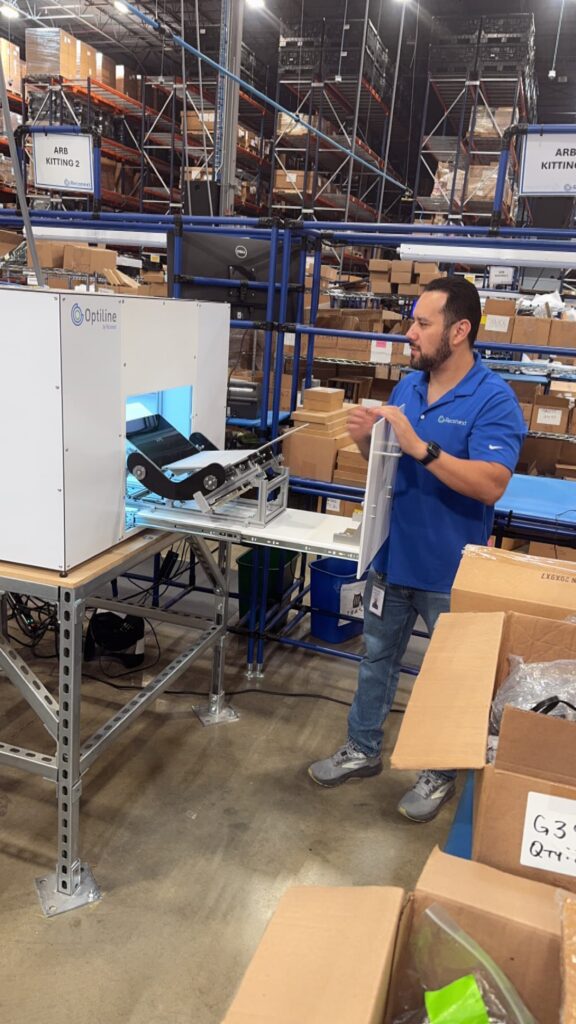
Every device that entered the line went through the same test. The system scanned the hardware, confirmed functionality, and then compared what it found against the official digital record in the OEM’s system of record. Inside that record lives the Bill of Materials, or BOM, which defines exactly what the device is supposed to contain.
The comparison is uncompromising by design. If the physical configuration and the BOM are not in exact alignment, the system fails. That precision protects listing accuracy, compliance, and brand reputation.
In our case, the testing bundle was operating as designed. The complication was that the configuration data retrieved for the system of record did not consistently reflect what was physically inside the devices moving across the floor. When those two views didn’t align, the system correctly identified the mismatch as an error and rejected the unit. We entered the program expecting an 85% pass yield. Instead, yields hovered around 35%, with some days falling to 3%.
The data was clear. The gap had to be closed.
Owning the Outcome Without Owning Every System
As a third-party logistics partner, we do not own the OEM’s manufacturing databases, licensing systems, or testing architecture. Those operate within a broader enterprise framework. What we do own is performance inside our operation. When yield drops, it is our responsibility to diagnose the root cause and resolve the issue in partnership with the client.
Addressing the decline required more than production floor adjustments. The configuration data flowing between systems had to be revalidated, and several failure categories required coordinated resolution across OEM technical teams. During the transition, several connected platforms needed to function in sync. When the alignment shifted, automated controls flagged those differences and halted the device in the process.
The solution was not about correcting a single step, but about restoring alignment across the environment so that physical devices and digital records reflected one another consistently.
Building a Response That Could Scale
We knew that restoring performance would require more than quick fixes. It required disciplined, scalable structure.
Bringing Evidence to the Table
We began by escalating with precision. Every ticket included specific service tag examples, detailed logs, and clearly identified failure codes. Rather than broad reporting, we brought reproducible cases that allowed joint troubleshooting. Working alongside the OEM’s Failure Escalation, Build-To-Order, and IT teams, we addressed data integrity issues, stabilized system-to-system integrations, and resolved recurring failure patterns connected to the testing bundle.
That discipline improved both the quality and speed of resolution.
Stabilizing the Flow Through Rework
At the same time, we established a dedicated rework team to resolve recoverable failures each day. They interfaced directly with the system of record, corrected configuration mismatches, and returned units to the testing process. This approach kept inventory moving while broader system issues were being resolved and prevented backlog from compounding.
Introducing Automation Where It Mattered
Manual corrections alone would not sustain enterprise-scale throughput. To operate at full volume, we needed a smarter layer between physical inspection and system correction.
We developed an internal AI agent to execute defined correction steps within the OEM’s environment. Built from structured, validated recordings of manual workflows, the agent was trained to replicate the disciplined logic our operators use to resolve recurring BOM alignment discrepancies within the system of record.
As those patterns became clear, the agent began handling them directly. Since November 2025, it has autonomously resolved nearly 4,000 errors, achieving an 80% successful correction rate. What began as a way to reduce repetitive manual intervention has become a controlled automation layer that shortens resolution cycles and increases consistency.
The capability continues to evolve, but even in its early stages, it materially reduced manual workload while strengthening the reliability of recurring corrections.
Making Performance Visible
We also invested in real-time visibility. Dashboards were built to track yield trends, aging inventory, productivity, and failure categories. With performance metrics clearly defined and continuously monitored, patterns became visible, decision-making sharpened, and corrective action accelerated.
Eight Months That Changed the Trajectory
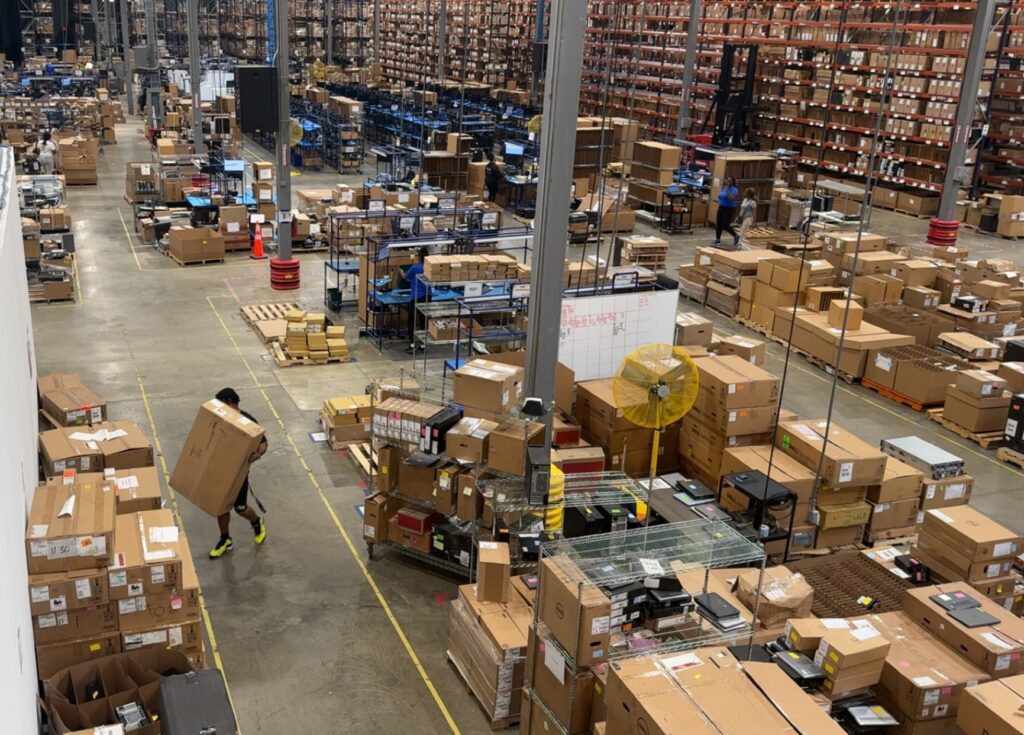
By May 2025, the facility was operating at full volume. Over the following eight months, throughput to finished goods inventory increased from approximately 1,500 systems per week to over 3,500 per week. More than 35,000 units were successfully reworked and returned to production flow. Sellable inventory expanded almost fivefold, from roughly 7,000 units to over 32,000 available for resale.
Those figures represent recovered value and restored velocity. More importantly, they reflect disciplined execution under a complex enterprise transition.
A Playbook That Extends Beyond One Site
Greenfield launches combined with enterprise transitions rarely proceed without complexity. Systems that have functioned for decades often reveal pressure points only when conditions change. What ultimately defines performance is the discipline and rigor applied in navigating it.
The experience sharpened our operating discipline and enhanced our ability to execute within complex, high-accountability environments. Our escalation model is now more tightly integrated with enterprise technical teams; our rework framework is more scalable; and our AI-assisted configuration correction capabilities have matured into deployable assets across programs. The transition strengthened our enterprise launch playbook and reinforced our ability to execute reliably within layered, governed systems at scale.
We don’t claim that complexity won’t surface in future programs. In fact, we assume that it will. What we can say with confidence is that when it surfaces, we are equipped to diagnose root causes, coordinate across departments to fix it, and deploy solutions that scale.
Memphis stands as proof that even under significant pressure, disciplined execution and thoughtful innovation can turn operational instability into sustainable performance. That is the standard we bring to every partnership.