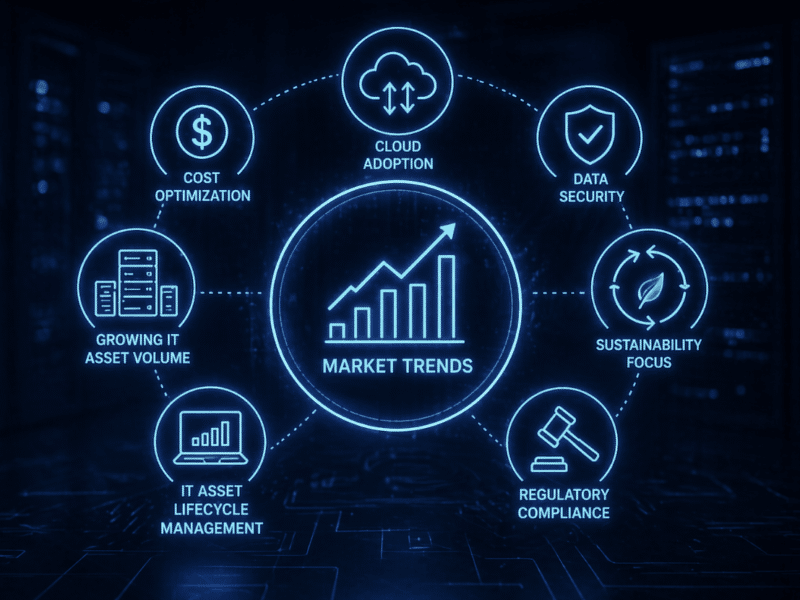
As organizations refresh their technology infrastructure, retired IT equipment continues to grow in volume. Managing these assets requires more than disposal; it requires a structured approach to data security, compliance, environmental responsibility, and value recovery.
A certified ITAD provider can help, but certifications alone are not enough. Businesses should assess how providers manage the full disposition lifecycle, from secure collection and data sanitization to reporting and downstream recycling. These factors help organizations select a partner aligned with their operational and compliance objectives.
Key Takeaway
When selecting a certified ITAD provider, businesses should verify that the vendor follows recognized data security standards, holds environmental recycling certifications, and maintains a transparent chain of custody throughout the asset disposition process.
What ITAD Certification Means
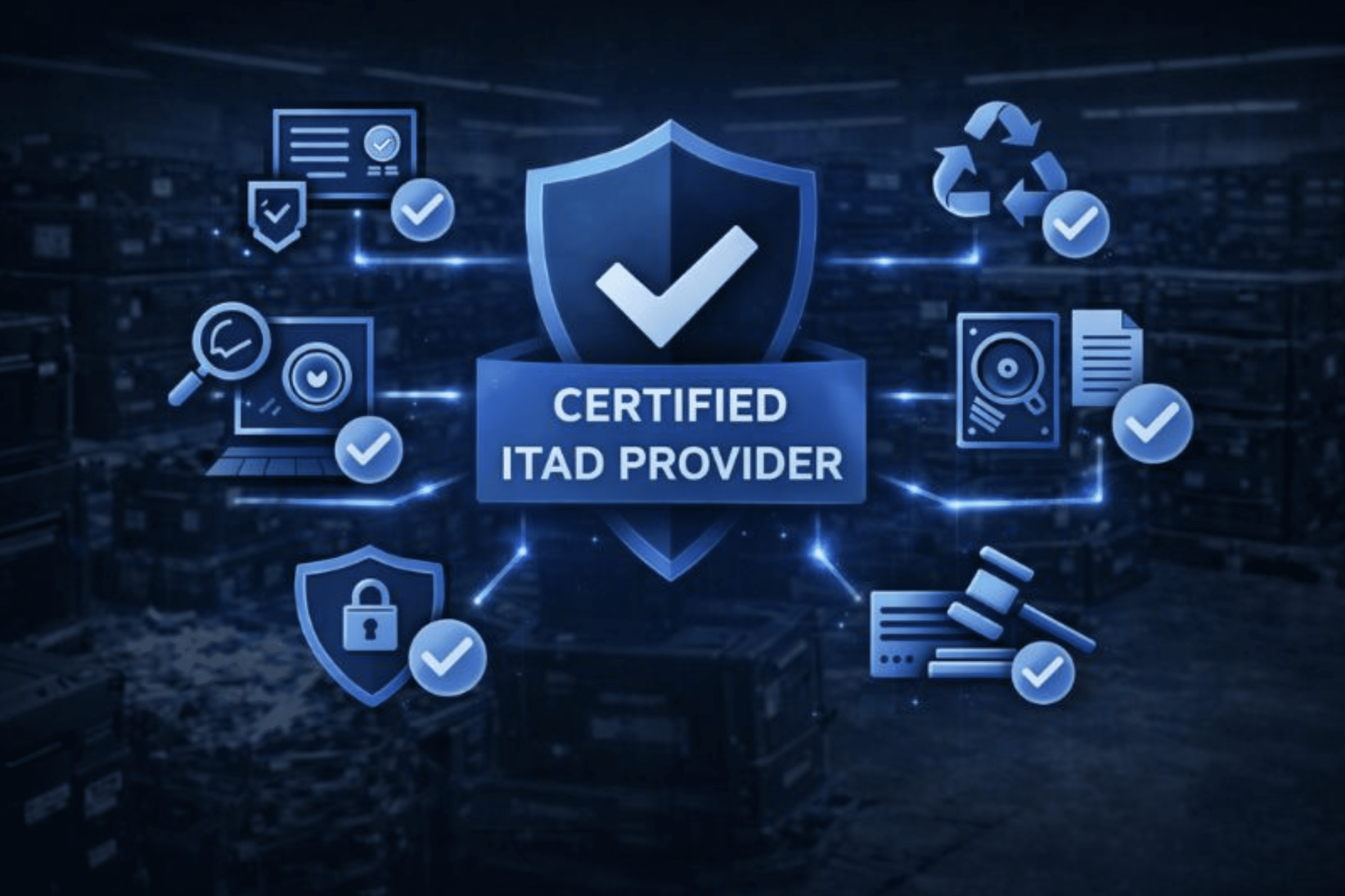
An ITAD certification verifies that a provider manages retired IT assets securely, sustainably, and in line with industry standards. Vendors earn certification by demonstrating that they can sanitize data, recycle electronic waste responsibly, and comply with data privacy and environmental regulations.
Because certification requires vendors to meet strict criteria, it gives organizations greater confidence that the provider will follow ITAD best practices throughout the disposition process.
Common ITAD Certifications
ITAD certifications come from various certifiers and generally verify two core areas: data security and destruction, and environmental compliance.
Data security and destruction certifications verify that vendors securely handle, sanitize, or destroy data-bearing devices. NAID AAA Certification, administered by i-SIGMA, is the most common certification in this category.
Environmental compliance certifications confirm that a vendor practices environmental safety and responsible downstream recycling. The R2v3 Standard and e-Stewards Standard certificates are primarily used to verify this.
An ITAD company may not need every certification, but it should hold at least one in each category. Some vendors also pursue ISO 27001 and ISO 14001 to strengthen compliance and align their ITAD programs with international standards.
5 Things to Look For When Choosing an ITAD Provider
Selecting an ITAD provider can be challenging, but focusing on these five priorities helps you choose a partner that protects revenue, data security, and regulatory compliance.
Security and Data Protection Standards

Certified ITAD companies must comply with recognized data security and privacy standards, including approved methods for handling and sanitizing sensitive information.
When evaluating vendors, businesses should ask what sanitization methods are used and whether those methods permanently remove data. Inadequate data destruction practices increase the risk of breaches and compliance violations.
Certified ITAD providers typically use permanent data erasure methods, such as crypto erase or degaussing, where appropriate. These practices help reduce the risk of unauthorized data exposure while supporting regulatory compliance.
Beyond data sanitization, certified vendors maintain a secure chain of custody throughout the IT asset disposition process. This involves documenting asset transfers and ensuring handlers are vetted, which strengthens accountability and supports audit readiness.
Environmental Responsibility

ITAD vendors are responsible for making sure electronic waste does not end up in landfills. Uncertified vendors may rely on improper disposal methods, including illegal e-waste exports or unsafe handling of hazardous materials. A certified vendor, however, follows established environmental standards to ensure responsible recycling and disposal practices.
When evaluating vendors, ask them how they handle downstream recycling. Most certified vendors are equipped to dismantle electronics, recover usable parts and recycle materials responsibly.
Downstream recycling helps prevent the dumping of unused electronics. It is a much cleaner way of transforming used electronics into raw materials for new equipment.
Vendors that care about environmental impact help companies track the carbon footprint resulting from these refreshes. That includes providing sustainability and ESG reports that show the impact of the ITAD services.
Value Recovery Opportunities

Old equipment still has recoverable value even when they are declared unusable. Expert ITAD vendors understand this, which is why their ITAD processes involve a value recovery plan.
For slightly usable devices, certified ITAD vendors can refurbish and repair them to recover some value. This value is recovered by reusing or reselling the devices. Reconext specializes in cosmetic refurbishments and functional repairs to extend the lifespan of returned IT equipment, thereby reducing replacement costs.
The other value recovery route companies should consider is parts harvesting. An ITAD provider should be able to reclaim functional device parts during the manufacturing of new equipment, helping to save on costs and contribute to the circular economy.
Compliance and Legal Considerations

ITAD carries significant regulatory risk, and vendors that follow applicable requirements help shield customers from liability. Companies should choose vendors that understand these risks and how they affect the business.
In highly regulated industries like healthcare, businesses should work only with vendors that comply with HIPAA and GDPR. These vendors sanitize devices that contain highly sensitive customer data, meaning slight negligence could result in data leaks. The liability here for the business is legal and lost customer trust.
Certified vendors also support audit readiness. They provide disposition documentation that helps companies demonstrate compliance with data privacy regulations.
Provide Transparency and Reporting

Without transparency and reporting, organizations cannot accurately assess the operational, compliance, and environmental outcomes of their IT asset disposition programs. Detailed reporting helps them refine their approach and create more favorable policies over time.
Reporting includes certificates of data destruction, asset disposition records, and other reports that verify sensitive information was securely erased or destroyed in accordance with industry standards.
Organizations should also choose ITAD providers that communicate clearly and transparently throughout the process. Regular updates help reassure clients that sensitive data is handled properly and provide interim documentation before final disposition.
Conclusion
Certified ITAD providers are transparent, safeguard data, enforce compliance, support sustainability goals, and maximize asset value. Businesses that care about these five aspects should always choose vendors who satisfy all of them. While some of these are hard to verify on face value, choosing based on certifications eliminates much of the guesswork.
Industry experience is another important consideration when evaluating ITAD providers. Providers with established ITAD programs and a proven track record are often better positioned to navigate complex security, compliance, and asset recovery requirements.
With more than a decade of experience in IT asset disposition, Reconext helps organizations securely manage retired technology assets while supporting compliance, sustainability, and value recovery objectives. Contact Reconext to learn how our end-to-end ITAD solutions can support your organization’s asset disposition strategy.
FAQs
How long does the ITAD process take?
The timeline for IT asset disposition varies depending on the number of devices, the type of assets, and the chosen services, like refurbishment or resale. Most providers offer a project plan with estimated pickup, processing, and reporting dates so you can align ITAD with your IT lifecycle schedules.
Can ITAD providers handle international or multi-location deployments?
Yes, many certified ITAD providers have global logistics capabilities and partner networks to manage multi-location or international device retirement. They ensure consistent standards for security, compliance, and environmental handling across all sites.
How is asset valuation determined in ITAD?
Asset valuation depends on device condition, age, brand, and market demand for resale or refurbishment. Certified ITAD providers often perform testing and grading to determine fair market value while maximizing recovery for clients.
Are there risks to using a non-certified ITAD provider?
Yes, non-certified providers may not follow strict data destruction or environmental standards, leaving your organization exposed to data breaches, legal penalties, or regulatory violations. Using a certified provider ensures auditable processes and mitigates financial, legal, and reputational risk.